Understanding the Water Damage Exclusion Endorsement
When you receive your insurance renewal, it often comes with a stack of “endorsements.” In insurance-speak, an endorsement is a document that changes your base policy. The water damage exclusion endorsement is one of the most significant. It doesn’t add coverage; rather, it typically serves to refine and broaden the list of things the insurance company will not pay for.
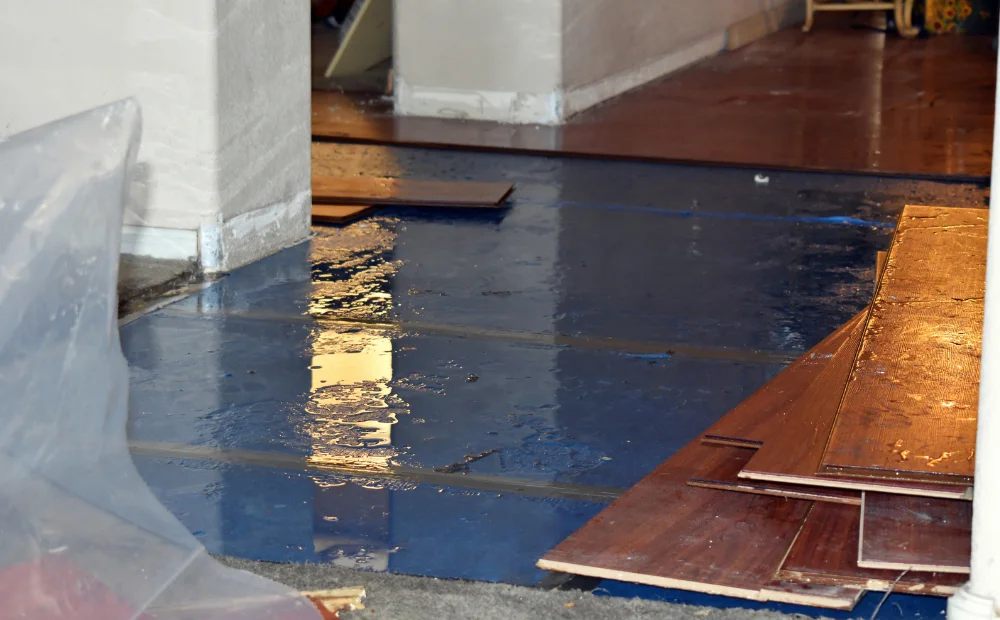
Standard property insurance is designed to cover “sudden and accidental” internal water damage, like a pipe bursting in the wall. However, insurers use these endorsements to draw a hard line between water that starts inside your plumbing and water that comes from the ground or the sky. As noted in Understanding Water Exclusion Clauses in Insurance Policies, these clauses are standard across the industry to limit the insurer’s exposure to catastrophic events like floods.
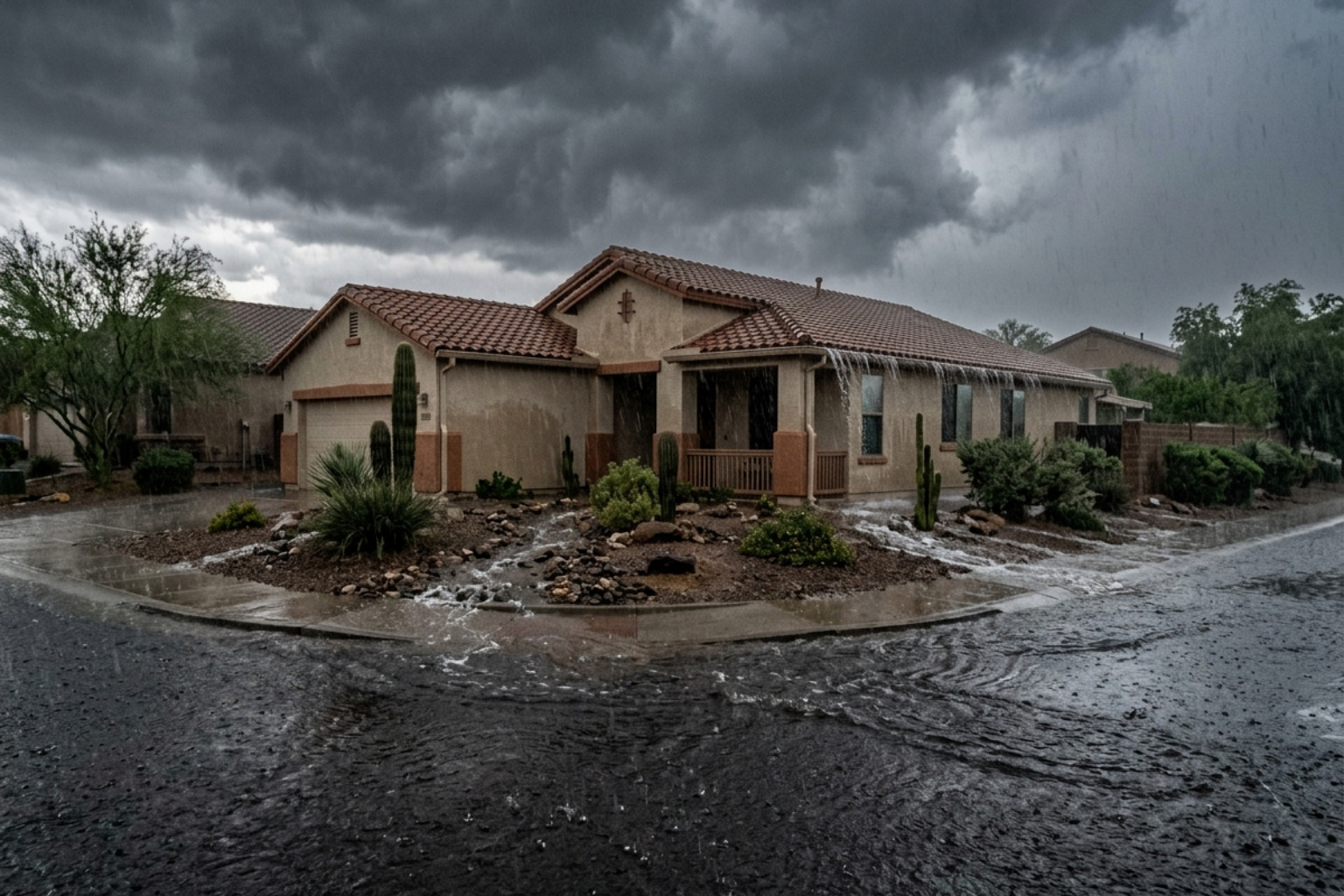
For many, discovering this fine print only happens after a monsoon storm pushes “surface water” into a living room. Without a clear understanding of these forms, you might find that Why Your Homeowners Policy Might Leave You High and Dry is more than just a catchy title—it’s a financial reality.
How it Modifies Standard Property Policies
The base contract of an insurance policy (like an HO-3 for homeowners or a CP 10 30 for commercial owners) contains general exclusions. The water damage exclusion endorsement (such as Form CP 10 32 – Water Exclusion Endorsement) replaces those general sections with much more restrictive language.
It effectively narrows the definition of “covered peril.” For example, while your policy might say it covers “water damage,” the endorsement clarifies that this only applies to specific instances like a malfunctioning appliance or a broken pipe. It explicitly removes coverage for any water that touches the ground before entering your home. You can learn more about the nuances of these claims at our Water Damage resource page.
The Evolution of Exclusion Language Post-Katrina
The language in these endorsements hasn’t always been this strict. Historically, there was a legal concept called “efficient proximate cause.” If a windstorm (covered) broke a levee and caused a flood (excluded), courts sometimes ruled that the wind was the primary cause, forcing insurers to pay.
Following Hurricane Katrina, the insurance industry overhauled forms like the CP 10 32. They introduced “anti-concurrent causation” language. This essentially says: “If an excluded event (like a flood) contributes to the damage in any way, the entire claim is excluded, regardless of any other covered event (like wind) that happened at the same time.” This shift has made it much harder for policyholders to fight denials. If you are facing a complex dispute in the Valley, seeking guidance from a qualified public adjuster is often necessary to navigate these “anti-concurrent” hurdles.
What’s Actually Excluded? Breaking Down the Fine Print
To understand your risk, you have to look at the specific categories of water that insurers refuse to cover. According to standard forms like the AAIS FL 0440, the exclusions are broad:
- Flood and Surface Water: This includes waves, tides, tidal water, and the overflow of any body of water. In Arizona, “surface water” usually refers to rain that collects on the ground and flows into your home because the soil is too saturated to soak it up.
- Groundwater Seepage: Water that exerts pressure on your foundation or leaks through basement walls is almost always excluded.
- Mudslide and Mudflow: While it might look like a landslide, if it’s “waterborne” mud, it falls under the water exclusion.
- Waterborne Material: This excludes damage from debris, trash, or silt carried by the excluded water.
Distinguishing between these categories is vital. We often help clients understand the Flood Damage vs Water Damage Arizona distinction, as “water damage” from a pipe is covered, but “flood damage” from a heavy rain is not.
Natural vs. Man-Made Causes in Water Damage Exclusion Endorsements
A common misconception is that if a human error caused the flood—like a dam failing or a levee breaching—the exclusion shouldn’t apply because it wasn’t an “act of God.”
Modern water damage exclusion endorsement language, however, explicitly states that the exclusion applies “regardless of the cause.” Whether the water comes from a natural storm surge or a man-made failure of a containment system, the insurer is off the hook. This is particularly relevant in CGL Exclusions Common to Construction-Related Claims, where a contractor’s failure to manage stormwater can lead to massive, uninsured losses for a property owner.
Specific Exclusions for Sump Pumps and Sewer Backups
In many parts of the country, and even in some Arizona homes with basements or below-grade plumbing, sump pumps are a lifeline. However, the ISO HO 04 95 form shows that standard policies exclude water that backs up through sewers or drains, or overflows from a sump pump.
This exclusion applies even if the failure was caused by a mechanical breakdown or a power failure during a storm. If your pump stops working and your basement floods, a standard policy will likely leave you with a denied claim. This is a primary reason for The Complete Guide to Why Insurance Isn’t Paying Water Damage Claims.
Exceptions and Carve-Backs: When Water Damage is Covered
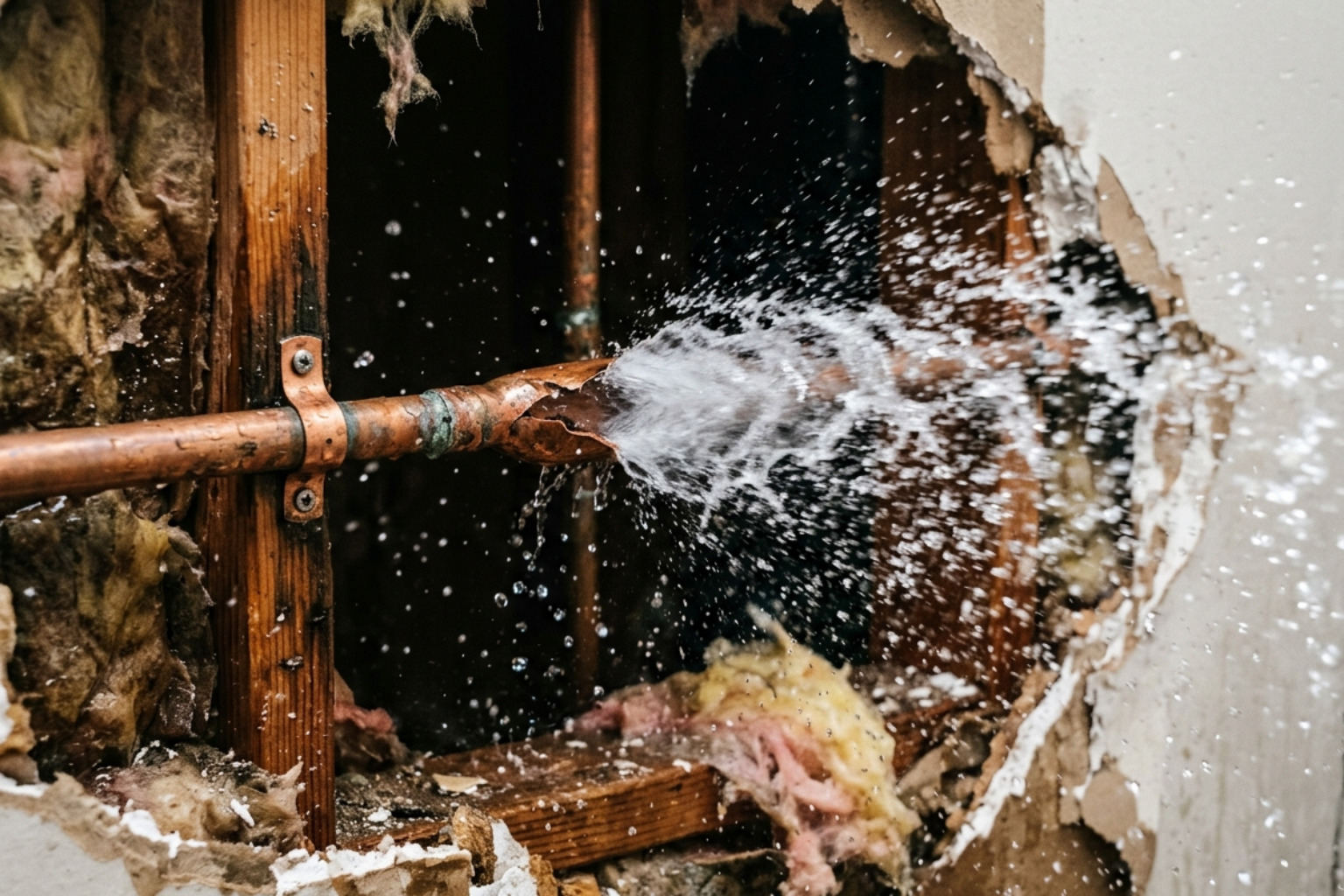
While the exclusions are heavy, they aren’t absolute. There are “carve-backs”—specific scenarios where the policy does provide coverage.
The most common exception is for the accidental discharge or overflow of water from within a plumbing, heating, or air conditioning system, or a household appliance. If your washing machine supply line snaps, that is a covered peril. For a detailed look at how to handle these, see our guides on Burst Pipe Insurance Claims and Dishwasher Leak Damage.
Sudden vs. Continuous Leakage Scenarios
The “sudden and accidental” rule is the gold standard for coverage. If a pipe bursts today, you’re likely covered. However, if that pipe has been pin-hole leaking for six months and you just noticed the mold and rot today, the insurer may use the “seepage and leakage” exclusion. Most policies exclude water damage that occurs over a period of 14 days or more. This is a frequent point of contention in our Denied Water Damage Claim Guide.
Ensuing Losses and the Fire/Explosion Exception
Even if a massive flood (an excluded event) causes your property to catch fire or explode, the policy will usually pay for the fire damage. This is known as an “ensuing loss.”
For example, if a flood causes a short circuit that starts a fire, the water damage to your floors is excluded, but the fire damage to your walls is covered. Similarly, if a flood triggers an automatic sprinkler system, the resulting Fire Sprinkler Flood may have coverage components depending on your specific AAIS FO 0217 or commercial form language.
Policy Variations: Homeowners, Commercial, and Farmowners Forms
Not all water exclusions are created equal. The language varies significantly depending on the type of property you own.
| Policy Type | Key Water Exclusion Form | Main Focus |
|---|---|---|
| Homeowners | HO-3 / HO 04 95 | Excludes external water; requires riders for backup. |
| Commercial | CP 10 32 / CP 10 30 | Focuses on “anti-concurrent” causes and storm surge. |
| Farmowners | FO 0217 / UF WEE-1 | Includes livestock flood exclusions and specific ag-equipment rules. |
In the commercial world, vacancy is a major factor. If a building is vacant for more than 60 days, many water damage coverages are suspended entirely unless a special “vacancy permit” is purchased.
Court Interpretations of Ambiguous Language
Because insurance companies write these policies to benefit themselves, courts often have to step in when the language is vague. One famous area of dispute is the definition of “surface water.”
In some cases, courts have ruled that if water is “channeled” by man-made structures (like a neighbor’s faulty drainage pipe) before it hits your home, it may lose its status as “surface water” and therefore might be covered. A detailed analysis of ISO Form 2.c.(6) shows that exceptions for off-premises storm drain backups can sometimes provide a “back door” to coverage that insurers initially deny.
Why You Need a Water Damage Exclusion Endorsement Review
In April 2026, the complexity of these forms has only increased. With 19 states (including those with hurricane risks) now requiring separate deductibles for certain water events, the financial stakes are high.
Reviewing your policy isn’t just about reading the declarations page; it’s about understanding the endorsements hidden in the back. At Hudson Douglas, we offer professional policy reviews to help you identify these gaps. Our Water Damage Insurance Claim Tips can help you prepare, but knowing Why Covered Water Damage Isn’t Always Covered is the first step toward true protection.
Bridging the Gap: Recommended Endorsements and Riders
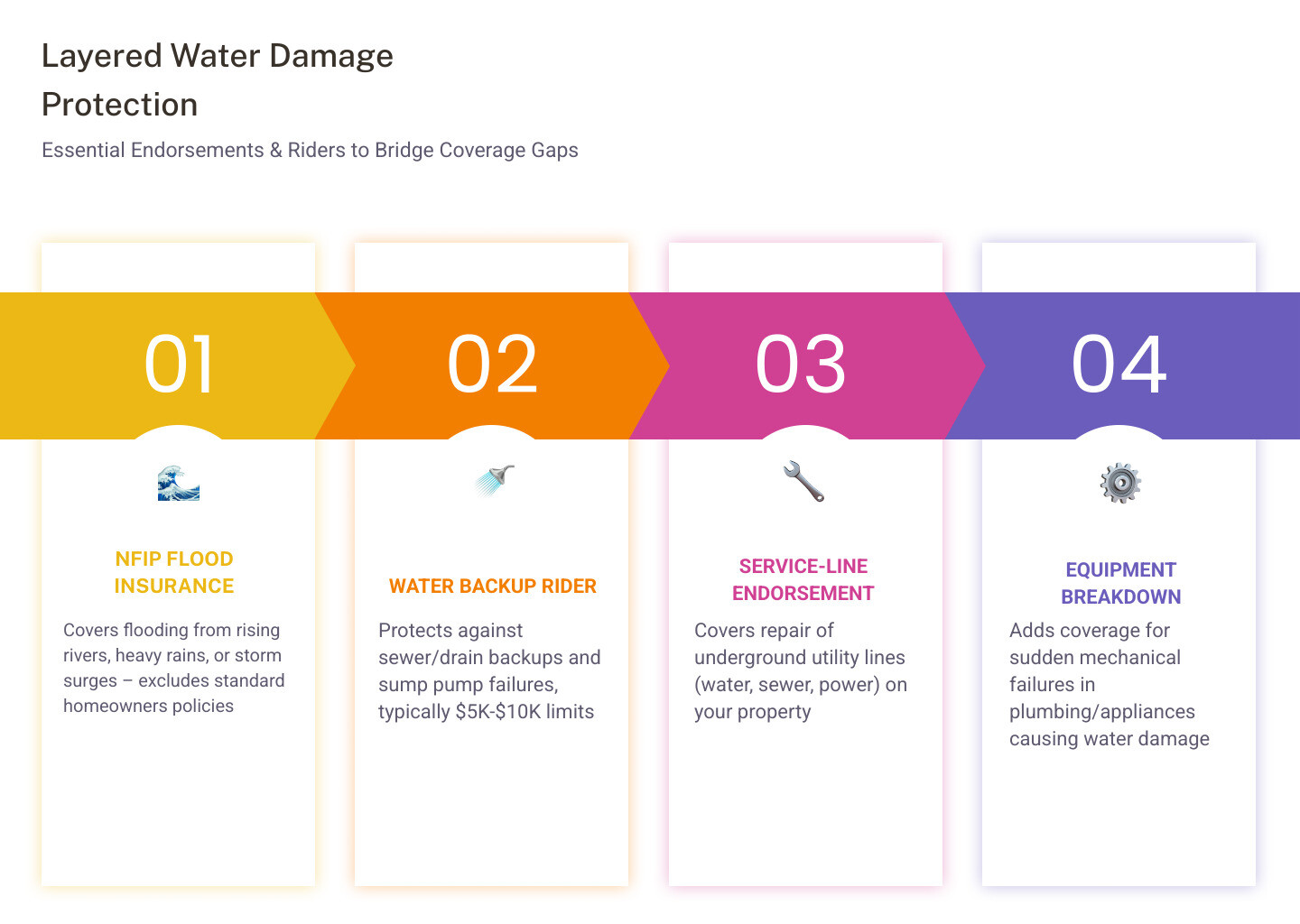
If your current policy has a water damage exclusion endorsement that leaves you vulnerable, you have options. You can “buy back” some of this coverage:
- NFIP Flood Insurance: This is a separate policy regulated by FEMA. It is the only way to cover true “flooding” from rising rivers or heavy rains.
- Water Backup Rider: This adds coverage for sewer and drain backups and sump pump failures. It usually comes with a specific limit (e.g., $5,000 or $10,000).
- Service-Line Endorsement: This covers the failure of underground utility lines (water, sewer, power) on your property, which are otherwise excluded.
As Gilbert insurance experts point out in Does Your Home Insurance Cover Water Damage?, these riders are relatively inexpensive compared to the cost of a self-funded remediation.
Frequently Asked Questions about Water Exclusions
Does my policy cover a burst pipe if I am away on vacation?
Generally, yes, but there’s a catch. If you are gone for more than 30 consecutive days, the “vacancy” or “unoccupancy” clauses might kick in. Most policies also require you to maintain heat in the building or shut off the water supply and drain the pipes to maintain coverage for freezing.
Is damage from a municipal water main break considered a “flood”?
This is a “grey area” often settled in court. Insurers will try to call it “surface water” (excluded). However, because it is a man-made failure of a pressurized system, many public adjusters and attorneys successfully argue that it should be covered as an accidental discharge.
Can I add coverage for a sump pump failure to my existing policy?
Yes. You can add the HO 04 95 endorsement (or its commercial equivalent). This specifically overrides the exclusion for sump pump overflow and provides a set amount of coverage for the resulting damage and the cleanup.
Conclusion: Protecting Your Property and Your Rights
Navigating insurance endorsements can feel like learning a second language. Between “anti-concurrent causation” and “surface water channeling,” the fine print is designed to protect the insurance company’s bottom line—not yours.
At Hudson Douglas Public Adjusters, we believe you deserve an advocate who speaks that language fluently. As a family-owned and operated business with over 40 years of expertise, we’ve seen every tactic in the book. Whether you are in Paradise Valley, Gilbert, or Sedona, we are locally based and ready to help.
We work solely for you, the policyholder. We don’t charge any upfront fees—our fee is 12% of the final payout, meaning we only get paid when you do. From the initial inspection to the final negotiation, we handle the stress so you can focus on getting your life back to normal.
If you’ve suffered a loss or are worried about your current coverage, don’t wait for the next monsoon. Contact us today for a consultation. We are available 24/7 and provide full support in both English and Spanish.