When Your Kitchen Springs a Leak: Understanding the Risk
Dishwasher leak damage is one of those problems that can sneak up on Arizona homeowners, starting with a small puddle and ending with thousands of dollars in repairs. If you’re reading this because you just found water on your kitchen floor, you’re probably feeling stressed and unsure what to do next. You’re not alone, and you’re in the right place.
What you need to know right now:
- Water damage can start in just 2 hours – even from a small leak
- Mold can develop in 24-48 hours in damp areas
- Flooring, cabinets, and subflooring are all at risk
- Insurance may or may not cover the damage – it depends on the cause
- Quick action protects your home and strengthens your claim
A leaking dishwasher isn’t just an appliance problem. It’s a race against time to protect your kitchen, your home’s structure, and your insurance claim. The good news? Most dishwasher leaks can be caught early and managed effectively if you know what to look for and how to respond.
In this guide, we’ll walk you through the warning signs of a leak, explain what’s likely causing it, help you understand the real scope of damage that can happen, and give you clear steps to take right now. We’ll also help you steer the insurance side of things, which can be confusing and frustrating when you’re already dealing with a mess in your kitchen.
Whether you caught the leak early or finded it after damage has already started, this guide will help you protect your home and make informed decisions about repairs and claims.
First Signs of Trouble: How to Spot a Leaking Dishwasher
Sometimes, a dishwasher leak damage incident announces itself with a dramatic splash. Other times, it’s far more subtle, quietly causing harm behind the scenes. Knowing what to look for can save you a lot of headache and expense down the road.
The most obvious signs that indicate a dishwasher is leaking include:
- Puddles on the floor: This is the clearest indicator. You might find water directly in front of the dishwasher, especially near the door, or it could be pooling underneath the unit.
- Water dripping from the door: If you see water actively dripping from the bottom edge of the dishwasher door during or after a cycle, you definitely have a leak.
However, many leaks are sneaky. They don’t always leave a visible puddle right away, especially since dishwashers are often tucked away under kitchen counters. These subtle signs are often the ones that lead to significant, hidden dishwasher leak damage:
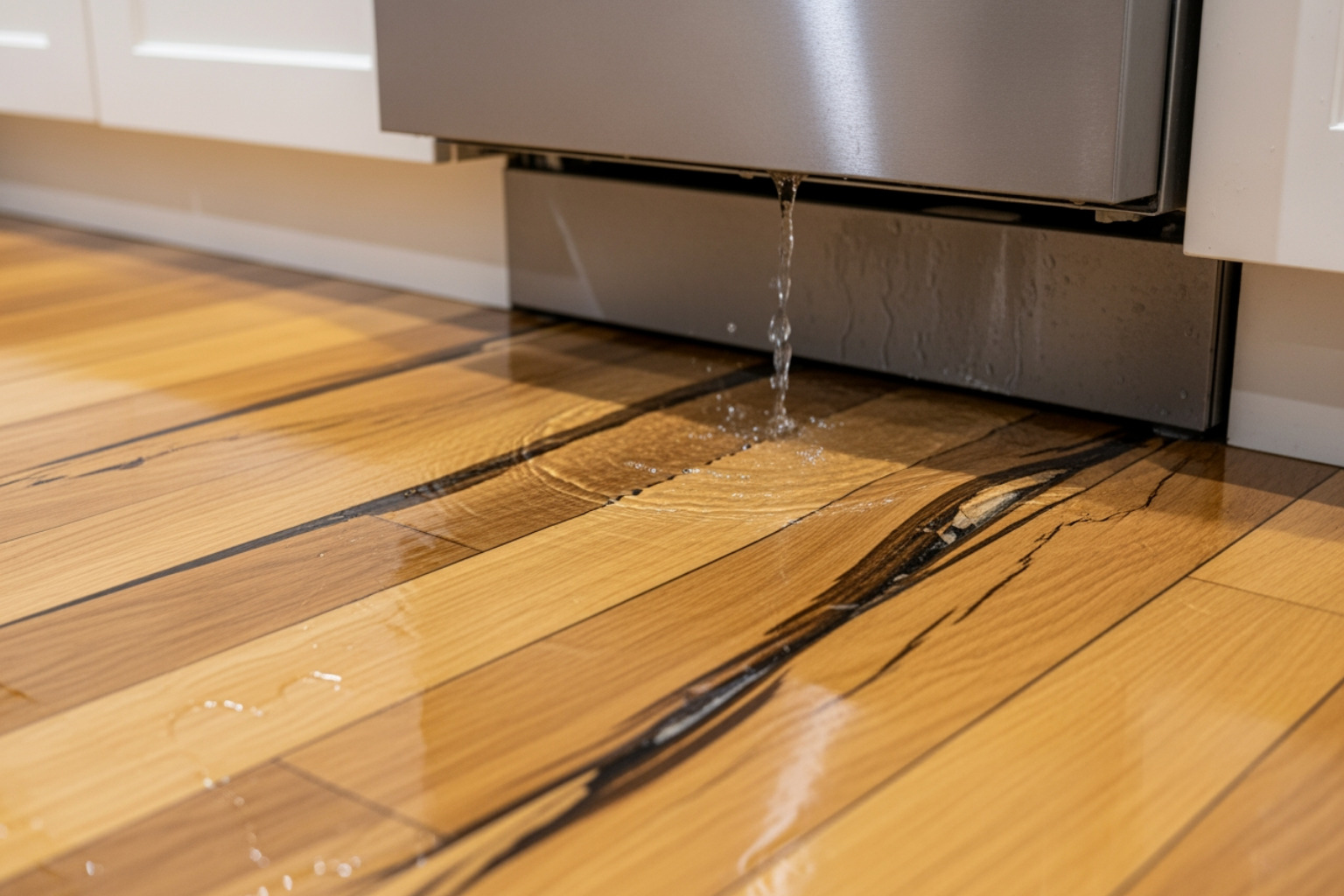
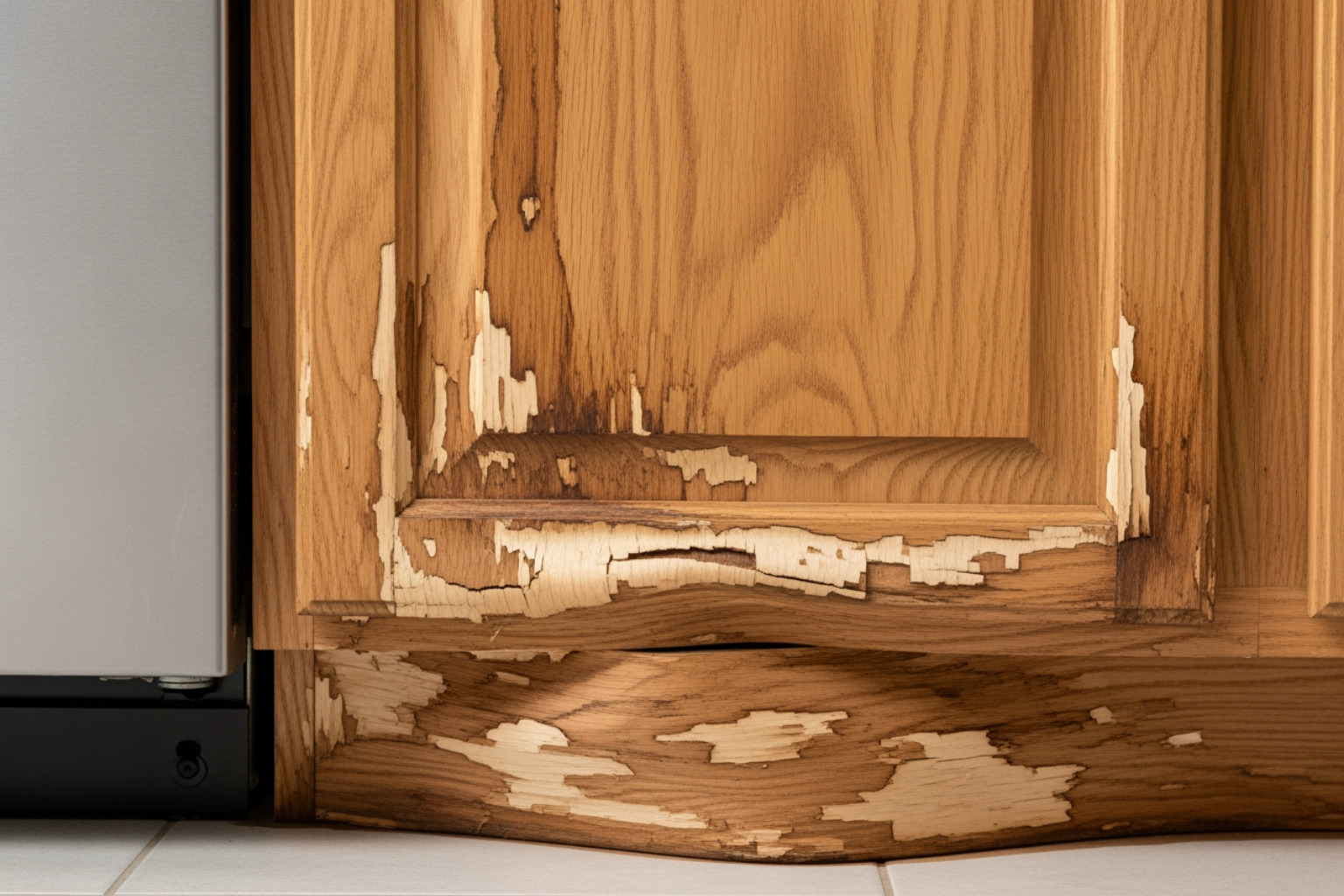
- Warped cabinet base: Water can seep into the wooden base of your kitchen cabinets adjacent to the dishwasher. Look for swelling, bubbling, or discoloration on the wood or laminate.
- Stained or discolored flooring: Even if the floor isn’t visibly wet, you might notice dark spots, streaks, or a general dullness on your tile grout, laminate, or hardwood. For wood floors, you might see white spots, indicating damage to the finish.
- Buckling or cupping floorboards: If wood floorboards near the dishwasher start to lift at the edges (cupping) or warp (buckling), it’s a strong sign of prolonged moisture exposure.
- Musty smell: A persistent musty or damp odor in your kitchen, particularly near the dishwasher, is a red flag. This often indicates hidden moisture and potential mold growth underneath the appliance or in the subflooring.
- Mold growth: Visible mold, even small spots, on baseboards, under cabinet edges, or on the floor is a clear sign of a sustained moisture problem. Mold and mildew can develop in wet areas in as little as 24-48 hours.
- Frequent water spots on dishes: While often attributed to hard water, excessive water spots or residue on your dishes after a wash cycle can sometimes indicate that water isn’t draining properly, which can contribute to leaks.
Slow leaks, especially, can go undetected for a long time, leading to catastrophic damage that extends much further than initially apparent. A slow leak of one drop every 5 seconds yields over 1.7 gallons per day, or over 50 gallons per month. That’s a lot of water quietly soaking into your home!
What’s Causing the Leak? Common Culprits and Quick Fixes
Understanding the root cause of your dishwasher leak damage is the first step toward fixing it. Many leaks stem from common issues that homeowners can often address themselves with a bit of troubleshooting. However, some problems require professional attention.
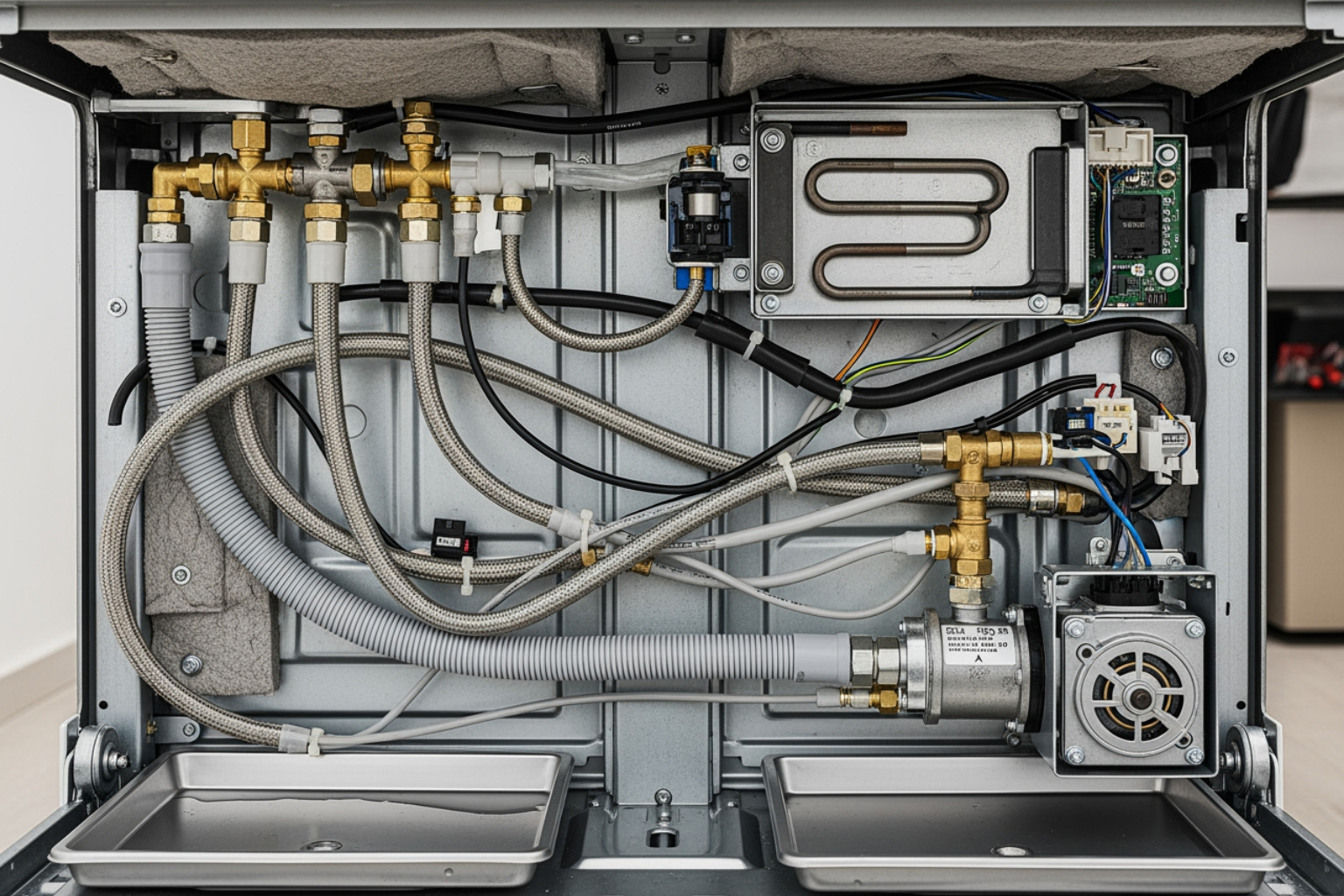
The most common causes of dishwasher leaks generally fall into a few categories: worn parts, clogged components, and installation errors.
Door and Gasket Issues
The door seal, also known as the gasket, plays a crucial role in preventing leaks. It creates a watertight barrier when the dishwasher door is closed.
- Worn door seal/cracked gasket: Over time, the rubber or silicone gasket around the dishwasher door can become hard, cracked, torn, or simply worn out. This prevents a tight seal, allowing water to escape. If water is accumulating directly under the door, a faulty door seal is a likely culprit.
- DIY Fix: Inspect the gasket thoroughly. If it’s damaged, you can often gently remove the old one and press a new one into place. Soaking a new gasket in warm, soapy water can make it more pliable for easier installation.
- Loose door latch: If the door isn’t latching tightly, the gasket can’t do its job. The latch might be bent, loose, or simply not engaging properly.
- DIY Fix: Try tightening the door latch with a screwdriver. If the latch mechanism itself is broken, it may need to be replaced. Also, check for loose dishwasher door hinges.
- Debris on gasket: Sometimes, food particles or detergent residue can build up on the gasket, preventing a good seal.
- DIY Fix: Wipe down the door gasket occasionally with a cloth and mild cleanser to remove debris and inspect for hardening.
Clogs and Drainage Problems
A significant contributor to dishwasher leak damage is anything that impedes proper drainage. When water can’t drain out, it often finds another way – usually onto your kitchen floor.
- Clogged dishwasher filter: The dishwasher filter traps food particles to prevent them from recirculating or damaging the drain pump. If it gets clogged, water can back up and leak from the front of the dishwasher or even cause the unit to overfill.
- DIY Fix: Locate the filter at the bottom of the dishwasher (usually a cylindrical or flat screen). Remove it and rinse it thoroughly under warm water. Use a soft brush to scrub away stubborn food debris, grease, and residue. Regular cleaning helps prevent this issue.
- Blocked drain hose: The drain hose carries wastewater from the dishwasher to your sink’s drain or garbage disposal. If it becomes kinked, clogged with food debris, or disconnected, water can back up and leak.
- DIY Fix: Check the drain hose for kinks or blockages. Ensure it’s securely connected to both the dishwasher and the sink drain. If it’s cracked or damaged, it will need to be replaced, ideally with a reinforced steel-braided one for better durability.
- Improper installation or leveling: Your dishwasher needs to be perfectly level to function correctly and prevent water from pooling where it shouldn’t. If it’s not level, water can gather under the unit or slosh over the edge, leading to leaks.
- DIY Fix: Place a level on the bottom edge of your dishwasher. If it’s misaligned, use shims under the unit’s adjustable feet and adjust them until the appliance is perfectly level. Also, ensure the dishwasher is securely fastened to the countertop to prevent shifting during cycles.
Internal Component Failures
Sometimes the leak originates from internal components that are harder to access or diagnose.
- Faulty water inlet valve: This valve controls the flow of water into the dishwasher. If it’s stuck open or malfunctioning, the dishwasher can overfill, causing water to spill out.
- DIY Fix: This is often a component best left to a professional appliance technician, as it involves water supply connections and electrical components.
- Cracked tub: In older dishwashers, the plastic or stainless steel tub can develop cracks due to corrosion from detergents and minerals, or just general wear and tear. Water can then seep through these cracks and collect underneath the dishwasher.
- DIY Fix: A cracked tub usually requires professional repair or, more often, a replacement of the entire dishwasher, especially if the unit is older.
- Worn pump bearings/pump issues: The dishwasher has pumps for both washing (circulating water) and draining. If these pumps fail electrically or mechanically, they can cause leaks or prevent proper operation. You might hear strange noises.
- DIY Fix: Listen for specific noises:
- A loud buzzing noise indicates a blocked or dirty drain pump or wash pump. If jammed, remove the blockage.
- Humming, grinding, or squealing noises also point to a pump problem.
- A squealing or droning sound suggests a failing wash pump. Check for blockages and consider replacing the wash pump.
- A scraping sound suggests a damaged impeller or impeller fin scraping against the pump housing. You may be able to replace just the impeller.
- If a new drain pump should only take a few minutes to remove all water from your dishwasher, but it’s taking longer or leaving standing water, it’s a sign of a bad pump. You may have to replace the drain pump if there are no blockages. You can also disconnect the drain pump from the system and test its continuity; if the measured impedance is 15-40Ω, it’s likely fine. If the pump just hums when it should be running, the entire pump assembly might need replacement.
- DIY Fix: Listen for specific noises:
Always remember to disconnect power to the unit and shut off the water supply before performing any repairs or inspections on your dishwasher to prevent electrical shock and further water damage.
The Aftermath: Understanding Dishwasher Leak Damage
Once a dishwasher leak begins, it’s a race against time. The speed and extent of dishwasher leak damage can be surprising, turning a minor appliance issue into a major home repair project. This is where a small leak truly becomes a big problem.
The Impact of Dishwasher Leak Damage on Kitchen Materials
Water doesn’t discriminate; it seeks the path of least resistance and soaks into everything porous it encounters.
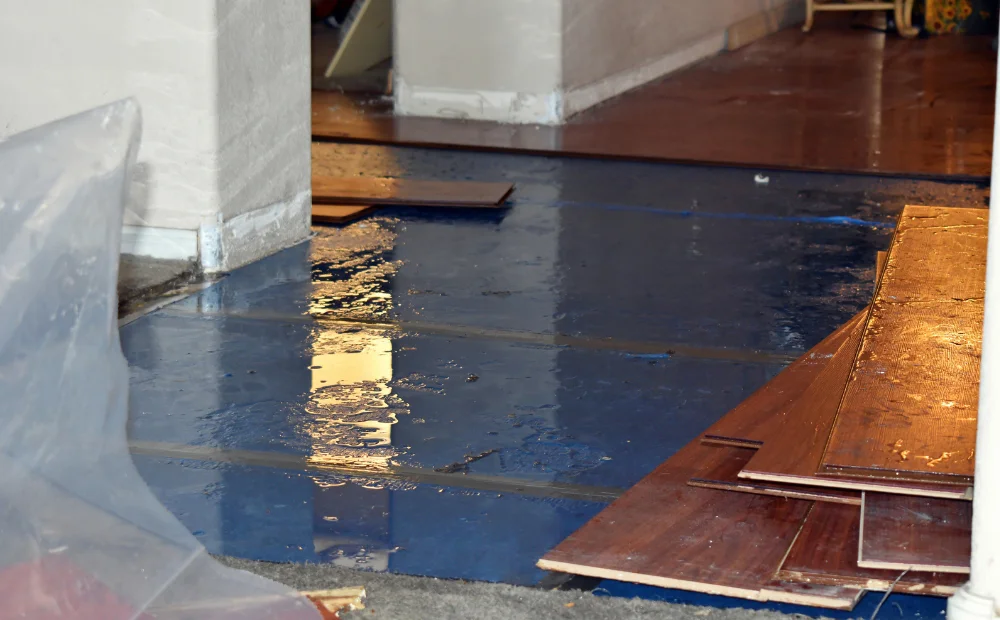
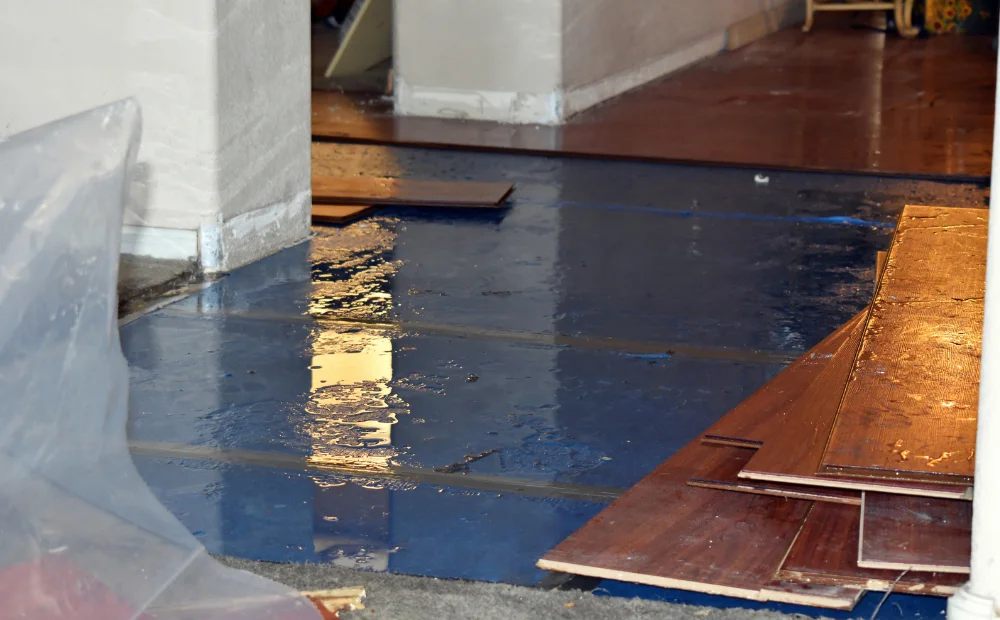
- How quickly can water damage occur from a dishwasher leak? Water damage can occur within just a couple of hours. This means that even a leak that starts while you’re out running errands can cause significant harm by the time you return.
- How can a leaking dishwasher cause damage to a kitchen? Water seeps under the appliance, across the floor, and into surrounding structures. It can wick up into cabinets, saturate subflooring, and even travel to adjacent rooms or down to lower levels. We’ve seen cases in Arizona where water from a kitchen leak traveled across the floor and down into a basement, affecting ceilings and carpets.
The types of materials in a kitchen that are most vulnerable to water damage from a dishwasher leak include:
- Hardwood floors: Highly susceptible to warping, buckling, cupping, and discoloration. Once wood absorbs water, it’s very difficult to restore its original shape and integrity.
- Laminate flooring: The particleboard core of laminate swells significantly when exposed to water, leading to irreversible bubbling, lifting, and delamination.
- Kitchen cabinets: Made from wood, particleboard, or MDF, cabinets will absorb water, causing them to swell, warp, and weaken. Swollen cabinet doors or jambs are clear signs of water absorption and potential deterioration.
- Drywall: Water-saturated drywall quickly loses its structural integrity, becoming soft and prone to mold growth.
- Subflooring: The structural layer beneath your finished floor can become saturated, leading to weakening, rot, and providing a perfect breeding ground for mold. This can compromise the stability of your kitchen floor.
- Electrical wiring: Water can damage electrical components and wiring, creating safety hazards.
Health Risks from Hidden Dishwasher Leak Damage
Beyond the visible destruction to your kitchen, hidden dishwasher leak damage poses significant health risks, especially in the warm, dry climate of Arizona where mold can thrive once it finds moisture.
- What are the potential health risks associated with water damage and mold growth from a dishwasher leak?
- Mold and mildew: As mentioned, mold and mildew can develop in wet areas in as little as 24-48 hours. Mold spores, naturally occurring everywhere, quickly colonize damp surfaces. Once established, mold can spread rapidly and extensively, often hidden behind walls or under flooring.
- Respiratory issues: Exposure to mold spores can trigger allergic reactions, asthma attacks, and other respiratory problems in sensitive individuals. Symptoms can include coughing, sneezing, wheezing, nasal stuffiness, and eye irritation. For those with compromised immune systems, mold exposure can lead to more serious infections.
- Musty odors: The persistent musty smell associated with hidden water damage is often a sign of microbial growth. This odor can permeate your home and indicate an ongoing problem that needs to be addressed for both structural and health reasons.
Thorough drying and, if necessary, mold remediation are critical after any water damage incident. Porous items like drywall, carpet, and insulation may require complete removal if contaminated with mold, highlighting why quick and effective action is so important.
Immediate Steps for Damage Control
Finding a dishwasher leak damage situation can be alarming, but acting quickly and methodically is key to minimizing further harm. Safety first, always!
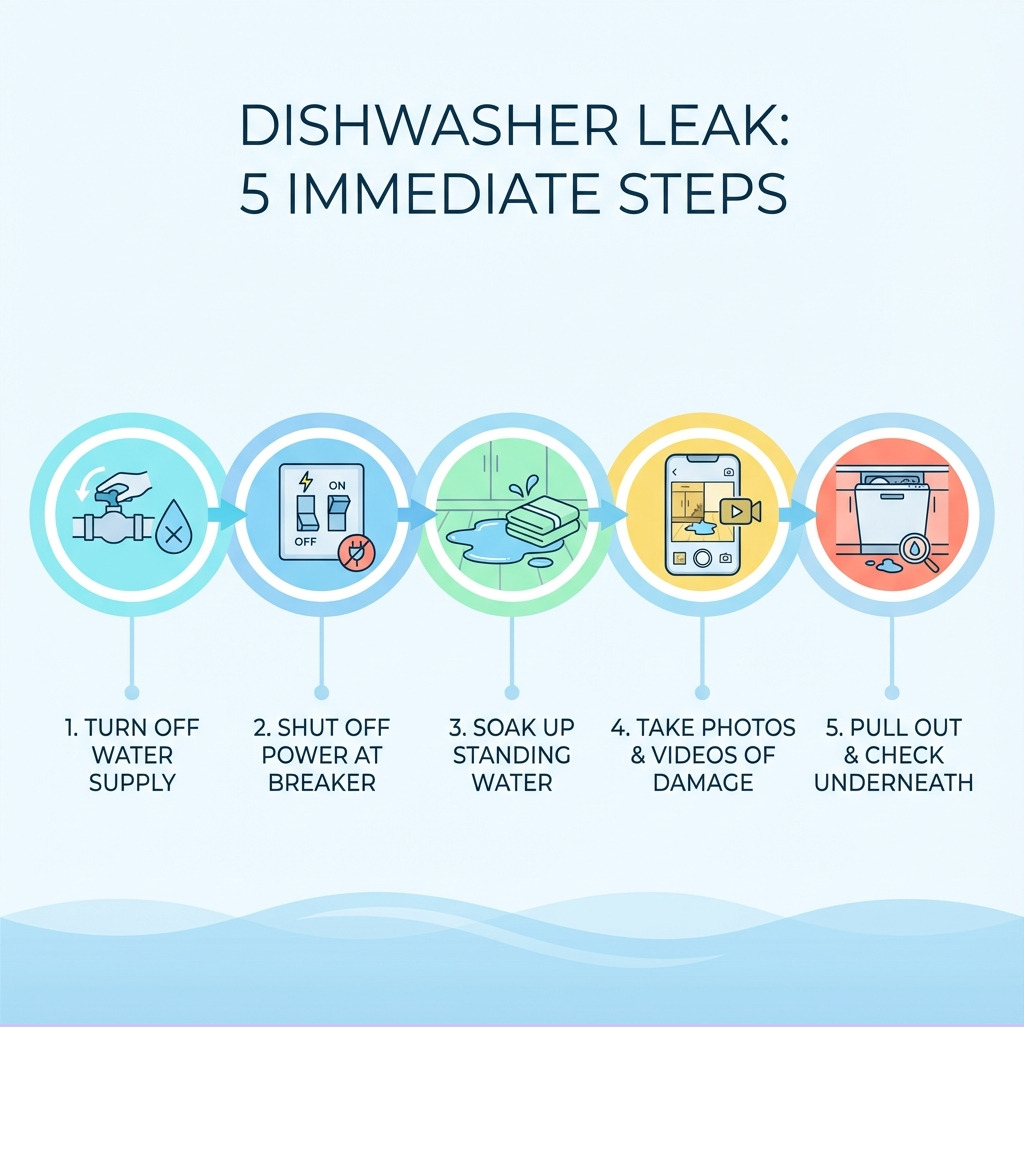
1. Stop the Water and Power
Your absolute first priority is to prevent more water from flowing and to eliminate any electrical hazards.
- Shut off water supply valve: Locate the water supply valve for your dishwasher. This is usually under the kitchen sink or behind the dishwasher itself. Turn it off immediately. If you can’t find a dedicated valve, you may need to turn off the main water supply to your house.
- Turn off power at the circuit breaker: Go to your home’s electrical panel (usually in the garage, basement, or a utility closet) and locate the circuit breaker labeled for your kitchen or dishwasher. Flip it to the “off” position. This prevents electrical shock and further damage to the appliance’s electronics if water has reached them.
2. Contain the Puddle and Document Everything
Once the water and power are off, focus on containment and documentation.
- Soak up standing water: Use towels, mops, or a wet/dry vacuum to soak up any visible water on the floor and around the dishwasher. Pull the unit out from under the counter if possible (after disconnecting water and power lines) to access any water pooled beneath it. The faster you remove the water, the less time it has to cause further damage.
- Take photos and videos: This step is crucial for your insurance claim. Document everything thoroughly. Take clear photos and videos of:
- The leak itself (if still visible).
- The water on the floor.
- Any damage to your flooring (discoloration, warping, lifting).
- Damage to cabinets (swelling, staining).
- Damage to baseboards or walls.
- The dishwasher model and serial number.
- The general area of your kitchen.
- Make sure to capture both wide shots and close-ups.
3. Assess and Call for Help
Now that the immediate emergency is handled, it’s time to assess the situation and decide on the next steps.
- Appliance repair vs. water damage restoration:
- If the leak was small, contained, and you caught it quickly, and there’s no visible damage to your home’s structure (flooring, cabinets, walls), you might just need an appliance repair technician to fix the dishwasher. You can attempt simple DIY fixes for common issues like door seals or clogged filters, but if the problem is internal or complex, call an appliance professional.
- However, if you observe significant water spreading, visible damage to your kitchen materials, a persistent musty smell, or suspect hidden moisture, it’s time to call a professional for water damage restoration. They have specialized equipment to detect hidden moisture, thoroughly dry affected areas, and prevent mold growth.
- When is it necessary to call a professional for dishwasher leak repair or water damage restoration?
- For appliance repair: Call a professional if DIY attempts fail, if the leak is from internal components (like pumps or inlet valves), or if you’re uncomfortable performing the repair yourself.
- For water damage restoration: Call immediately if water has seeped into your subflooring, cabinets, or walls; if you notice significant warping or swelling of materials; if there’s a musty smell; or if the leak has been ongoing for some time. Thorough drying with air movers and dehumidifiers is crucial, and that’s a job for experts.
Navigating Your Insurance Claim for Dishwasher Leaks
Dealing with dishwasher leak damage is stressful enough without having to steer the complexities of an insurance claim. Understanding your coverage is key, as policies can be confusing and often have specific conditions regarding water damage.
Generally, homeowner’s insurance policies in Arizona cover “sudden and accidental” water damage. This means if a dishwasher hose suddenly bursts or a component unexpectedly fails, causing a flood, it’s likely to be covered. However, things get tricky when the damage is deemed “gradual” or due to “lack of maintenance.”
For a deeper dive into this, we encourage you to read our guide on Why Covered Water Damage Isn’t Always Covered: What Arizona Homeowners Need to Know Before It’s Too Late.
The age of your dishwasher and your maintenance history can also play a role. Newer dishwashers with no prior issues are more likely to have leaks covered by insurance, as they support the “sudden and accidental” argument. Older dishwashers showing signs of neglect or long-term wear are less likely to have leaks covered, as insurers might argue the damage was preventable.
Why a Denied Water Damage Claim Can Happen
It’s disheartening to have a claim denied, especially when you’re already dealing with home damage. Several factors can lead to a denied water damage claim:
- Lack of maintenance: If the insurer can prove that the leak was caused by your failure to maintain the dishwasher (e.g., not replacing a clearly worn hose or ignoring a known slow drip), they may deny the claim. This is why regular maintenance and prompt repairs are so important.
- Slow leak exclusion: Many policies specifically exclude damage from slow, continuous leaks that occur over time, arguing that these should have been finded and addressed by the homeowner. A slow leak of one drop every 5 seconds yields over 1.7 gallons per day, or over 50 gallons per month, which can cause extensive damage before being noticed.
- Insufficient documentation: If you don’t have thorough photos, videos, and records of the damage and your immediate actions, it can be harder to prove the extent or nature of the loss.
- Disagreements on repair scope: Even if the claim isn’t denied outright, the insurer’s adjuster might undervalue the damage or dispute the necessary scope of repairs, leading to a lowball offer. Repairs for water damage can easily grow to thousands of dollars, or even tens of thousands of dollars, making an accurate assessment critical.
The Role of a Public Adjuster for Homeowners
When facing dishwasher leak damage and a potentially complex insurance claim, you don’t have to go it alone. This is where a public adjuster can be your strongest advocate.
We, Hudson Douglas Public Adjusters, work solely for you, the policyholder. Unlike the insurance company’s adjuster, whose loyalty lies with their employer, our priority is to ensure you receive a fair and complete settlement. We understand that property owners in Arizona, from Paradise Valley to San Tan Valley, are often stressed and unfamiliar with the intricacies of insurance claims.
Our role involves:
- Advocating for you: We become your voice in the claims process, handling all communication and negotiation with your insurance company.
- Ensuring a fair assessment: We thoroughly inspect and document all aspects of your dishwasher leak damage, including hidden damage that might be missed by the insurer’s adjuster. We prepare our own detailed estimate of repair costs, ensuring nothing is overlooked.
- Managing the claim process: We handle all the paperwork, deadlines, and follow-ups, taking the burden off your shoulders so you can focus on getting your home back in order.
- Maximizing your settlement: Our goal is to secure the maximum possible payout under your policy. We know the tactics insurance companies use and how to counter them effectively.
As a family-owned and operated business with over 40 years of experience serving Arizona homeowners and commercial property owners, we pride ourselves on our local roots and commitment to our community. We operate on a contingency basis, meaning there are no upfront fees. We receive 12% of the final payout, so you never pay out of pocket. We’re here to help you understand your options and feel confident in your claim. And for our Spanish-speaking clients, please know that we fluently communicate in both English and Spanish to fully support your needs.
Conclusion: Protecting Your Home from Future Leaks
A dishwasher leak damage incident is undoubtedly stressful, but as we’ve discussed, you can handle it with the right steps and support. By understanding the common causes, recognizing the signs, and taking immediate action, you can significantly mitigate the damage to your cherished Arizona home.
Prevention is always your best defense. Regular maintenance is crucial for extending your dishwasher’s lifespan and preventing future leaks. This includes:
- Cleaning the dishwasher filter regularly: This prevents clogs and ensures proper drainage.
- Inspecting door seals (gaskets): Check for cracks, tears, or debris and clean or replace as needed.
- Checking hoses and connections: Periodically inspect the water supply and drain hoses for signs of wear, kinks, or loose connections. Consider replacing old rubber hoses with reinforced steel-braided ones every five years.
- Ensuring proper leveling: Make sure your dishwasher remains level to prevent water from pooling.
- Using the correct detergent: Avoid using regular dish soap, which can cause excessive suds and lead to leaks.
Quick action is paramount when a leak occurs. The statistics are clear: water damage can occur within hours, and mold can start growing within 24-48 hours. Your swift response directly impacts the extent of damage and the ease of restoration.
If you’re facing a complex insurance claim in Arizona due to dishwasher leak damage, you don’t have to go it alone. Hudson Douglas Public Adjusters is a local, family-owned firm that works only for property owners like you. We’re here to help our neighbors get a fair and full settlement, with support available in English and Spanish. For help with your Water Damage claim, contact us for a no-obligation consultation. We’re available 24/7, ready to bring our 40+ years of expertise to your side.