Why a Denied Water Damage Claim Requires Immediate Action
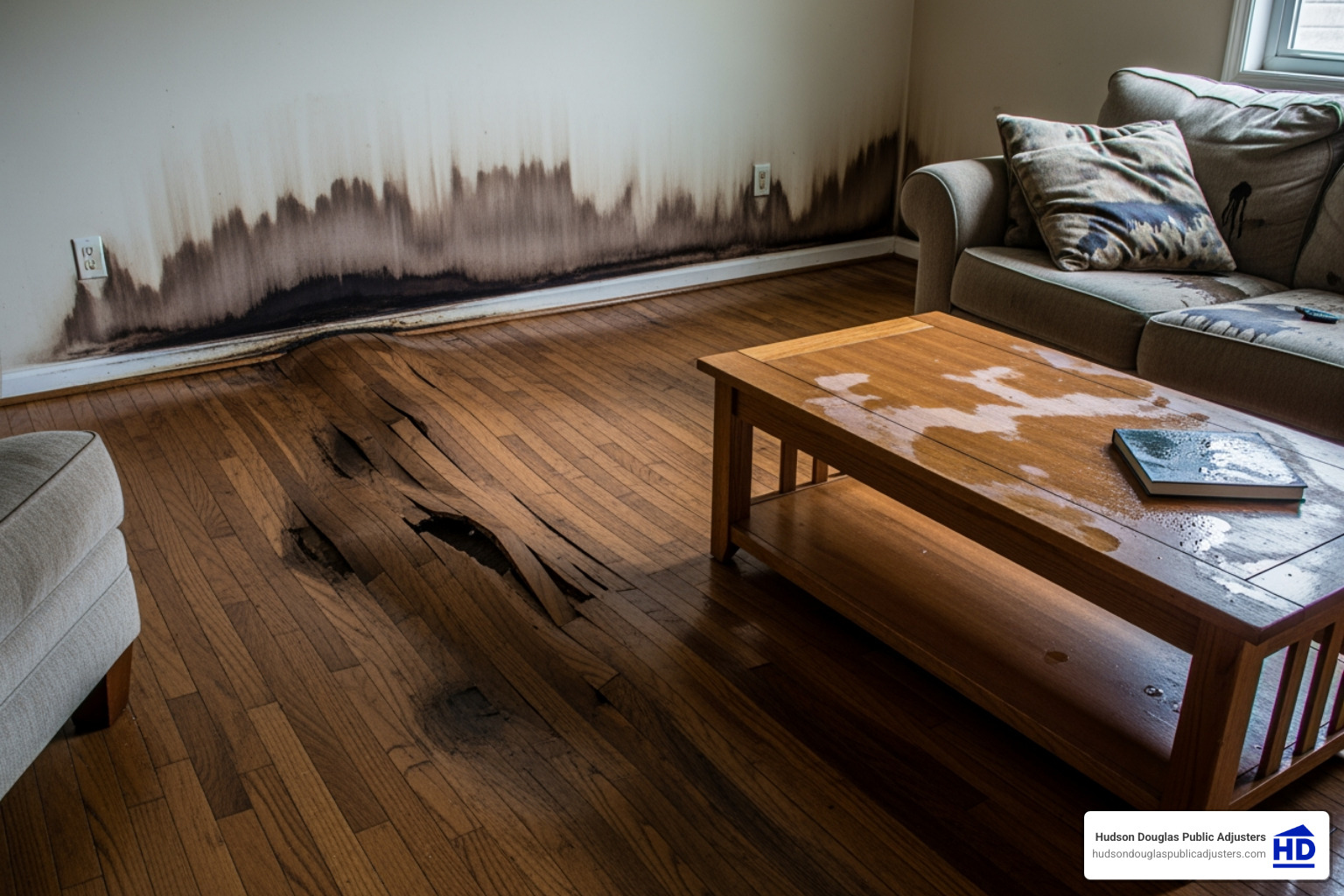
A denied water damage claim can feel like a devastating second blow. If your insurance company has rejected your claim, you need to act quickly, but you also need to understand your options and rights before taking the next step.
What to Do After Your Water Damage Claim Is Denied:
- Review your denial letter to understand the specific reason for rejection.
- Compare the denial reason against your policy language.
- Gather comprehensive evidence like photos, videos, and repair estimates.
- Submit a formal written appeal to your insurer within your policy’s deadline.
- Consider hiring a public adjuster to challenge the denial and negotiate for you.
- File a complaint with your state insurance department if the insurer acts in bad faith.
- Consult a property damage attorney for complex cases or suspected bad faith.
Water damage claims are remarkably common. Nearly a quarter of all homeowners’ insurance claims in a recent year involved water damage, with the average claim value exceeding $12,500. Yet insurers frequently deny these claims for reasons like policy exclusions, lack of maintenance, or insufficient documentation.
The good news? A denial letter is not the final word. You have the right to appeal, and many denied claims are successfully overturned when homeowners understand the process and present a well-documented case.
This guide walks you through every step of challenging your denied water damage claim—from understanding why insurers reject claims to building a compelling appeal and knowing when to escalate your dispute. You’ll learn how to fight for the coverage you paid for.
Understanding Why Your Claim Was Denied
To effectively challenge a denial, you must first understand the insurance company’s reasoning. This section breaks down the most frequent reasons insurers reject water damage claims.
Common Reasons for a Denied Water Damage Claim
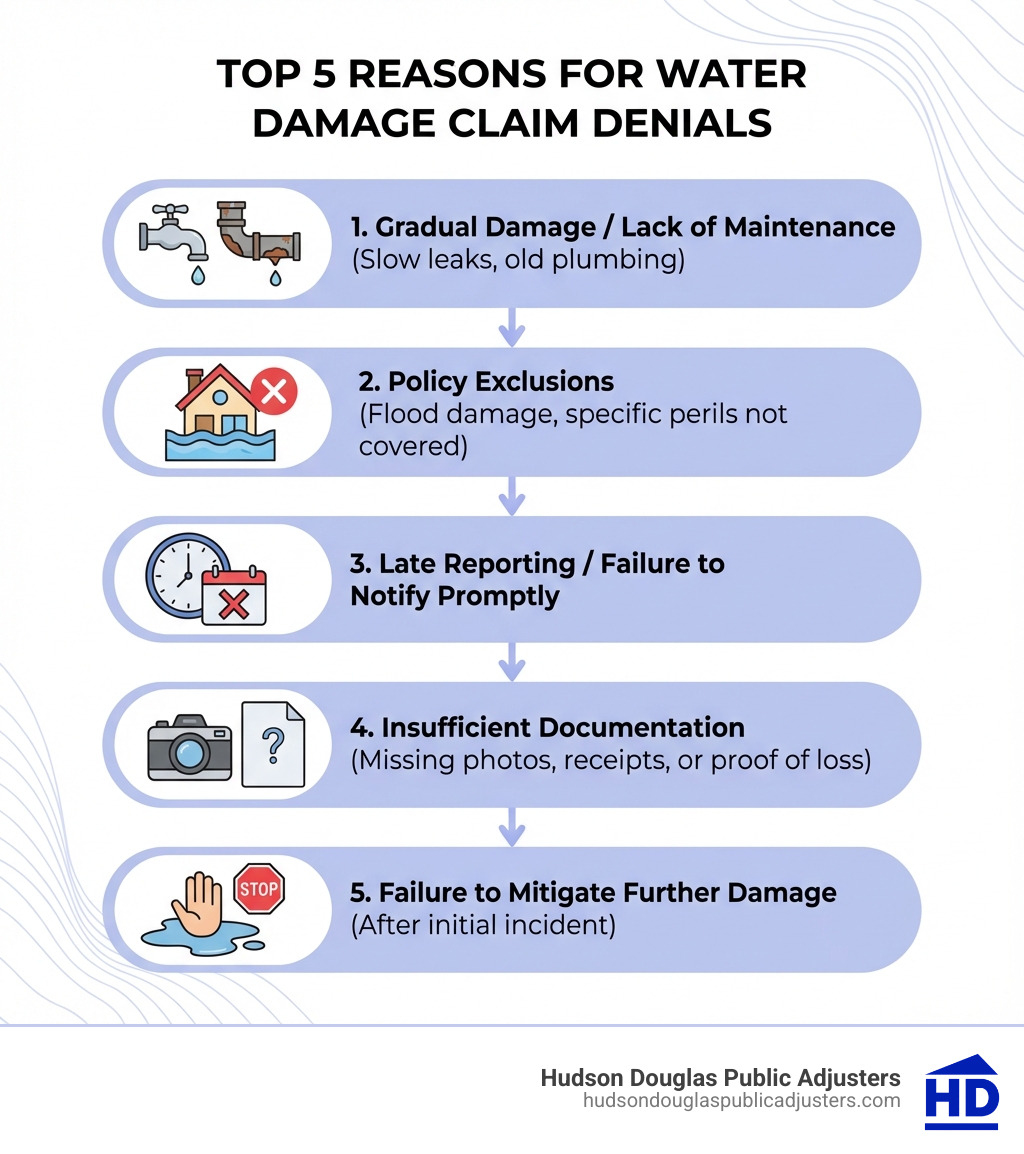
When your water damage claim is denied, it often stems from a few recurring issues. Here are the most common reasons:
- Policy Exclusions: Your policy might explicitly exclude certain types of water damage, such as flood damage, sewage backups, or groundwater seepage, unless you’ve purchased specific endorsements.
- Lack of Maintenance: If the damage results from long-term neglect—like an unaddressed roof leak or old plumbing—your claim might be denied. Insurers argue such damage is preventable and not “sudden and accidental.”
- Negligence: If your actions (or inactions) directly caused or contributed to the damage, such as leaving a window open during a storm, the claim could be denied.
- Late Reporting: Policies have strict deadlines for reporting damage. Waiting too long can lead to a denial, as the insurer may argue the delay prevented a proper investigation or worsened the damage.
- Insufficient Documentation: Insurers need proof. A lack of adequate photos, videos, or estimates can result in a denial.
- Gradual Damage: Many denials hinge on the insurer classifying the damage as gradual, which is often excluded from standard policies.
Knowing these common reasons empowers you to prepare a stronger appeal.
The Critical Difference: Sudden vs. Gradual Damage
One of the most frequent battlegrounds in a denied water damage claim is the distinction between “sudden and accidental” and “gradual” damage. This difference is often the make-or-break factor.
| Feature | Sudden Damage | Gradual Damage |
|---|---|---|
| Definition | Occurs abruptly and unexpectedly. | Develops slowly over time due to wear and tear or neglected maintenance. |
| Examples | A burst pipe, a washing machine hose suddenly breaking, water damage from a sudden storm, or an appliance malfunction. | A slow leak under a sink causing rot, chronic seepage through a foundation, or an unaddressed roof leak. |
| Coverage Status | Typically covered by standard homeowners’ insurance. Policies usually cover sudden and accidental incidents like burst pipes. | Typically excluded. Insurers classify this as a maintenance issue, arguing it could have been prevented. If you fail to address a known leaky faucet for months, the resulting damage claim is likely to be denied. |
| Key Factor | The unexpected nature of the event. | The element of time and the homeowner’s responsibility for upkeep. |
If your insurer denies your claim by stating it was “gradual damage,” we can help you review the evidence to determine if a sudden, underlying event was the true cause.
Is It Water Damage or Flood Damage?
In insurance, the difference between “water damage” and “flood damage” is monumental and often catches homeowners off guard.
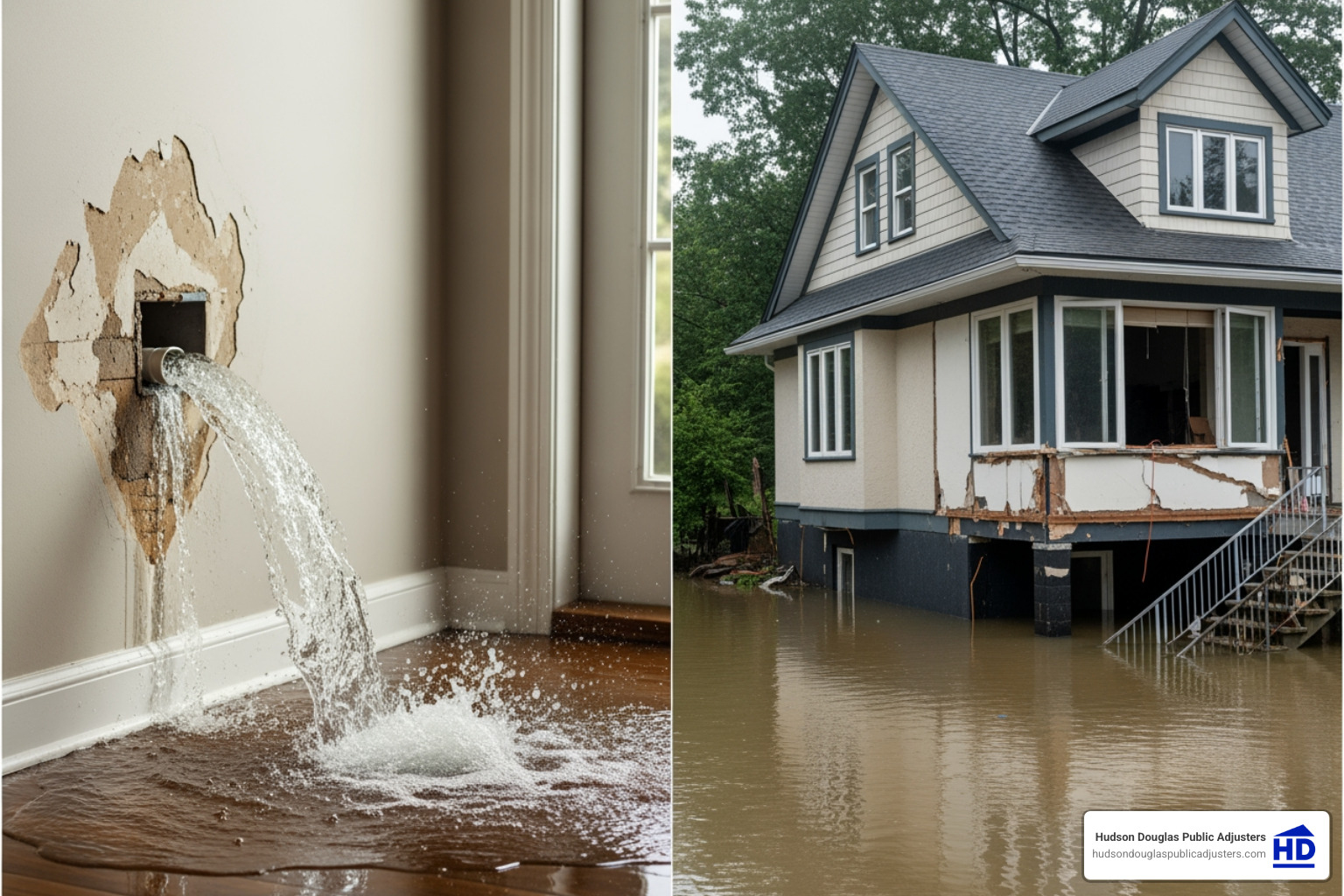
- Water Damage: In a standard policy, this typically refers to damage from water originating within your home, like a burst pipe, malfunctioning appliance, or a sudden roof leak from a storm. This is usually covered.
- Flood Damage: This is water rising from outside your home, such as an overflowing river or heavy rainfall. Standard homeowners’ policies almost universally exclude flood damage. For this, you need a separate flood insurance policy, often available through the National Flood Insurance Program (NFIP) or private insurers.
If your claim was denied because it was categorized as “flood damage,” it means the water originated from an external source. Understanding this distinction is vital.
Your Immediate Action Plan After Receiving a Denial
A denial letter isn’t the final word. It’s crucial to take these concrete steps immediately to protect your rights and prepare your appeal.
Step 1: Carefully Review Your Denial Letter and Policy
Your first and most important step is to read your denial letter and your entire insurance policy very carefully.

- Analyze the Denial Letter: The letter must state the specific reasons for rejection. Look for the exact policy language or exclusions cited by the insurer. This is your starting point for a rebuttal.
- Review Your Policy: Dig deep into your policy, paying close attention to the Declarations Page (summarizing coverage), the Exclusions Section, and any specific Water Damage Provisions.
- Understand Your Coverage: Knowing your insurance policy helps you challenge a denial by identifying if the insurer has misinterpreted the terms or if there’s a valid argument that your damage should be covered. This review is the foundation for a strong appeal.
Step 2: Request Your Complete Claim File from the Insurer
Next, formally request your complete claim file from the insurance company. You have a right to this information, which should contain:
- Communication logs (calls, emails, letters)
- The adjuster’s internal notes and observations
- Reports from any experts hired by the insurer
- All photos taken by the insurer’s team
- Any other documentation related to your claim
Reviewing this file allows you to see their playbook, understand their perspective, and identify potential inaccuracies.
Step 3: Don’t Delay—Understand Your Deadlines
Time is not on your side with a denied water damage claim. Act swiftly.
- Policy-Specific Time Limits for Appeal: Your policy will likely specify a deadline for appealing a denied claim, often 30 to 60 days. Missing this deadline could jeopardize your ability to challenge the denial.
- State Laws and Statutes of Limitations: Each state has legal time limits for pursuing legal action against an insurer. While these vary by state, some, like Louisiana, may have long periods for bad faith claims, though policies can sometimes shorten that window. It’s crucial to be aware of these deadlines in states like Alaska, Arizona, California, Colorado, New Mexico, Nevada, Oregon, Texas, Utah, and Washington.
Acting quickly preserves your rights and shows your insurer you are serious about pursuing your claim.
Building Your Case: How to Formally Dispute a Denied Water Damage Claim
With your initial review complete, it’s time to actively challenge the denial. This stage involves meticulous evidence gathering and formal communication.
Gathering Evidence to Appeal a Denied Water Damage Claim
A strong appeal for a denied water damage claim hinges on compelling evidence. The more thoroughly you document your case, the harder it is for the insurer to maintain its denial.
Here’s what you should gather:
- Photographic and Video Evidence: Take clear photos and videos of all damaged areas, the water source, and your mitigation efforts. Timestamps are helpful.
- Independent Contractor Estimates: Get detailed repair estimates from at least two reputable contractors. This provides an objective assessment of the damage, countering the insurer’s potentially low valuation.
- Repair Invoices and Receipts: Keep all receipts for temporary repairs or mitigation supplies (e.g., dehumidifiers, tarps) to show you acted proactively.
- Maintenance Records: If denied for “lack of maintenance,” provide invoices for roof inspections, plumbing repairs, or other upkeep to counter the claim.
- Communication Logs: Keep a detailed log of every conversation with your insurer, including dates, times, names, and a summary of what was discussed.
- Expert Reports: If you hired your own experts (e.g., a plumber, an engineer), include their independent reports.
The goal is to provide an undeniable picture of the damage, its cause, and why it should be covered. Organizations like United Policyholders offer a claim guidance library with helpful examples of forms and requests.
Writing and Submitting Your Formal Appeal Letter
After gathering evidence, write and submit a comprehensive appeal letter. It must be clear, professional, and well-supported.
Essential elements for your appeal letter:
- Your Name, Policy Number, and Claim Number.
- Date of Loss.
- A Clear Statement of Appeal: Explicitly state you are appealing the denial.
- Point-by-Point Rebuttal: Address each reason for denial from the insurer’s letter, explaining why it’s incorrect and citing your evidence.
- Reference Specific Policy Language: Quote sections of your policy that support your claim.
- List of Enclosed Evidence: Create a bulleted list of all attached supporting documents.
- Professional Tone: Maintain a calm, factual tone.
- Requested Action: Clearly state what you want the insurer to do (e.g., re-evaluate and approve coverage).
How to submit it: Send your appeal via certified mail with a return receipt requested. This provides proof of delivery. Keep copies of everything.
Considering a Second Opinion from a Public Adjuster
When facing a denied water damage claim, you don’t have to fight the insurance company alone. A public adjuster can be your most valuable ally.
- Role of a Public Adjuster: Unlike the insurer’s adjuster, a public adjuster works exclusively for you, the policyholder. Their job is to represent your best interests.
- Independent Damage Assessment: A public adjuster conducts their own thorough assessment, often finding damage or costs the company adjuster overlooked.
- Negotiation Expertise: Public adjusters are experts in insurance policies and claim negotiation. They can effectively counter an insurer’s arguments for denial and know how to present a comprehensive claim to maximize your payout.
- Advocacy and Time-Saving: A public adjuster handles all communication and negotiations, freeing you to focus on recovery.
- No Upfront Fees: Many public adjusters, including us at Hudson Douglas Public Adjusters, work on a contingency basis. We don’t get paid unless you do, and our fee is a percentage of the final settlement.
Getting a second opinion from a public adjuster can significantly improve your chances of overturning a denial and securing a fair settlement.
Escalating Your Dispute: Advanced Options and Legal Rights
If your internal appeal for a denied water damage claim is unsuccessful, you still have powerful options to pursue the compensation you deserve.
Identifying and Leveraging Insurance Bad Faith
Sometimes, a denial isn’t just a disagreement; it can be a sign of insurance bad faith. This occurs when your insurer unreasonably denies a valid claim or fails to handle it properly.
Signs of insurance bad faith include:
- Unreasonable Delays in investigating or paying a claim.
- Failure to Conduct a Thorough Investigation before denying a claim.
- Misrepresenting Policy Terms to avoid payment.
- Lowball Settlement Offers that are far below the actual value of your damages.
- Refusing to Provide a Reason for Denial in writing.
- Using Threatening or Intimidating Tactics to discourage you.
If you suspect bad faith, document everything. This can be crucial leverage for further legal action.
Alternative Dispute Resolution: Appraisal and Mediation
Before filing a lawsuit, consider Alternative Dispute Resolution (ADR).
- Appraisal: This is used when you and the insurer agree the loss is covered but disagree on the cost of repairs. Each side hires an appraiser, and they select a neutral umpire to make a binding decision if they can’t agree.
- Mediation: A neutral mediator helps you and the insurer negotiate a settlement. The mediator facilitates discussion but doesn’t make decisions, and the process is usually non-binding.
- Filing a Complaint with Your State’s Department of Insurance: You can file a formal complaint if you believe your claim was unfairly denied. While the department won’t resolve your specific dispute, it can investigate the insurer’s conduct, which may prompt a re-evaluation. For more insights, you can refer to resources on how to fight a denied homeowners insurance claim.
When to Involve a Property Damage Attorney
While a public adjuster can often resolve disputes, legal counsel becomes essential in certain situations.
Consider contacting a property damage attorney if:
- Your claim involves complex legal issues or policy language.
- You have strong evidence of insurance bad faith.
- The insurer is unresponsive or threatening.
- Your claim involves extensive damage and high costs.
- A lawsuit is necessary after all other options have failed.
Potential Outcomes of Appealing:
- Claim Reversal: The insurer agrees to pay for the damages.
- Partial Payment: The insurer covers some, but not all, damages.
- Negotiated Settlement: You reach a mutually agreeable amount through ADR or direct negotiation.
- Litigation: A lawsuit could result in a court-ordered settlement.
Look for attorneys specializing in property insurance claims in your state (Alaska, Arizona, California, Colorado, New Mexico, Nevada, Oregon, Texas, Utah, Washington).
Conclusion: Take Control of Your Denied Claim
A denied water damage claim is a serious setback, but it is not the end of the road. By understanding your policy, carefully documenting your case, and formally appealing the decision, you can successfully challenge your insurer’s denial. For complex claims or when you need an expert advocate on your side from the start, partnering with a public adjuster can make all the difference. We, at Hudson Douglas Public Adjusters, work exclusively for you, the policyholder, to ensure you receive the maximum settlement you are entitled to.
Take the first step toward overturning your denial. Get a free, no-obligation consultation on your water damage claim today.