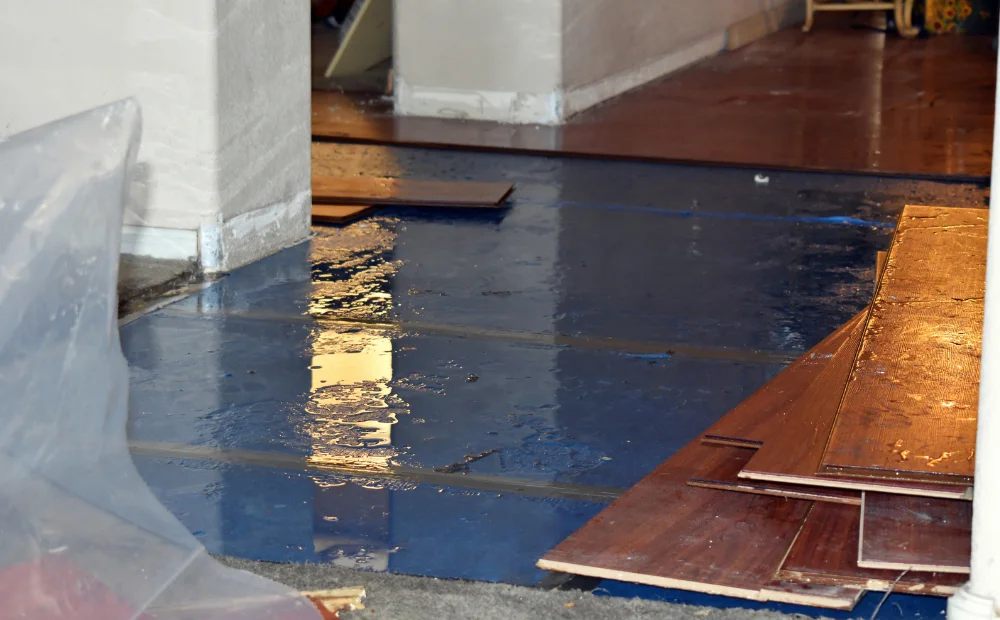
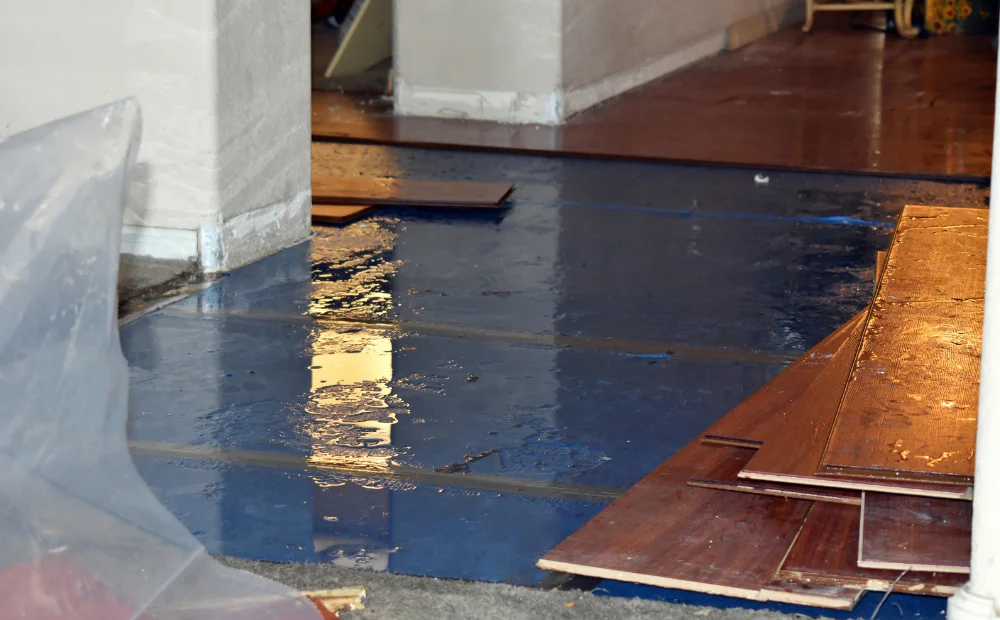
What Are Water Damage Exclusions — and Why Do They Matter?
Water damage exclusions are specific clauses in homeowners and commercial property insurance policies that limit or completely deny coverage for certain types of water-related losses.
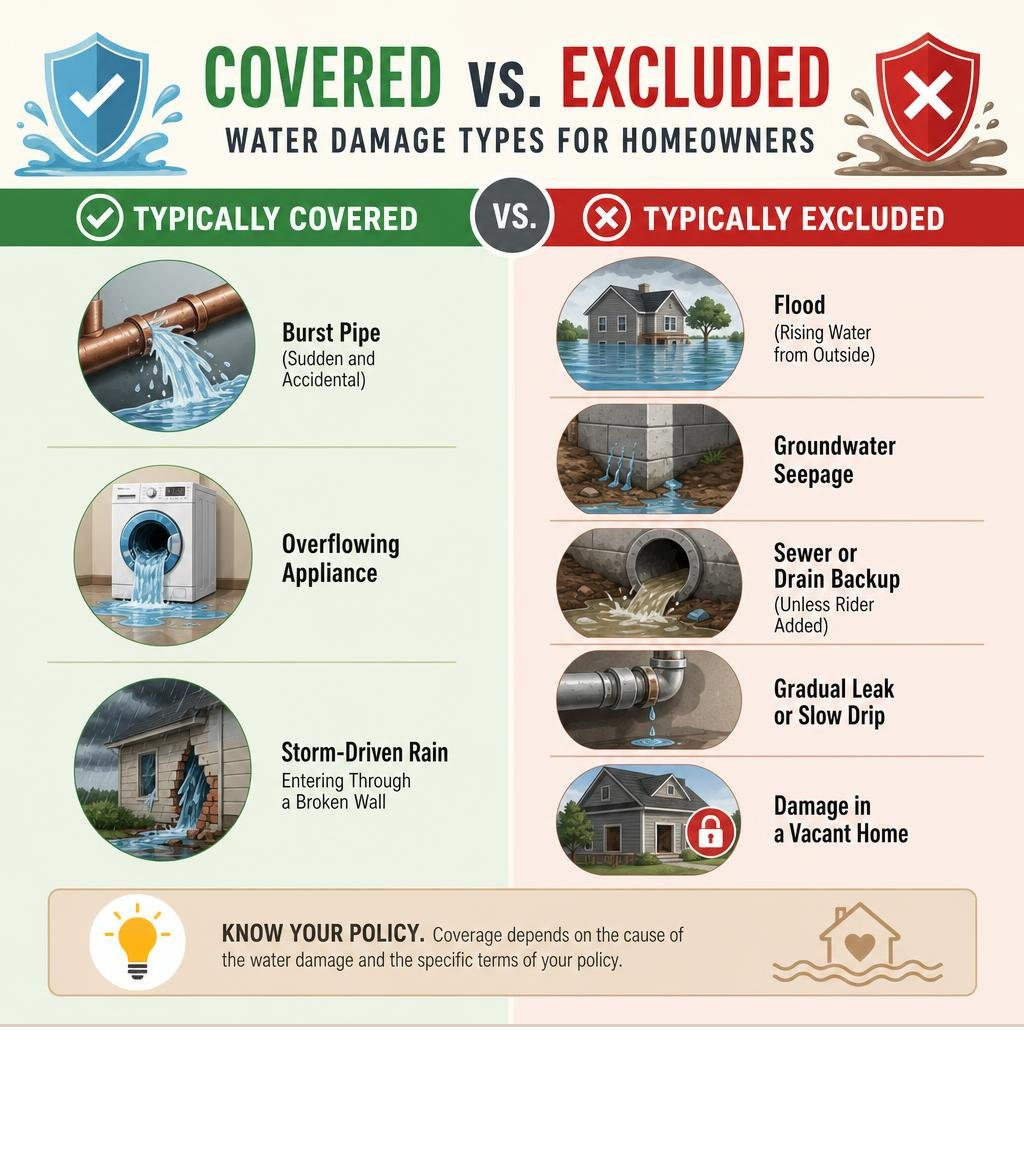
Here’s a quick breakdown of what’s typically covered vs. excluded:
| Water Damage Type | Typically Covered? |
|---|---|
| Burst pipe (sudden and accidental) | Yes |
| Overflowing appliance | Yes |
| Storm-driven rain entering through a broken wall | Often yes |
| Flood (rising water from outside) | No — requires separate policy |
| Groundwater seepage | No |
| Sewer or drain backup | No (unless rider added) |
| Gradual leak or slow drip | No |
| Damage in a vacant home | Often no |
These exclusions affect more policyholders than most people realize. Water damage accounts for roughly one in three homeowners insurance claims — and a significant portion of those claims are denied or underpaid because of exclusion language buried deep in the policy.
Arizona properties face real exposure here. Monsoon season brings sudden, heavy rainfall that can push water into foundations and living spaces. Aging plumbing in older Phoenix-area homes creates leak risk year-round. And many homeowners only learn what their policy doesn’t cover after they’ve already filed a claim.
That moment — when the insurer points to an exclusion clause — is one of the most stressful parts of owning property. The language is dense, the reasoning can feel arbitrary, and it’s hard to know if the denial is even legitimate.
This guide walks you through what water damage exclusions actually mean, how courts have interpreted them, and what your options are when a claim gets denied.
Simple guide to Water Damage Exclusions:
Navigating the Fine Print of Water Damage Exclusions
When you open your policy document, the first thing to understand is that insurance policies generally fall into one of two categories: “all-risk” (sometimes called open perils) or “named peril” policies.
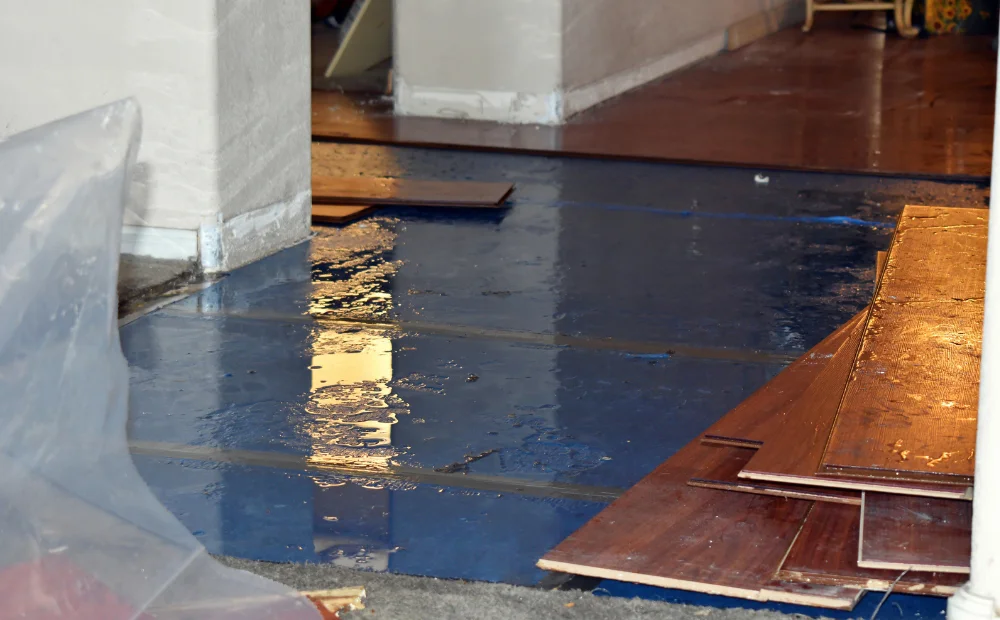
An all-risk policy is the most common type of coverage for residential dwellings. It is designed to cover every conceivable source of physical damage unless that specific cause is explicitly listed under the policy’s exclusions section. If a pipe bursts and floods your hallway in Scottsdale or Chandler, the carrier must pay for the repairs unless they can point to a specific clause that lets them off the hook.
Conversely, a named peril policy (frequently used for personal property or lower-cost insurance plans) only covers losses caused by events explicitly listed in the contract, such as fire, lightning, or windstorms. If the cause of the water damage is not on that list, you do not have coverage.
Regardless of which policy type you hold, the insurer will rely heavily on water damage exclusion forms to narrow their liability. These forms are standardized addenda that rewrite or expand the basic exclusions in your policy. They outline exactly what types of water the insurance company refuses to pay for, and they are written with extreme precision to protect the insurance company’s bottom line. Understanding these forms is the first step in knowing how your insurer will evaluate a claim.
Defining Flood, Surface Water, and Groundwater
One of the most common battlegrounds between policyholders and insurance adjusters is how different types of water are defined. Insurance companies use very specific, legally tested definitions for terms like “flood,” “surface water,” and “groundwater.” If your property in Mesa or Gilbert experiences water intrusion, the exact origin of that water determines whether you get a check or a denial letter.
- Surface Water Runoff: This refers to water that collects on the surface of the ground from natural sources like torrential rainfall or melting snow, without joining a defined channel or watercourse. During a summer monsoon in Paradise Valley, if rain pools in your yard and flows over your threshold, the insurer will classify this as excluded “surface water.”
- Groundwater Seepage: This is water that exists beneath the earth’s surface. It presses against your foundation, crawls up through concrete slabs, or leaks into basements. Standard property policies almost universally exclude groundwater damage, viewing it as a natural hydrostatic pressure issue that homeowners must manage through proper grading and maintenance.
- Sewer Backup and Water Service Line Failures: If a municipal sewer main backs up and sends raw sewage through your drains, or if an underground water service line ruptures on your property, standard policies do not cover the ensuing mess. Under standard insurance definitions, raw sewage and water backing up through drains are excluded unless you have explicitly purchased an optional endorsement.
Flood Insurance Requirements and Differences
Because standard homeowners policies exclude floods, property owners in high-risk zones must secure separate coverage. But how do you know if you need it, and how does it work?
In Arizona, while we are known for our dry desert climate, sudden flash flooding is a serious hazard. High-risk flood zones exist around desert washes, low-lying alluvial plains, and areas with poor municipal drainage. If you own a mortgaged property financed by a federally backed lender in a government-designated Special Flood Hazard Area (SFHA), you are legally required to carry flood insurance.
Flood insurance is primarily managed through the National Flood Insurance Program (NFIP), which is regulated by FEMA. Because NFIP rates are standardized, a policy will cost the same amount regardless of which private insurance agency writes it for you.
It is vital to recognize that flood insurance is entirely separate from your standard homeowners policy. While your standard policy might bundle your dwelling and personal belongings together, an NFIP policy requires you to purchase separate limits for the building structure and your personal contents. Furthermore, the NFIP defines a “flood” strictly as a general and temporary condition of partial or complete inundation of two or more acres of normally dry land area, or of two or more properties. If only your home is affected by pooling rainwater, the NFIP might not recognize it as a flood, while your standard policy will still exclude it as surface water—leaving you in a dangerous coverage gap.
Sudden and Accidental vs. Gradual Water Damage
If there is one distinction that every Arizona property owner must understand, it is the difference between “sudden and accidental” water damage and “gradual” water damage.
Standard property insurance is designed to protect you against unexpected, sudden emergencies. If a washing machine supply line suddenly splits and floods your laundry room, or if a copper pipe under your sink bursts, that is a covered event. The key is that the event happened without warning and required immediate emergency response.
On the flip side, gradual water damage is caused by slow, continuous leaks, deterioration, rust, or neglected maintenance. If a pipe behind your drywall has been slowly dripping for months, causing rot and decay, the insurance company will deny the claim. They will argue that the damage occurred over an extended period and that it was your responsibility as a property owner to identify and fix the issue before it caused structural harm.
To help you visualize how insurance adjusters split these claims down the middle, we have put together this comparison:
| Feature | Sudden & Accidental Damage | Gradual Water Damage |
|---|---|---|
| Pace of Event | Happens in an instant (minutes or hours). | Occurs slowly over days, weeks, or months. |
| Typical Cause | Ruptured water heater, burst pipe, appliance failure. | Slow pipe drips, roof leaks from old shingles, slow foundation seepage. |
| Coverage Status | Generally Covered under standard policies. | Generally Excluded as a maintenance issue. |
| Evidence | Clean water, sudden pressure drop, immediate pooling. | Mold, rot, rusted tacks, warped wood, musty odors. |
To dig deeper into why these distinctions exist and how insurance companies use them to limit their financial exposure, read our guide on Why Covered Water Damage Isn’t Always Covered.
The 14-Day Rule and Delayed Discovery
Many modern property policies contain a strict temporal limitation often referred to as the 14-day rule. This clause states that any water damage caused by constant, repeated, or continuous seepage or leakage of water over a period of 14 days or more is completely excluded from coverage.
This rule is incredibly problematic for homeowners because we do not live in glass houses. A slow pinhole leak inside a wall cavity in your kitchen or bathroom can go entirely unnoticed for weeks. By the time you notice a musty smell, peeling paint, or a soft spot on the drywall, the leak has likely been active for more than 14 days.
When you file the claim, the insurance company will send out an adjuster or a forensic engineer. These vendors are trained to look for clues like rusted pipe brackets, deep wood rot, or established mold colonies to prove the leak has been active for more than two weeks. Because mold can develop rapidly within 24 to 48 hours if humidity levels exceed 60%, its presence alone doesn’t prove a long-term leak, but insurers will often use it as leverage to deny your claim under the 14-day exclusion.
If you are currently facing a denial where the insurer claims your leak is “too old” to cover, you can find a detailed breakdown of how to fight back in The Complete Guide to Why Insurance Isn’t Paying Water Damage Claims.
Legal Interpretations and Policy Provisions
Because water damage exclusions are so restrictive, they are frequently litigated in court. Over the years, legal battles have shaped how these clauses are applied, particularly regarding whether the water source was natural or man-made.
Historically, many courts have ruled that standard water damage exclusions—which bar coverage for floods, surface water, and groundwater—only apply to naturally occurring phenomena. For example, if a natural river overflows, it is an excluded flood. But what happens if a municipal water main under a public street breaks and sends a torrent of water into your home?
In the landmark case Sosa v. Mass. Bay Ins. Co., a municipal water main ruptured, sending water gushing into the street and eventually flooding the plaintiff’s basement. The insurer denied the claim, pointing to the standard water damage exclusion. However, the court ruled in favor of the policyholder, stating that the exclusion did not clearly bar coverage for water originating from a broken man-made municipal structure. The court emphasized that coverage provisions should be interpreted broadly, while exclusions must be construed narrowly.
How Courts Interpret Ambiguous Water Damage Exclusions
When an insurance policy is poorly drafted or contains vague terminology, courts generally apply the principle of contra proferentem (interpreting ambiguities against the drafter). Since the insurance company wrote the contract, any ambiguous language is resolved in favor of the policyholder’s reasonable expectations.
For instance, if a policy excludes “surface water” but fails to define it, and your property is damaged by water that was diverted or channeled by man-made structures (like a neighbor’s grading or an incomplete municipal storm drain), courts often rule that the water lost its natural character as surface water once it was channeled. In these cases, the exclusion may not apply.
If you are a commercial property owner, these legal nuances are even more critical, as commercial policies often feature unique language regarding kinetic water force vs. chemical water damage. For a detailed legal analysis of these distinctions, see The Water Damage Exclusion And Your Commercial Property Insurance.
Anti-Concurrent Cause Provisions
To bypass policyholder-friendly court rulings, insurance companies introduced anti-concurrent cause (ACC) provisions.
An ACC provision states that if a loss is caused by a combination of a covered peril (such as a pipe bursting or wind damage) and an excluded peril (such as a flood or groundwater), the entire loss is excluded from coverage. It does not matter which event happened first or which was the primary cause of the damage.
Overcoming Exclusions with Endorsements and Riders
The good news is that you do not have to accept these gaps in coverage. You can customize your insurance policy by adding endorsements (also called riders) that buy back coverage for excluded water events.
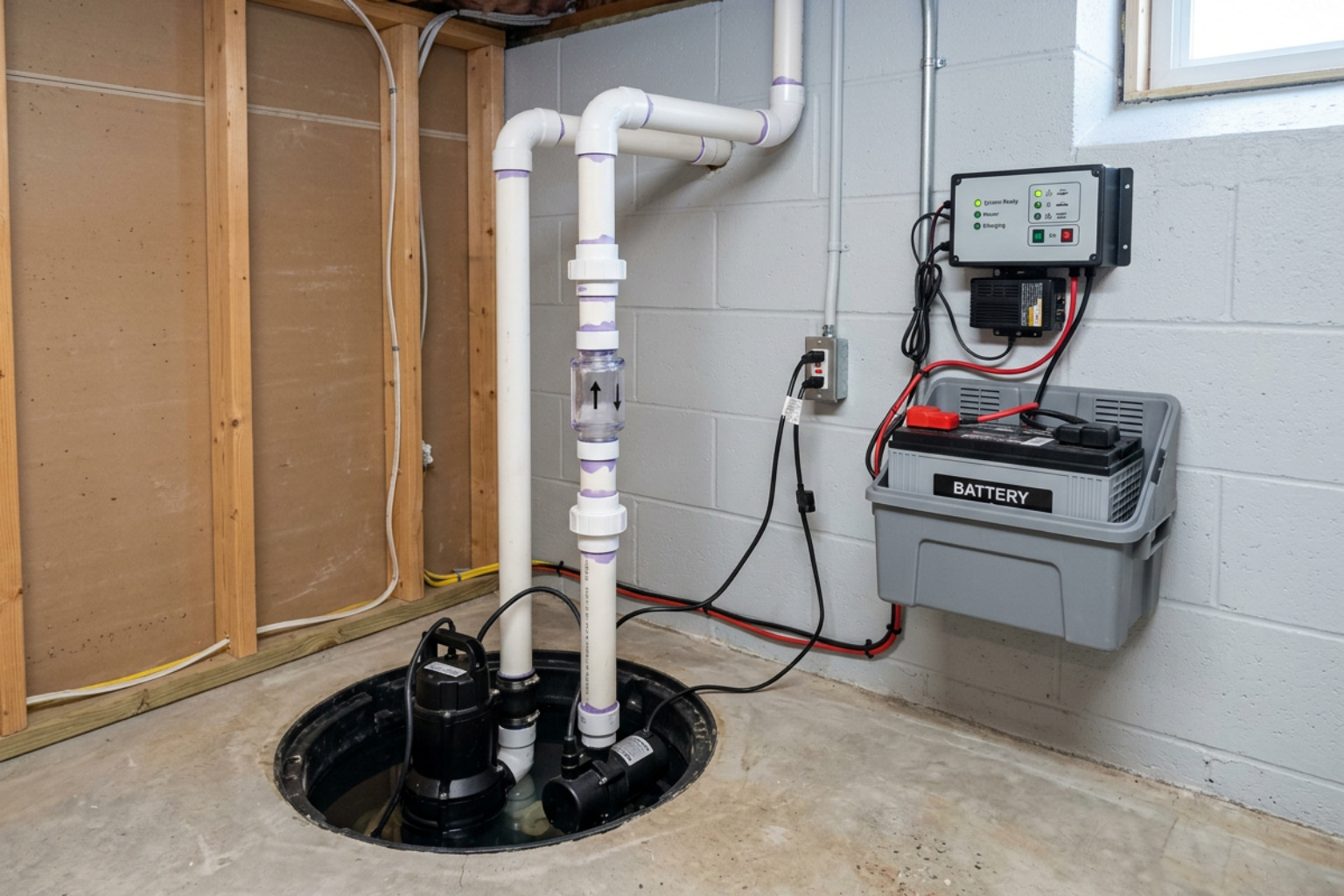
The most common and valuable endorsements include:
- Sewer Backup and Sump Pump Overflow Rider: This endorsement provides a specific limit of coverage (typically ranging from $5,000 to $25,000 or more) to pay for clean-up and repairs if water backs up through your drains, toilets, or if your sump pump fails.
- Service Line Coverage: This pays for the excavation and repair of underground utility lines (like your main water or sewer line) that fail on your property.
- Water Damage Endorsements: Some carriers offer endorsements that soften the 14-day rule or provide limited coverage for hidden leaks.
Common Endorsements to Bypass Water Damage Exclusions
If you want to protect your home or business from being left high and dry, you should proactively speak with your agent about adding specific riders. Adding a sewer backup or sump pump failure rider typically only adds a nominal fee to your annual premium, but it can save you tens of thousands of dollars in remediation costs.
For a complete breakdown of how to audit your policy and buy back the coverage you actually need, check out our guide on Why Covered Water Damage Isn’t Always Covered.
Steps to Challenge a Denied Water Damage Claim
If you have already received a denial letter from your insurance company, do not panic. A denial is not the final word—it is simply the insurance company’s opening position.
If you believe your claim was wrongfully denied under a water damage exclusion, take these steps immediately:
- Request a Copy of Your Complete Policy: Do not just rely on the summary page. Get the full policy, including all endorsements and exclusion forms.
- Document Everything: Take high-resolution photos and videos of the damage, the source of the leak, and any affected belongings. Keep a detailed timeline of when the leak was discovered and how you responded.
- Prevent Further Damage (Mitigation): You have a policy obligation to mitigate your damages. Shut off the water, dry out the area if safe to do so, and hire a professional mitigation company if necessary. Keep all receipts.
- Get an Independent Evaluation: Do not rely solely on the insurance company’s preferred vendors or engineers. They have an inherent conflict of interest. Hire an independent plumber, leak detection specialist, or public adjuster to write an unbiased report on the cause and timing of the leak.
- Review Our Denial Guides: For a step-by-step roadmap on how to structure your appeal, read our Denied Water Damage Claim Guide and learn more about the common pitfalls in our article on handling a Denied Water Damage Claim.
Frequently Asked Questions About Water Damage Exclusions
Does homeowners insurance cover water damage from a burst pipe?
Yes, standard homeowners insurance almost always covers water damage from a burst pipe, provided the break was sudden and accidental. If a pipe freezes, ruptures, or suddenly splits, your policy will pay for the water extraction, drying, drywall repairs, and flooring replacement.
However, there are exceptions. If the pipe burst because you turned off the heat in your home during the winter and left the property vacant, or if the pipe had been slowly leaking behind a wall for months due to rust and lack of maintenance, the claim may be denied under the wear-and-tear or vacancy exclusions. To learn more about how to ensure your burst pipe claim is paid fully, check out our Denied Water Damage Claim Guide.
Is mold remediation covered under standard property insurance?
Mold remediation is typically only covered if it is the direct result of a covered water damage claim. For example, if a hot water heater ruptures and mold develops behind the drywall within 48 hours before the drying process is complete, the insurance company will usually cover the mold cleanup.
However, standard policies usually impose a strict sub-limit on mold remediation (often capped at $5,000 or $10,000), which may not cover the full cost of professional removal. If the mold developed due to high humidity, a slow long-term leak, or groundwater seepage, mold remediation is completely excluded. You can read more about how insurers handle these limits in The Complete Guide to Why Insurance Isn’t Paying Water Damage Claims.
What should I do if my water damage claim is denied?
If your claim is denied, the first step is to carefully read the denial letter to see which specific exclusion the insurer is citing. Next, gather your evidence (leak detection reports, plumbing invoices, and photos) and contact an independent advocate.
Working with a licensed public adjuster can completely change the trajectory of a denied claim. Unlike the insurance company’s adjuster, a public adjuster works solely for you, the policyholder. We inspect the damage, review your policy language, write an accurate repair estimate, and negotiate directly with your carrier to secure a fair settlement. To understand how this partnership works, read The Ins and Outs of Public Adjusters for Water Damage.
Conclusion
Dealing with water damage is stressful enough without having to decode complex policy exclusions and battle your insurance company for a fair payout. When your home or business is damaged, you deserve an experienced local advocate who stands by your side.
At Hudson Douglas Public Adjusters, we are a family-owned and operated business with deep roots in Arizona. We represent policyholders only—never the insurance companies. We serve communities across the state, including Paradise Valley, Queen Creek, Gilbert, Scottsdale, Chandler, Goodyear, Mesa, San Tan Valley, Cave Creek, and Ahwatukee, as well as Clark County, Nevada, and the Utah Wasatch Front. To ensure all of our neighbors receive the help they need, we provide fully bilingual support in both English and Spanish.
We operate with complete transparency. We charge no upfront fees, and our clients never pay out of pocket. We only receive a flat 12% of the final claim payout once we successfully secure your settlement.
If you are dealing with a complicated, underpaid, or denied claim, let us take the burden off your shoulders. Contact us today for a free, no-obligation policy review and claim consultation.
Get the help you deserve and protect your property:
- No Cost, Big Help: Why Get a Free Water Damage Consultation
- File your claim with confidence: Water Damage Claims