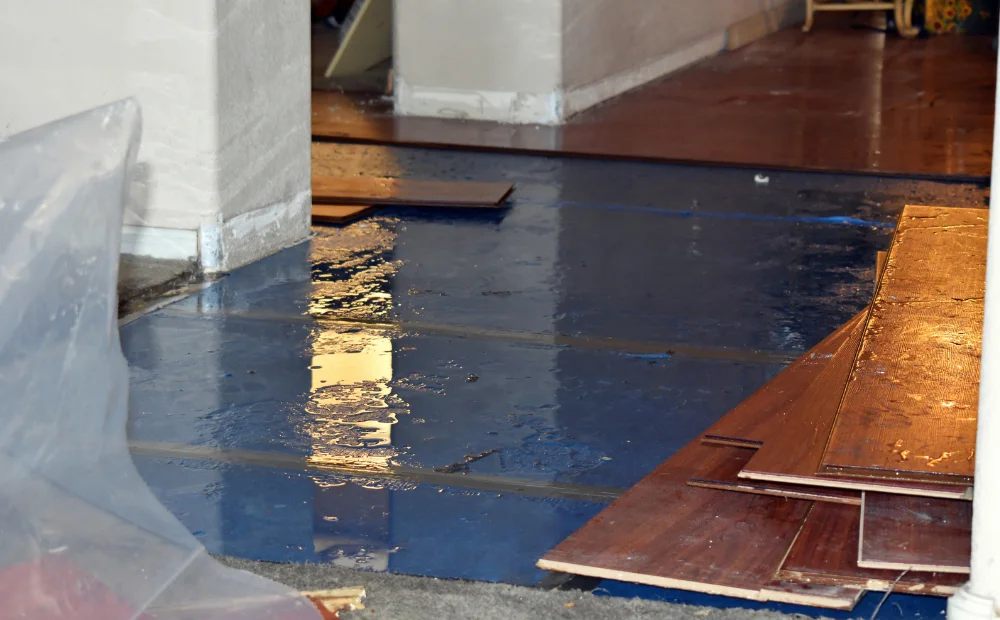
Foundation Water Damage Insurance: The Coverage Question Starts With the Cause
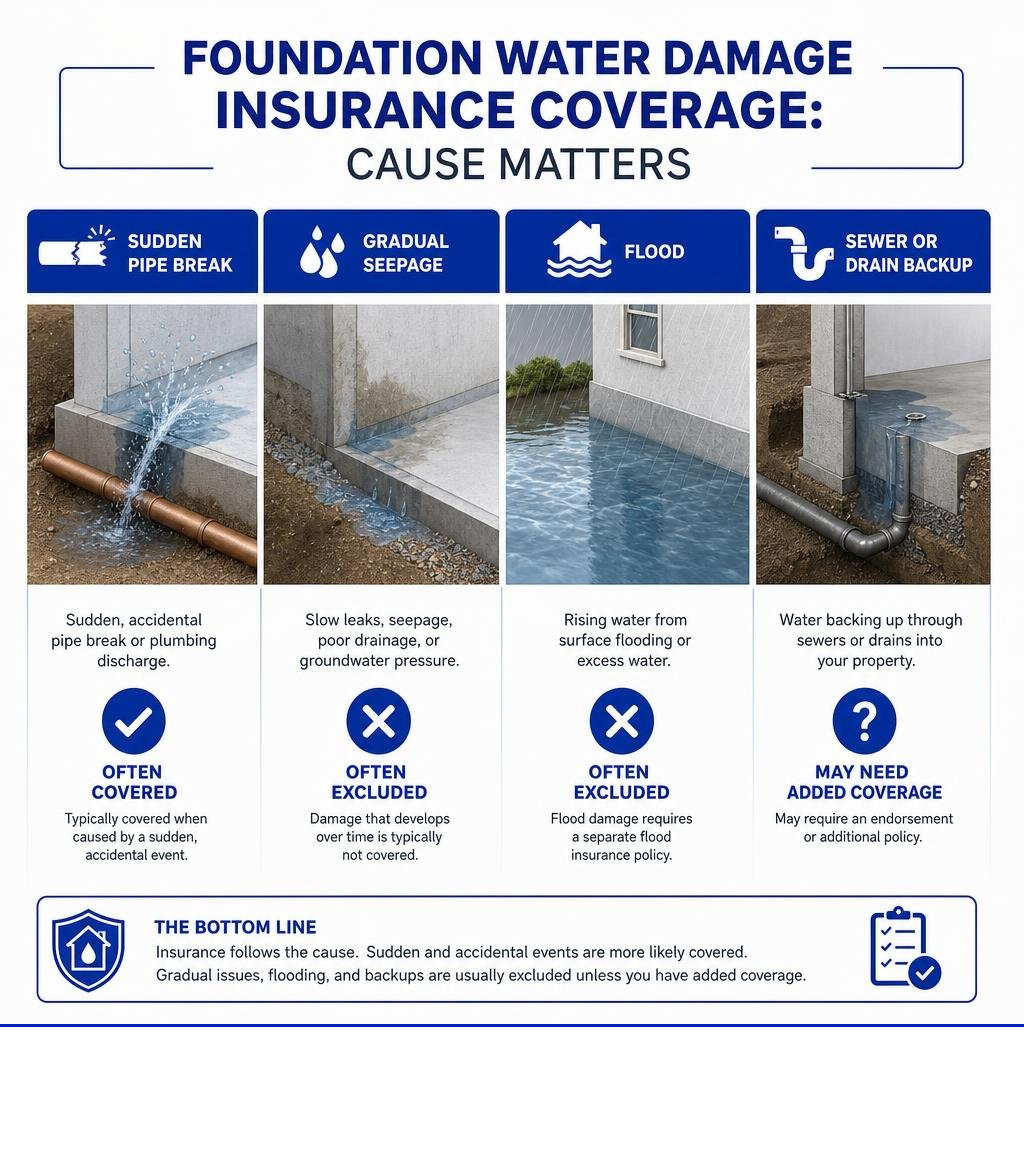
Foundation water damage insurance may pay when a sudden, accidental event damages your home or commercial property. A burst pipe under a concrete slab is a common example. But standard property insurance usually does not cover damage that develops over time, such as slow seepage, poor drainage, groundwater pressure, soil movement, or normal settling.
The key question is not simply, “Is my foundation damaged?” It is: What caused the damage, and what does the policy say about that cause?
A quick guide:
- Often covered: Sudden pipe breaks, accidental plumbing discharge, and other covered events that directly damage the foundation.
- Often excluded: Slow leaks, repeated seepage, flooding, earth movement, hydrostatic pressure, wear and tear, and deferred maintenance.
- May need added coverage: Sewer or drain backups, sump-pump failures, flood losses, and some slab-leak or foundation-related repairs.
Foundation claims can be especially confusing because a plumbing leak may be covered while the resulting settling, cracking, or soil movement is excluded unless the policy includes the right endorsement. The same policy may also treat the cost to open a slab for pipe access differently from the cost to level or structurally repair the foundation.
I’m Douglas Waldie, and this guide will help Arizona property owners understand the policy language, evidence, and next steps that matter in a foundation water damage claim.
Explore more about foundation water damage insurance:
Understanding Foundation Water Damage Insurance Coverage: What Is and Isn’t Covered
When you purchase property insurance, your home’s foundation is structurally protected under Coverage A (Dwelling Coverage). Coverage A applies to the physical structure of your house, including footings, poured concrete slabs, and load-bearing basement walls. However, whether a repair bill is paid depends on the precise peril (the specific cause of loss) that damaged the structure.
According to national insurance data, the average water damage and freezing claim pays out $12,514. Yet when property owners submit foundation-related claims, they frequently face pushback or outright claim denials. This happens because policies are written with specific perils in mind, and foundation movement sits directly on the boundary between covered losses and standard policy exclusions.
| Cause of Damage | Standard Coverage Status | Notes & Policy Details |
|---|---|---|
| Sudden & Accidental Pipe Burst | Typically Covered | Covered under Coverage A for structural foundation damage and slab access. |
| Plumbing Slab Leak (Abrupt Rupture) | Typically Covered (Access & Tear-Out) | Covers tear-out to access pipe; structural leveling may require an endorsement. |
| Gradual Plumbing Seepage | Typically Excluded | Excluded under continuous leakage and wear-and-tear exclusions. |
| Surface Water Runoff / Heavy Rain | Excluded | Considered flood damage; requires separate flood insurance (NFIP/private). |
| Groundwater / Hydrostatic Pressure | Excluded | Standard hazard policies exclude water pressing against foundation walls. |
| Sewer / Drain / Sump Pump Backup | Excluded (Unless Endorsed) | Requires an optional Water Backup and Sump Overflow endorsement. |
| Soil Movement / Expansive Clay | Excluded | Excluded under universal Earth Movement and Settling policy clauses. |
To make sense of policy language, property owners must understand all about water damage exclusions. Standard policies separate sudden, accidental physical losses from problems that develop gradually. Reviewing specific water damage exclusion forms will show that while an abrupt supply line break is covered, damage caused by ambient moisture or expanding soil is almost universally denied.
How Foundation Water Damage Insurance Handles Sudden Burst Pipes vs. Slab Leaks
One of the most frequent structural emergencies involves plumbing supply lines running beneath a home’s concrete foundation slab. When a pressurized copper or PEX pipe suddenly bursts under the slab, water can erode soil, create massive voids beneath the foundation, or crack concrete footings.
Standard policies generally cover sudden and accidental pipe ruptures, but the coverage divides into distinct components:
- Access and Tear-Out: Dwelling coverage typically pays the labor and demolition costs required to break through the concrete slab, dig down, and expose the broken pipe.
- The Plumbing Repair Itself: Insurance policies often exclude the nominal cost to replace the broken piece of pipe itself, categorizing plumbing wear as the owner’s maintenance responsibility.
- Collateral Damage and Foundation Restoration: Restoring the concrete slab, replacing affected subfloors, and repairing cracked structural elements is generally eligible under Coverage A.
However, the legal line between direct water damage and resulting structural movement can be complex. In insurance disputes such as the federal case Thomas v. State Farm Lloyds, courts examined whether water damage endorsements cover collateral foundation shifting when sub-slab leaks erode supporting soil. In that dispute involving $55,534 in foundation and plumbing repair costs across five leaks, the court affirmed that standard policies strictly exclude earth movement and structural settling, even when initiated by a plumbing failure, unless specific foundation endorsements are in place.

Excluded Foundation Hazards: Gradual Seepage, Earth Movement, and Settling
Standard residential and commercial hazard policies are built to address sudden, unforeseen disasters—not ongoing maintenance. As a result, carrier adjusters routinely apply the wear and tear exclusion when an issue shows signs of long-term development.
Typical non-covered foundation perils include:
- Gradual Seepage: Slow pinhole leaks running for weeks or months behind walls or beneath slabs.
- Hydrostatic Pressure: Natural underground water tables pushing against exterior concrete or basement retaining walls.
- Earth Movement and Expansive Clay Soils: Soils that expand during seasonal rains and contract severely during extended droughts. When soil contracts, slab corners drop; when it swells, slabs experience structural heave.
- Natural Settling: Normal building settlement over time, which causes cosmetic hairline cracks.
Understanding why covered water damage isn’t always covered helps policyholders protect their rights when adjusters mischaracterize sudden pipe failures as uninsurable soil movement.
Critical Policy Endorsements and Specialized Coverage Options
Because standard hazard policies contain standard exclusions for water intrusion and earth movement, optional policy endorsements (written amendments that alter your core policy) are vital for comprehensive foundation protection.

Slab Leak and Foundation Endorsements Explained
In regions prone to expansive soil or complex slab construction, carriers offer dedicated foundation endorsements to close standard policy coverage gaps. In Texas and neighboring states, insurers historically established specific Dwelling Foundation Endorsements (such as ISO forms and State Farm endorsements FE-5368 and FE-5369).
These riders provide specialized terms:
- Sub-Limit Capping: These endorsements often cap structural foundation repairs at approximately 15% of your total Coverage A dwelling limit. For instance, on a property with a $300,000 dwelling limit, a 15% endorsement delivers up to $45,000 in dedicated slab-leak and structural repair coverage.
- Access vs. Leveling Protections: Policyholders must carefully review declarations pages. A minor endorsement with a $2,000 slab access limit covers only the physical concrete cutting to reach a pipe—not the extensive hydraulic piering, underpinning, or structural leveling required to restore the property.
Without clear policy endorsements, policyholders can find themselves underinsured, which is why your homeowners policy might leave you high and dry when unexpected structural issues arise.
Surface Water Flooding and Groundwater Exclusions
A common point of confusion is the distinction between surface runoff and internal water damage. Learn the difference between flood damage vs water damage Arizona property owners face during intense monsoon rains.
Standard hazard policies universally exclude damage caused by rising surface water, heavy rainfall runoff that pools against a foundation, and external groundwater intrusion. To protect against surface flood waters entering a home or undermining foundation footings, property owners must maintain a separate flood policy. National Flood Insurance Program (NFIP) policies cost an average of $976 per year in 2026 and provide separate structural protection limits.
Additionally, backing up of municipal sewers, neighborhood storm drains, or residential sump pumps is excluded unless you have added a Water Backup and Sump Discharge or Overflow Endorsement. These riders typically provide $5,000 to $25,000 in dedicated coverage for secondary water damage resulting from mechanical drainage failures.
Navigating the Claims Process for Foundation Water Losses
Filing a property insurance claim for foundation water damage requires prompt action, clear documentation, and technical evidence.
Filing a Foundation Water Damage Insurance Claim: Documentation and Process
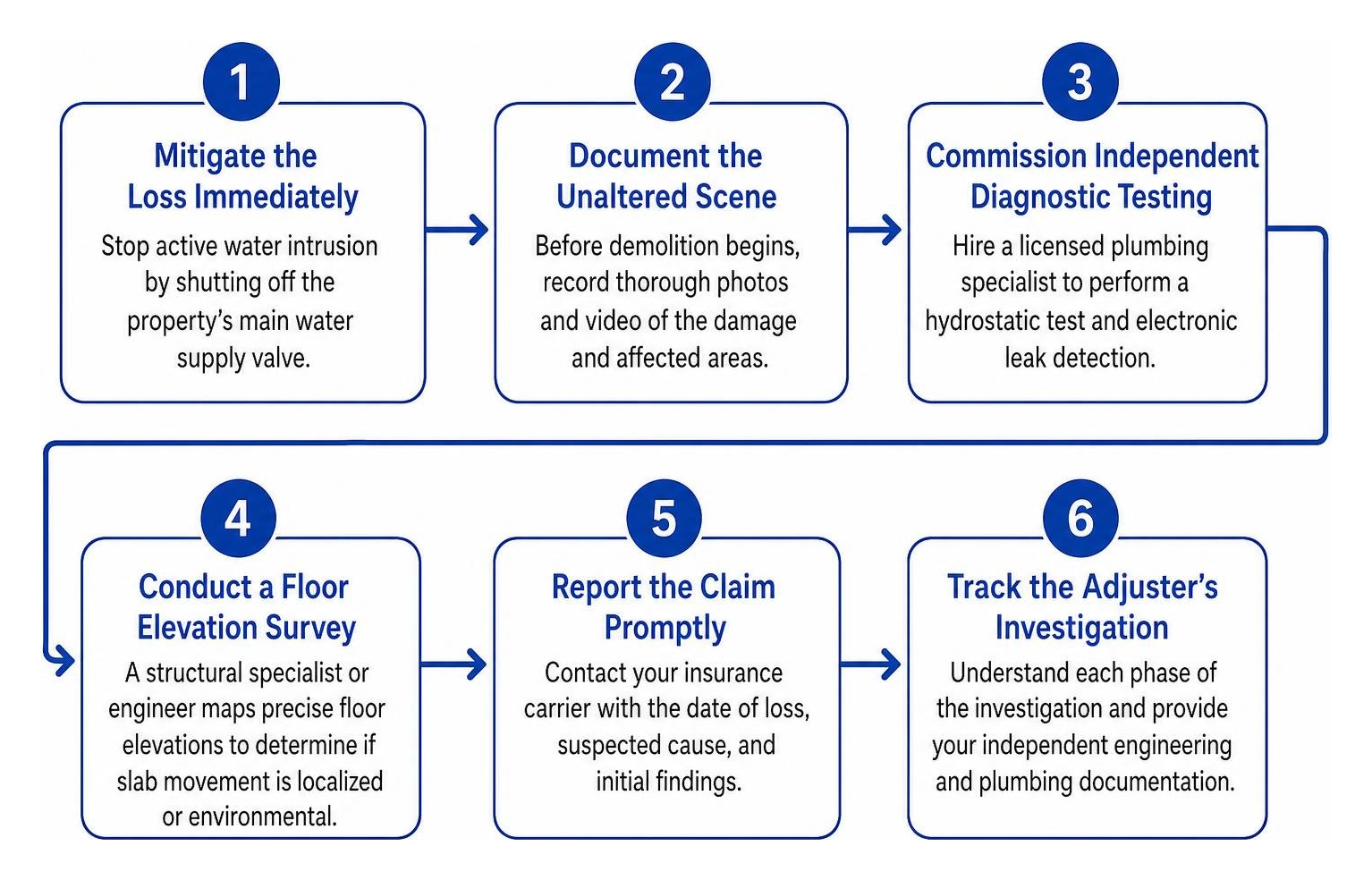
When structural water damage is discovered, following a disciplined claims framework helps prevent delays and disputes:
- Mitigate the Loss Immediately: Stop active water intrusion by shutting off the property’s main water supply valve. Policies require policyholders to take reasonable steps to prevent secondary damage.
- Document the Unaltered Scene: Before demolition begins, record thorough high-definition photographs and video of standing water, cracked concrete, damaged drywall, sticking doors, and warped trim.
- Commission Independent Diagnostic Testing: If a slab leak is suspected, hire a licensed plumbing specialist to perform a hydrostatic pressure test and electronic acoustic leak detection to pinpoint the exact failure point.
- Conduct a Floor Elevation Survey: A structural specialist or engineer uses specialized altimeter equipment to map the precise floor elevations of your property. This establishes whether slab movement is localized to a plumbing leak or represents uniform environmental settling.
- Report the Claim Promptly: Contact your insurance carrier to provide the date of loss, the suspected cause, and initial findings. Following proven water damage insurance claim tips helps ensure smooth processing from day one.
- Track the Adjuster’s Investigation: Understand each phase of the home insurance claim investigation process so you can provide your independent engineering and plumbing documentation directly to the carrier’s field adjuster.
What to Do If Your Foundation Claim Is Denied or Underpaid
If your insurance carrier denies your claim or offers an insufficient settlement, do not panic. Claim adjusters frequently default to attributing foundation movement to uninsurable soil movement or normal wear and tear without fully investigating hidden plumbing failures.
When facing a denial:
- Request a Formal Denial Letter: Review the specific exclusion clauses cited by the carrier.
- Review Our Claims Guide: Consult our comprehensive denied water damage claim guide to evaluate your options for appeal.
- Identify Underpayment Indicators: Check for common signs insurance company underpaid, such as omission of slab tear-out costs, missing structural underpinning line items, or lowballed labor rates.
- Secure Professional Representation: Navigating structural engineering reports and insurance coverage disputes can be overwhelming. Understanding the ins and outs of public adjusters for water damage allows policyholders to balance the scales by having a licensed expert advocate exclusively on their behalf.
When insurance disputes cannot be resolved and foundation repairs must be handled independently, minor crack sealing typically costs $250 to $800, whereas major structural underpinning ranges from $10,000 to $30,000+. When insurance denies a valid loss, property owners often bridge gaps using personal financing or an FHA Title I property improvement loan, which provides up to $25,000 for structural home repairs.
Preventative Maintenance to Protect Your Foundation
Because insurance policies exclude maintenance neglect, active property management is your best defense against uninsured structural foundation damage.
To protect your property’s foundation:
- Ensure Proper Soil Slope: Grade exterior soils so ground slopes away from your foundation at an angle of roughly 1/2 inch per foot (a 5% grade over a span of 10 feet).
- Maintain Roof Drainage Systems: Clean gutters once or twice a year, ensuring a slope of 1/4 inch per 10 feet toward downspouts. Install downspout extensions that discharge rainwater at least 5 to 10 feet away from the slab.
- Install Perimeter Drainage: In low-lying areas or regions with high seasonal runoff, install French drains or swales to redirect surface water away from the structure.
- Manage Soil Moisture Consistency: In dry, arid climates with expansive clay soil, maintain consistent perimeter moisture using automated drip lines or soaker hoses to prevent extreme ground contraction and settlement.
- Perform Bi-Annual Inspections: Walk your property every six months to check for interior drywall cracks, sticking doors, uneven floorboards, or exterior masonry separation.
Frequently Asked Questions About Foundation Water Damage Coverage
Does homeowners insurance cover the cost of tearing out a slab to access a plumbing leak?
Yes. When a sudden, accidental plumbing rupture occurs beneath a concrete foundation, standard Coverage A dwelling insurance typically covers the cost of tearing out and excavating the concrete slab to access the plumbing lines. It also covers the cost to restore the excavated concrete foundation slab once the plumbing repair is completed. However, the basic plumbing parts needed to fix the pipe itself are typically excluded as a homeowner maintenance expense.
How do I know if foundation cracks are caused by a plumbing leak or normal settling?
Determining causation requires objective diagnostic testing. A licensed plumber conducts hydrostatic pressure testing and isolation testing to verify whether water lines are leaking beneath the slab. Additionally, a licensed structural engineer performs an electronic floor-elevation survey. If structural heave or downward deflection is localized directly around a confirmed sub-slab leak source, the damage is typically attributable to the plumbing failure rather than uniform environmental settling.
Will insurance pay for foundation repairs if water backed up through a sewer or sump pump?
Standard property insurance policies exclude sewer backups, drain overflows, and sump pump mechanical failures. However, if you have added an optional Water Backup and Sump Discharge or Overflow Endorsement to your policy, the resulting secondary water extraction, sanitation, and structural foundation repairs will be covered up to your endorsement limit (typically between $5,000 and $25,000).
Conclusion: Maximizing Your Property Insurance Recovery
Dealing with foundation water damage can be stressful and complex. Between distinguishing sudden pipe breaks from long-term soil movement, interpreting complicated endorsement sub-limits, and managing expensive structural estimates, property owners face significant challenges during the claims process.
At Hudson Douglas Public Adjusters, we are a family-owned and operated business with over 40 years of property adjusting expertise. We represent policyholders exclusively—never insurance companies—across Arizona, including communities in Scottsdale, Paradise Valley, Queen Creek, Gilbert, Chandler, Goodyear, Mesa, San Tan Valley, Cave Creek, Ahwatukee, Sedona, Flagstaff, Prescott, and Tucson, as well as clients across Nevada’s Clark County and the Utah Wasatch Front.
We work solely on your behalf with no upfront fees, receiving 12% of the claim payout only when your claim is successfully resolved. Our team handles every phase of the process—from documenting foundation and structural damage with licensed engineering professionals to estimating repair costs and managing carrier negotiations—saving you time, eliminating confusion, and helping you secure the settlement you are entitled to under your policy.
If you are dealing with structural water intrusion or a disputed claim, explore our specialized services for residential and commercial water damage claims and let our family advocate for yours.