What Does a Homeowners Insurance Water Damage Exclusion Mean?
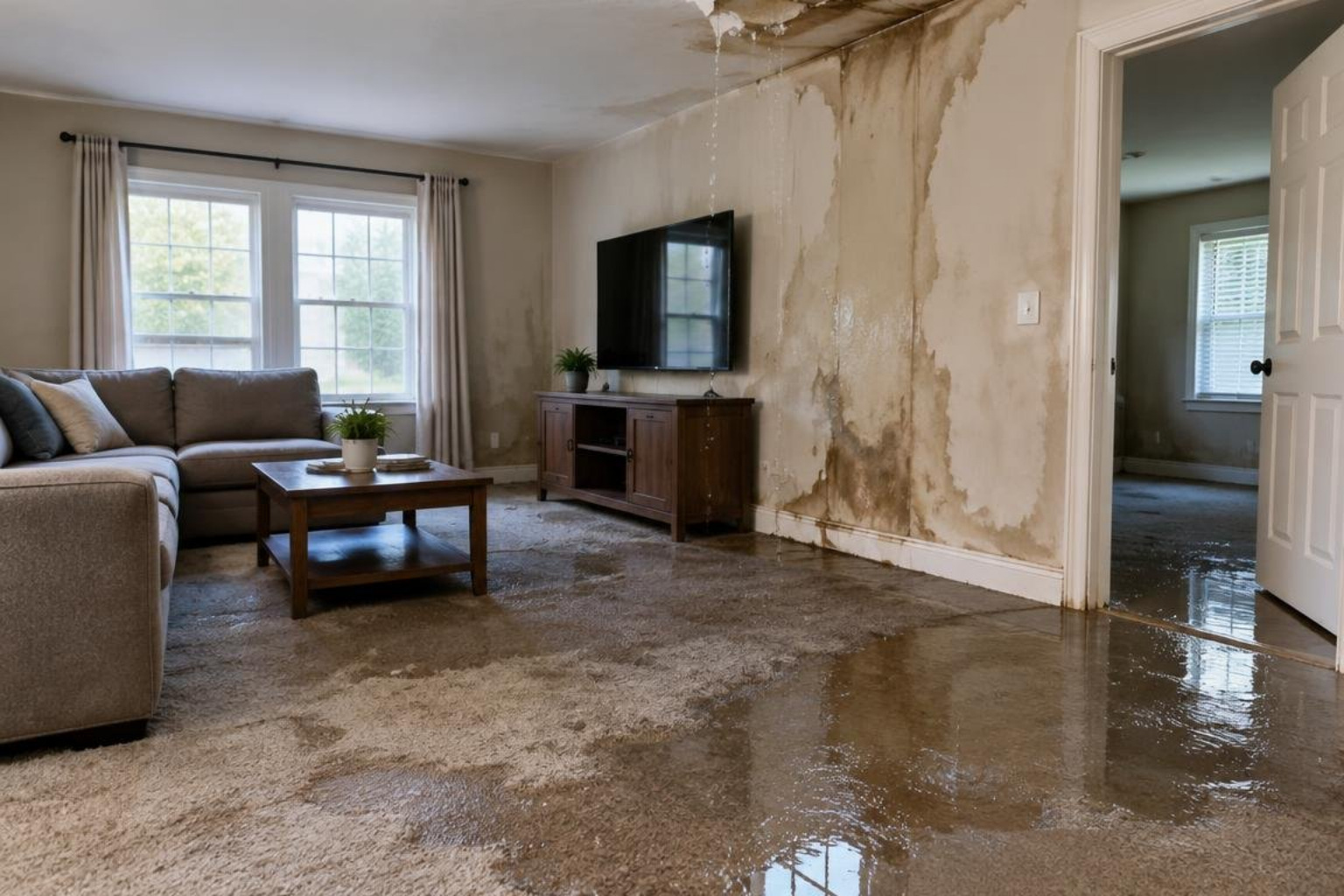
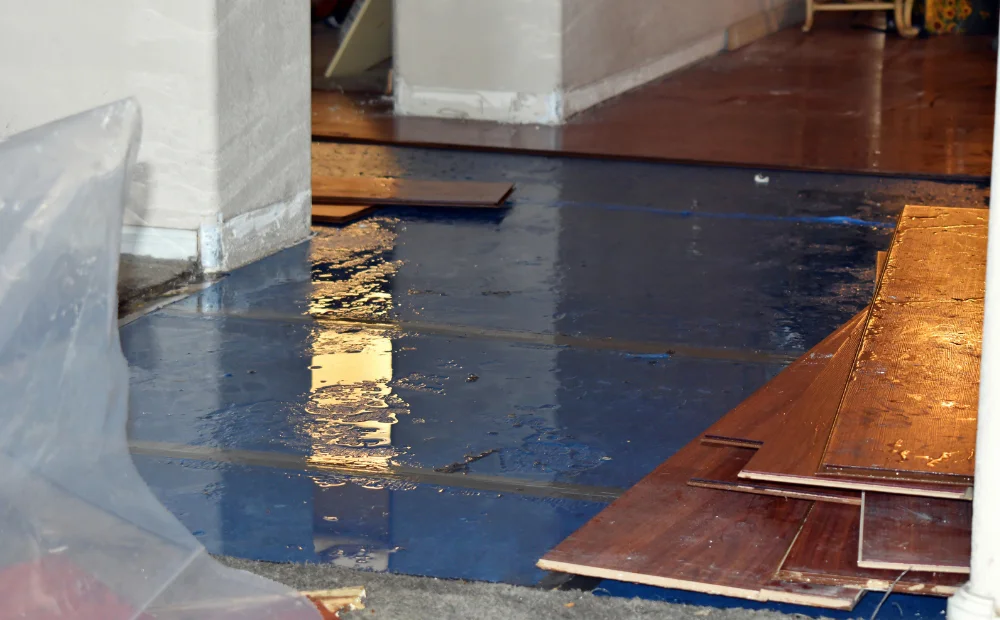
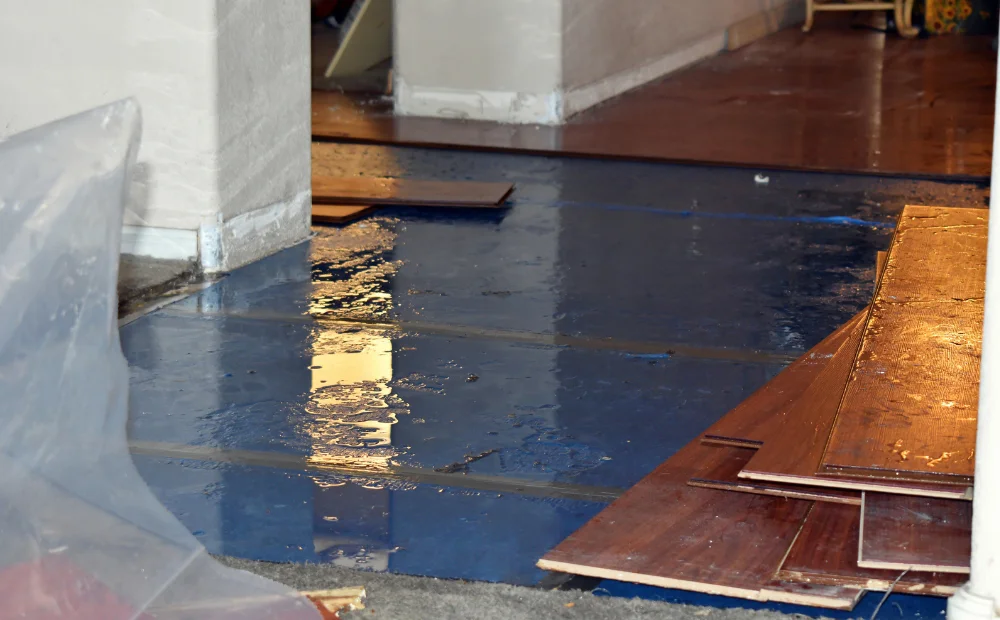
A standard homeowners policy usually covers sudden, accidental water damage, such as damage from a burst pipe. It typically excludes damage from slow leaks, flooding, groundwater, and sewer backups unless you have added coverage. The cause of the water matters more than how much damage you can see.
If you have just found water in your home, stop the flow if it is safe, take photos, and prevent further damage. Keep any damaged parts and repair records. Do not assume a denial is final: the exact policy wording and evidence of where the water came from can change the outcome.
I’m Douglas Waldie, and my family-owned, locally based Arizona business, Hudson Douglas Public Adjusters, represents only policyholders in residential and commercial property insurance claims.
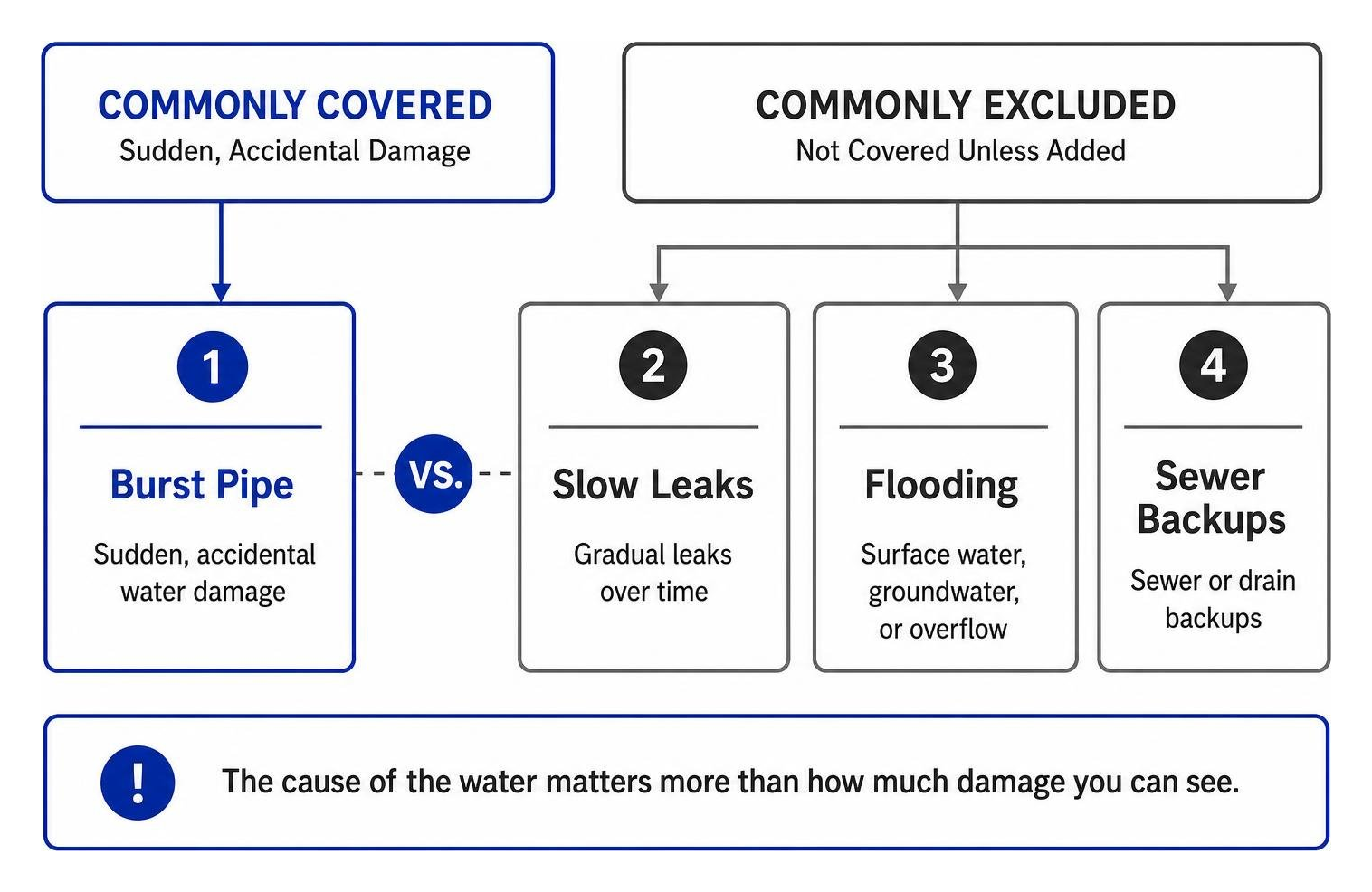
Easy homeowners insurance water damage exclusion word list:
Understanding the Standard Homeowners Insurance Water Damage Exclusion
Water damage and freezing rank as the second leading cause of homeowners insurance claims across the United States, representing approximately 29 percent of all property losses. Between 2016 and 2022, the average home water damage claim payout reached $11,650. Yet, despite how common these losses are, water intrusion remains the most misunderstood area of property insurance.
Most single-family residences are insured under an Insurance Services Office (ISO) HO-3 policy form. The HO-3 form provides “open-peril” coverage for your dwelling structure (Coverage A) and other structures (Coverage B), meaning any direct physical loss is covered unless explicitly excluded in the policy text. In contrast, personal property (Coverage C) is insured on a “named-peril” basis, meaning contents are covered only if the loss results directly from one of sixteen listed causes.
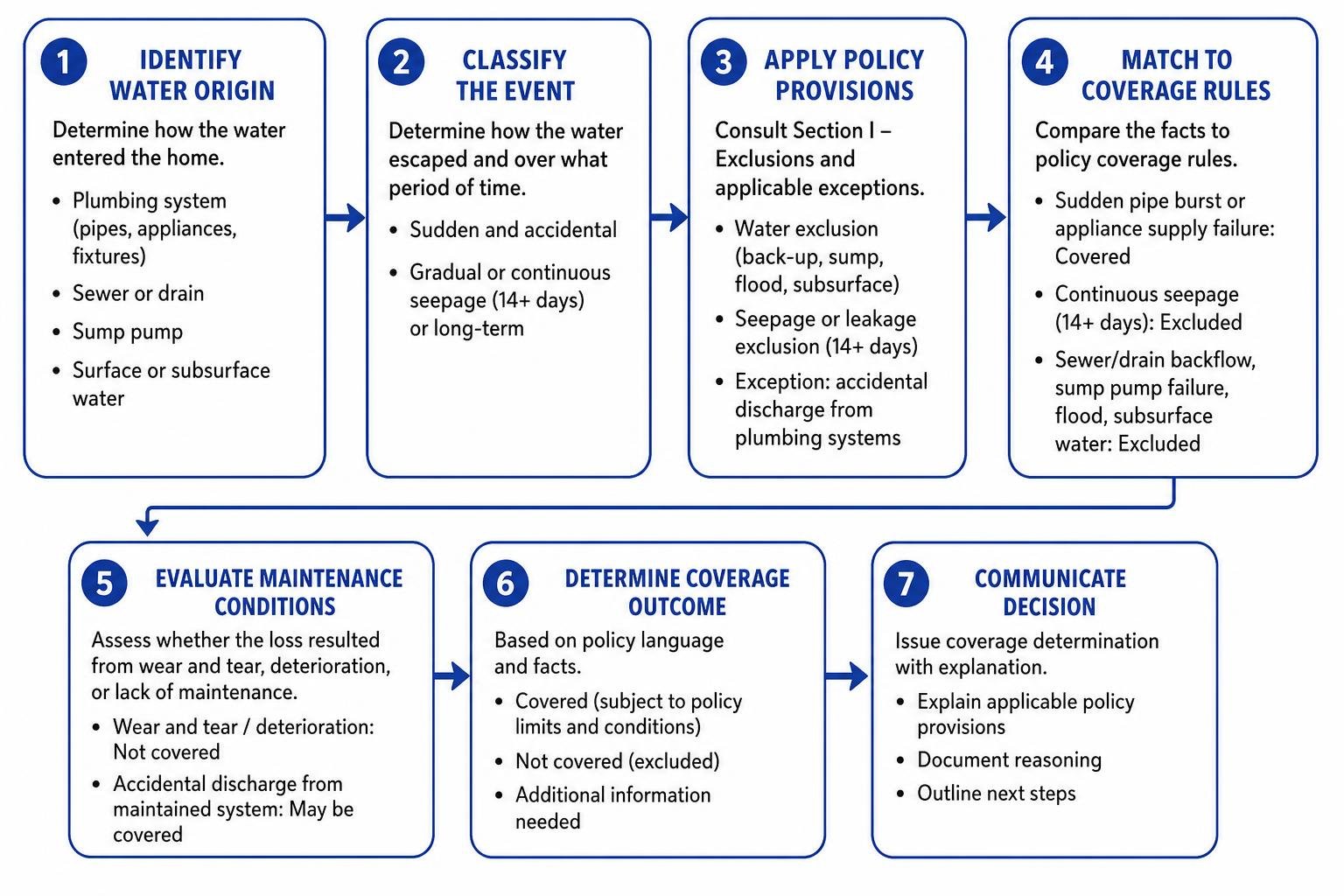
When water enters your home, insurance carriers immediately consult the Section I exclusions. These clauses restrict coverage based on how the water originated, how quickly it escaped, and whether it came from inside or outside the plumbing system.
| Water Incident Type | Standard HO-3 Coverage Status | Typical Policy Mechanism | Endorsement Available? |
|---|---|---|---|
| Sudden Pipe Burst | Covered | Open-Peril Dwelling / Named-Peril Contents | Built-in |
| Continuous Seepage (14+ Days) | Excluded | Seepage or Leakage Exclusion | Rarely |
| Sewer or Drain Backflow | Excluded | Water Exclusion (Back-up clause) | Yes (Water Back-Up Rider) |
| Sump Pump Failure | Excluded | Water Exclusion (Sump clause) | Yes (Water Back-Up Rider) |
| Surface Flooding / Runoff | Excluded | Water Exclusion (Flood / Surface Water) | Yes (NFIP or Private Flood) |
| Subsurface Groundwater | Excluded | Subsurface Water / Hydrostatic Pressure | Yes (Flood Policy) |
| Appliance Failure (Supply Hose) | Covered | Accidental Discharge from Plumbing/Appliance | Built-in |
Sudden and Accidental Events vs. Gradual Seepage and Maintenance Neglect
The fundamental boundary in property coverage sits between “sudden and accidental” discharges and “gradual deterioration.”
A sudden event occurs unexpectedly and without warning, such as a pressurized copper pipe splitting in an attic or a washing machine supply hose snapping during a wash cycle. In these instances, the carrier generally pays for the tear-out, drying, and structural restoration required to repair the dwelling.
Conversely, gradual damage develops over days, weeks, or months. Standard policies contain explicit continuous seepage exclusions that bar coverage if water has escaped or leaked over a period of 14 days or longer. Insurers often use moisture mapping, wood rot, rust around fittings, and drywall degradation to claim that a leak went unaddressed. Understanding why covered water damage isn’t always covered helps policyholders recognize that long-term leaks are almost universally categorized as uninsurable maintenance issues.
Key Policy Forms and the Homeowners Insurance Water Damage Exclusion Fine Print
Within the standard ISO HO-3 form, the primary water damage exclusion appears in Section I – Exclusions. However, policies also feature specific exceptions that protect the homeowner.
One of the most vital provisions is the exception to the exclusion for accidental discharge, outlined in many standard policy editions under Section 2.c.(6). This provision confirms that while wear and tear or deterioration of the plumbing pipe itself is not covered, the resulting accidental discharge of water or steam from within the plumbing, heating, air conditioning, or automatic fire sprinkler system remains covered.
Under this clause, the insurer must cover the cost of tearing out and replacing any part of the building necessary to repair the failed system, even though the insurer will not pay to fix the actual broken pipe or failed appliance fitting. Homeowners can read more about how insurers parse these clauses by studying the Homeowners Exception to Overflow of Water legal analysis and our comprehensive breakdown of water damage exclusion forms.
Common Excluded Water Perils and Outside Source Ingress
When evaluating water claims, insurers categorize water by its point of origin:
- Internal Sources: Water originating from inside a domestic plumbing system, appliance, or HVAC line.
- External Sources: Water originating outside the footprint of the home, including rain runoff, rivers, saturated soil, or municipal mains.
Standard property policies cover internal plumbing failures while excluding external water sources.
Flooding, Surface Runoff, and Foundation Infiltration
Under standard policy terms, “flood” carries a specific definition aligned with federal standards. FEMA defines a flood as a general and temporary condition of partial or complete inundation of two or more acres of normally dry land area or of two or more properties.
If heavy rain falls on your driveway, pools against your foundation, and seeps through basement or stem walls, the loss is categorized as surface water infiltration or hydrostatic pressure—both strictly excluded under standard policies. Even an inch of standing floodwater can cause upwards of $25,000 in residential damage.
Federal data shows that roughly 40% of National Flood Insurance Program (NFIP) flood claims originate from properties located outside high-risk flood zones.
Mold Growth, Sewer Backups, and Failure to Mitigate
Two secondary perils frequently trigger coverage disputes:
- Mold Contamination: Standard policies exclude mold, rot, and fungi by default. While mold resulting directly from a sudden, covered plumbing loss is often covered, insurers strictly cap mold remediation payouts—typically at $5,000 or $10,000. If mold arises from high humidity or a slow, unmitigated drip, the entire claim will be denied.
- Sewer and Drain Backups: When municipal sewers back up through neighborhood lines or your primary drain backs up into low-lying shower pans, standard property policies deny the claim under the water exclusion. Coverage requires a specific endorsement.
Additionally, every property policy places a contractual “Duty After Loss” on the insured. If you discover a leak and fail to shut off the water supply or delay calling dry-out professionals, the insurer can deny subsequent structural rot under the failure to mitigate clause. Examining why insurance isn’t paying water damage claims reveals that adjusters routinely cite mitigation delays as a primary reason to reduce or deny settlement checks.
Policy Endorsements, Gap Coverages, and Legal Precedents
To bridge the wide gaps created by standard exclusions, property owners can add specific policy riders and supplemental contracts.
| Endorsement / Policy Type | What It Covers | Standard Limits Offered | Estimated Annual Cost |
|---|---|---|---|
| Water Back-Up & Sump Overflow | Drains, sewers, and sump pump mechanical failures | $5,000 to $25,000 | $35 – $150 |
| Mold Remediation Endorsement | Fungi testing, containment, removal, and clearance | $10,000 to $50,000 | $50 – $200 |
| NFIP Flood Policy | Rising surface water, river overflow, mudflows | $250k Dwelling / $100k Contents | $450 – $1,400 |
| Private Flood Insurance | External flood, loss of use, higher dwelling limits | Up to Full Replacement Value | $600 – $2,000+ |
| Service Line Coverage | Buried water and sewer pipes on your property | $10,000 to $20,000 | $30 – $70 |
How Legal Precedents Challenge the Homeowners Insurance Water Damage Exclusion
When insurance policy language contains ambiguities, courts apply the legal doctrine of contra proferentem, interpreting vague provisions against the drafter (the insurer) and in favor of coverage for the policyholder. Furthermore, under property insurance law, the insurance carrier carries the legal burden of proof to demonstrate that a specific exclusion applies to a loss.
A landmark example of exclusion interpretation is found in Sosa v. Mass. Bay Ins. Co.. In this case, an off-premises municipal water main ruptured below ground, forcing pressurized water into a residential basement. The insurer denied the claim under the subsurface and surface water exclusions.
The court ruled against the insurer, determining that the exclusion was intended to apply to natural groundwater and natural floods, not artificial, pressurized water escaping from an off-premises utility main. For property owners facing an unfair carrier denial, reviewing our denied water damage claim guide details how legal precedent and expert causation analysis can reverse wrongful claim decisions.
Essential Coverage Questions to Ask Your Insurance Agent
Before a water loss occurs, review your declarations page and ask your insurance agent the following direct questions:
- “What is my policy limit for tear-out coverage to access a broken pipe?”
- “Does my policy include the 14-day continuous seepage exclusion, and is there an endorsement to buy back hidden water leak coverage?”
- “Do I have a Water Back-Up and Sump Discharge endorsement (HO 04 95), and what is its specific limit and deductible?”
- “What is my policy’s sub-limit for mold testing and remediation following a covered water loss?”
- “Is my home protected against exterior surface runoff or flash floods, or do I need a separate private or NFIP flood policy?”
Frequently Asked Questions About Water Damage Exclusions
Is hidden water damage behind walls covered under a standard policy?
Coverage for hidden water damage depends on the leak duration and your policy language. If a hidden pipe inside a wall cavity develops a pinhole rupture and causes damage before you can reasonably detect it, standard HO-3 policies will cover the structural tear-out and water drying.
However, if the carrier’s adjuster determines that the leak was active for longer than 14 days—relying on signs such as dry rot or extensive rusted fasteners—they will cite the continuous seepage exclusion to deny the claim. Some modern carrier forms offer optional hidden water damage endorsements that extend coverage up to $10,000 or $25,000 even if the leak was gradual.
How does flood insurance differ from a water backup endorsement?
Flood insurance and water backup endorsements protect against completely different perils and cannot be substituted for one another:
- Flood Insurance (NFIP/Private): Covers damage from external, rising surface waters that inundate dry land from outside the home (such as river overflow, severe rain ponding, or coastal storm surge).
- Water Backup Endorsement: Covers interior water and sewer lines that reverse direction, causing wastewater to back up through drains, toilets, or overflowing sump basins inside the structure.
A flood policy will not pay for a sewer line backup during normal operations, and a water backup endorsement will not pay for lake or street runoff entering through your front door.
What should I do immediately after discovering a water leak to avoid a claim denial?
To safeguard your property and protect your insurance claim from failure-to-mitigate denials, follow this immediate protocol:
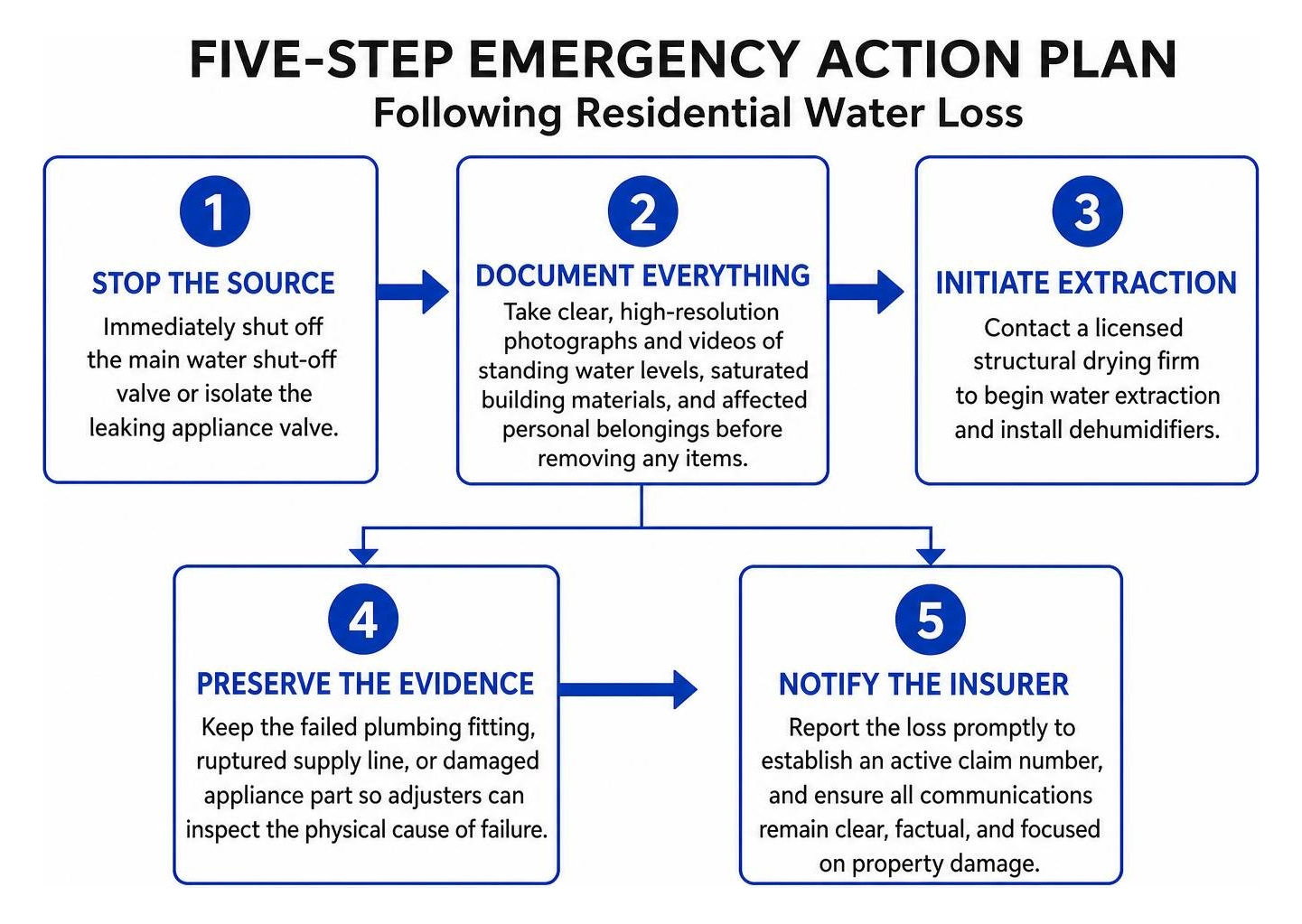
- Stop the Source: Immediately shut off the main water shut-off valve or isolate the leaking appliance valve.
- Document Everything: Take clear, high-resolution photographs and videos of standing water levels, saturated building materials, and affected personal belongings before removing any items.
- Initiate Extraction: Contact a licensed structural drying firm to begin water extraction and install dehumidifiers.
- Preserve the Evidence: Keep the failed plumbing fitting, ruptured supply line, or damaged appliance part so adjusters can inspect the physical cause of failure.
- Notify the Insurer: Report the loss promptly to establish an active claim number, and ensure all communications remain clear, factual, and focused on property damage.
Conclusion: Protecting Your Property Against Exclusion Traps
Water damage exclusions are designed to protect insurance carriers from catastrophic regional floods and everyday home maintenance costs. Unfortunately, these clauses are frequently used by carrier adjusters to deny or significantly underpay valid, sudden plumbing losses. Navigating ambiguous policy exclusions, proving the exact origin of water, and establishing the sudden nature of a pipe rupture requires deep technical and policy knowledge.
Hudson Douglas Public Adjusters is a family-owned and operated, locally based Arizona business serving Arizona homeowners and commercial property owners across Scottsdale, Gilbert, Chandler, Mesa, Goodyear, Cave Creek, and surrounding areas. We represent policyholders exclusively—never insurance companies—handling every phase of your residential or commercial property claim, from detailed moisture mapping and scope writing to rigorous settlement negotiations.
With over 40 years of claims experience and 24/7 bilingual support, we work strictly on a contingency basis where Hudson Douglas receives 12% of the payout, meaning you never pay out of pocket for our advocacy. If you are dealing with a complex claim, delayed payment, or wrongful denial, contact Hudson Douglas Public Adjusters for professional water damage claim assistance and secure the full, fair settlement your policy promises.