
What Happens After You File a Claim
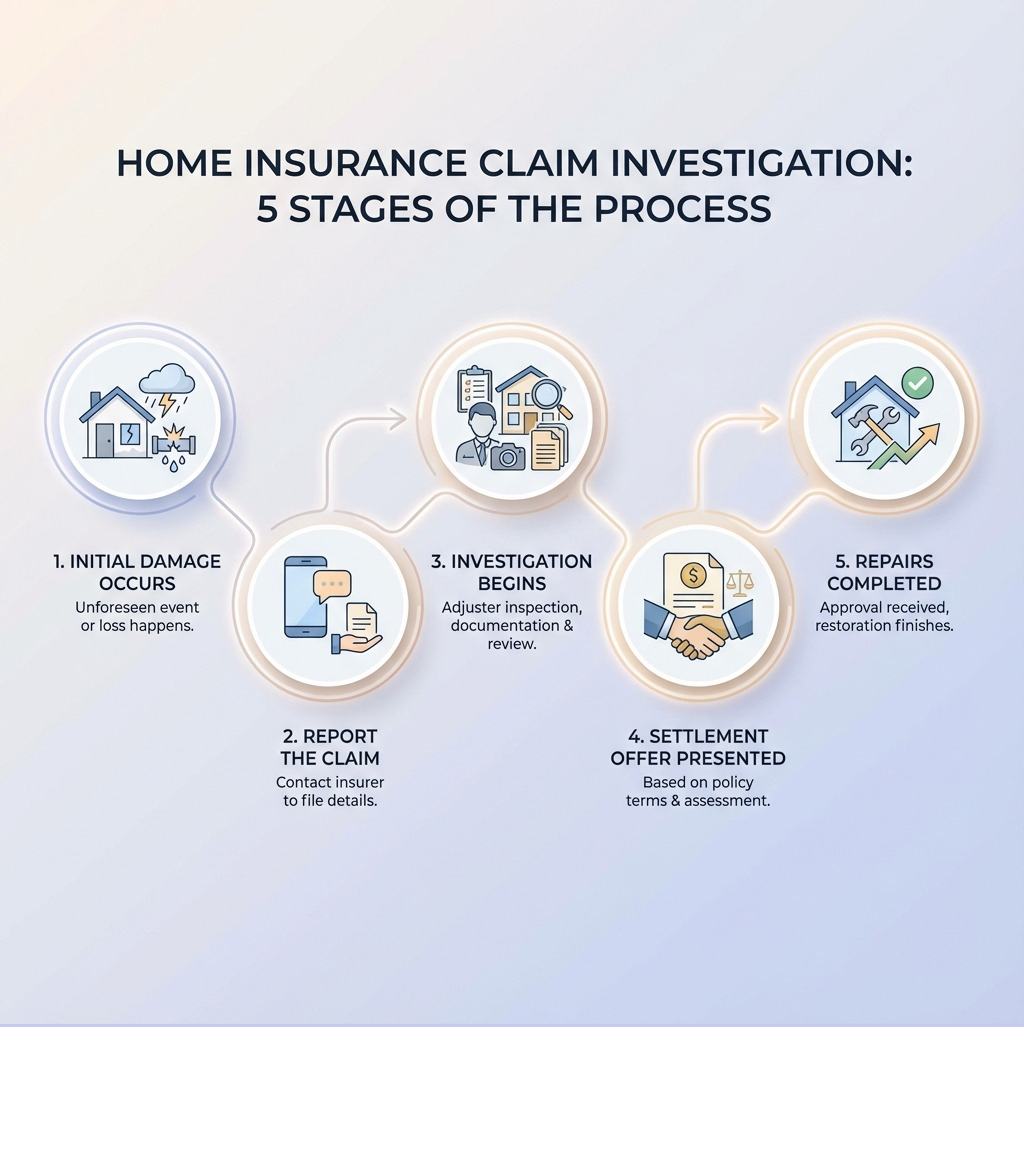
The home insurance claim investigation process begins the moment your insurer receives your claim. It involves several key steps designed to verify your loss, assess the damage, and determine what your policy covers. While this process is standard for all claims, understanding how it works can reduce stress and help you protect your rights.
Here’s what to expect:
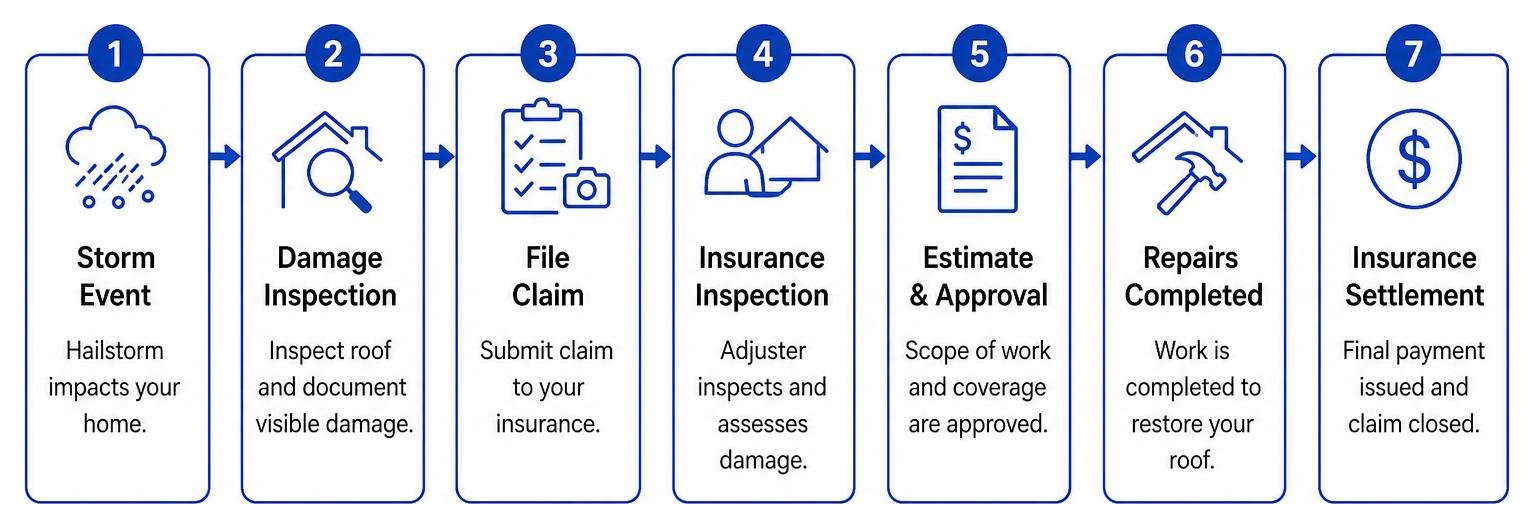
- Initial Contact – Your insurer assigns an adjuster within 2-3 days of filing
- Site Inspection – The adjuster visits your property to document damage
- Investigation – The insurer reviews your policy, gathers records, and may request statements
- Policy Review – Coverage is evaluated against your policy terms and limits
- Settlement Offer – You receive a written offer detailing what the insurer will pay
Most investigations take anywhere from a few weeks to several months, depending on the complexity of your loss. Large claims, unclear circumstances, or incomplete documentation can extend this timeline.
It’s natural to feel overwhelmed after your property is damaged. Whether from a monsoon storm, a burst pipe, or a kitchen fire, you’re suddenly faced with the daunting task of filing an insurance claim—often for the first time.
Then comes the call: your claim is under investigation.
For many Arizona homeowners, this phrase triggers worry. Does the insurance company think I did something wrong? Will they deny my claim? How long will this take?
Here’s the truth: an investigation is not an accusation. It’s a standard part of the claims process. Insurers are required to verify the facts of your loss, confirm coverage under your policy, and determine a fair payout. The problem is that most homeowners don’t know what happens during this process—or how to protect themselves along the way.
At Hudson Douglas Public Adjusters, we’ve spent decades guiding Arizona families through exactly this situation. We’re a locally owned business, and we understand how stressful it is to steer insurance paperwork when you’re already dealing with property damage. Our job is to make sure you’re treated fairly, your damage is fully documented, and you receive every dollar your policy allows.
This guide will walk you through each stage of the home insurance claim investigation process. You’ll learn what the adjuster is looking for, what documents you need, and when it might make sense to bring in professional help. Whether your claim is straightforward or complicated, you deserve to know what’s happening—and what to do next.
Why Your Home Insurance Claim is Being Investigated
An insurance claim is a formal request made by a policyholder to their insurer to receive financial compensation or coverage for a loss or damage covered by their insurance policy. When you file a claim, your insurance company has a duty to investigate. This isn’t just about verifying your loss; it’s also about preventing fraud.
Unfortunately, illegitimate insurance claims cost about $40 billion every year in the US. This isn’t a victimless crime; fraudulent claims raise the price of insurance for everyone. Because of this, it’s in an insurance company’s best interest to verify that every claim is legitimate. This is why the home insurance claim investigation process is so critical for them.
So, if your claim is being investigated, please don’t take it personally. It’s a standard procedure designed to ensure fairness for all policyholders and to protect the integrity of the insurance system.
What Triggers an Investigation?
While all claims undergo some level of scrutiny, certain factors can prompt a more in-depth investigation. These include:
- Large Loss Amount: Claims involving significant damage or high repair costs often warrant closer examination.
- Suspicious Circumstances: If the details surrounding the loss seem unusual or inconsistent, an insurer may investigate further. For instance, a fire claim might involve experts to determine its origin and cause, especially if the circumstances are unclear. For more on this, see our guide on Fire & Smoke Damage Claims.
- Inconsistencies in Statements: Discrepancies between what you initially report and what the adjuster observes or what witnesses say can raise red flags.
- Delayed Reporting: While most policies allow up to a year to file, significant delays in reporting a loss can make it harder to prove the damage source and may trigger additional questions.
- Vacant Property: If your home was vacant at the time of loss, or if you were operating a business from home, it could be considered a “material change in risk factors” by your insurer, potentially impacting coverage.
- Prior Claims History: A history of frequent claims, especially for similar types of damage, might lead to increased scrutiny.

The Role of the Insurance Adjuster
At the heart of the home insurance claim investigation process is the insurance adjuster. This individual is your primary point of contact from the insurance company. Their role is to investigate the cause and extent of the loss, determine the amount of damage covered by your policy, and estimate the cost of repairs. They will also review your policy to determine applicable coverage and deductibles.
The adjuster assigned by your insurance company works for the insurer. While they are expected to be fair, their loyalty is to their employer. This is a crucial distinction. For a deeper dive into this, you might find our article on Public Adjuster vs. Insurance Adjuster helpful.
The Home Insurance Claim Investigation Process: A Step-by-Step Walkthrough
Navigating a property loss can feel overwhelming, but understanding the steps involved in the home insurance claim investigation process can help you feel more in control. Here’s a typical walkthrough:
Step 1: Reporting the Loss and Initial Contact
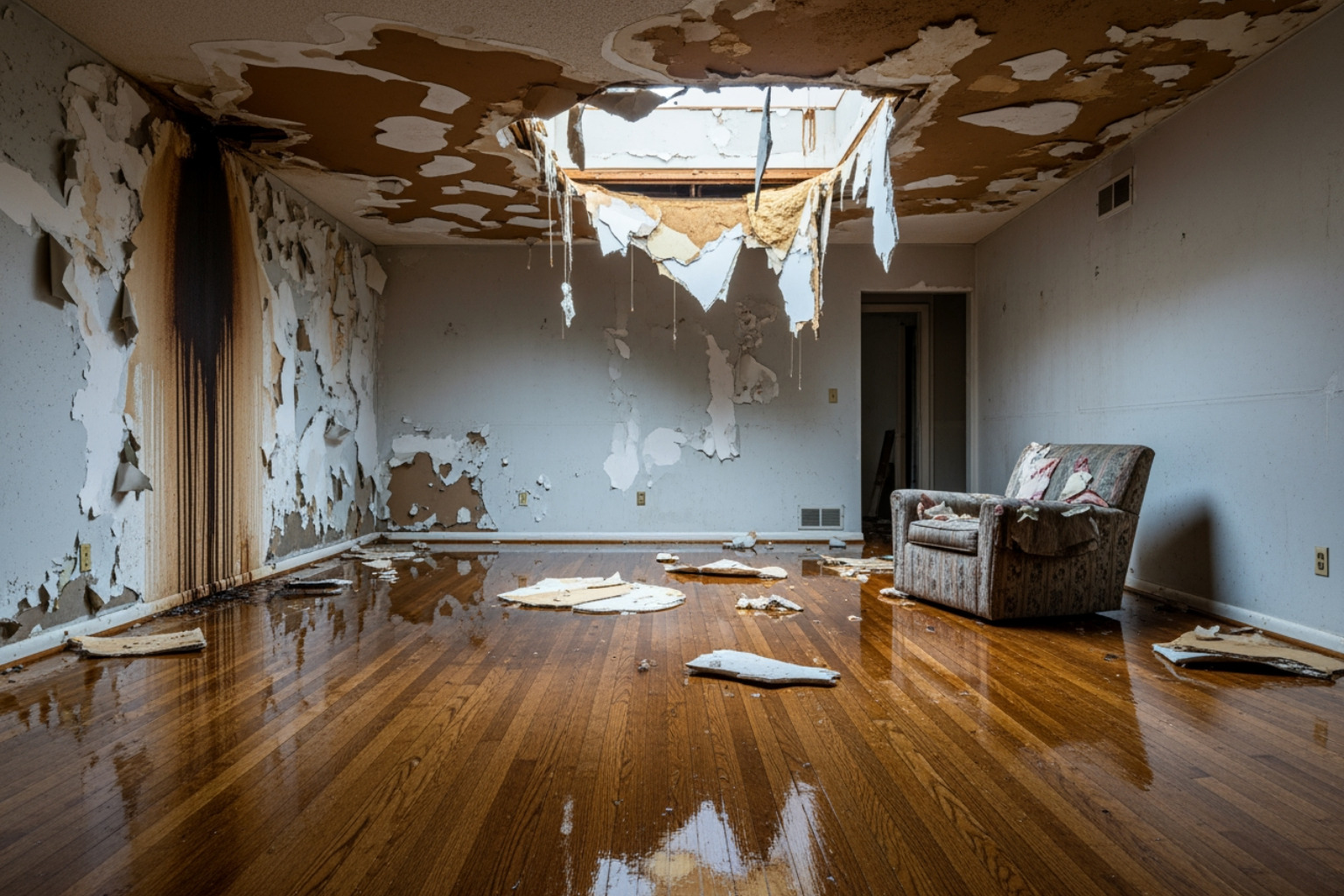
The first thing to do after a loss is to contact your insurance agent, broker, or company as soon as possible. Most insurance companies have time limits, ranging from 90 days to 12 months, for submitting a claim, but prompt reporting is always best. Providing basic details about the incident will initiate your claim, and you’ll typically receive a claim number.
During this initial stage, it’s also your responsibility to take reasonable steps to prevent further damage to your property. This might mean turning off the main water valve after a pipe burst or temporarily tarping a damaged roof after a storm. Keep all receipts for these temporary repairs, as they are often reimbursable. You can find more comprehensive guidance on filing a claim in our guide on How to file a homeowners claim.
Step 2: The Adjuster’s Inspection and Damage Documentation
Once your claim is filed, an adjuster will be assigned to your case and will schedule a visit to your property. This on-site inspection is a critical part of the home insurance claim investigation process. The adjuster will assess the damage, determine its cause, and evaluate what repairs or replacements are needed.
To prepare for their visit, we recommend:
- Document Everything: Take extensive photos and videos of all damaged items and areas before any cleanup or repairs begin. If you have “before” photos of your property or belongings, these can be invaluable.
- Create a Home Inventory: Prepare a detailed list of lost or damaged articles, including brand names, model numbers, and estimated values. Proof of ownership (receipts, warranties) is very helpful.
- Keep Damaged Items: Unless they pose a health hazard or are dangerous, do not dispose of damaged items until the adjuster has inspected them or you’ve confirmed with your insurer that disposal is acceptable.
- Gather Essential Documents:
- Police reports (if applicable, for theft or vandalism)
- Receipts for any temporary repairs you’ve made
- Your home inventory list
- Photos and videos of the damage
- Any contractor estimates you’ve obtained (though not always necessary before filing, it can be helpful for your own understanding)
Step 3: Formal Statements and the home insurance claim investigation process
During the investigation, the insurance company may request formal statements from you. These can come in two main forms:
- Informal Recorded Statements: These are often phone calls where your answers are recorded. While less formal than an EUO, anything you say can be used in the claims process. Be accurate and truthful.
- Examination Under Oath (EUO): This is a much more formal proceeding where you provide sworn answers to questions posed by an insurer’s representative, often their attorney, in the presence of a court reporter. It’s a thorough inquiry, and you have a legal obligation to tell the truth. While you have the right to legal counsel, their participation may be restricted compared to a deposition. Failing to appear, refusing to answer material questions, or providing false answers can lead to your claim being denied or your policy being voided.
It’s worth noting a cognitive bias called the “telescoping effect,” where people misremember the timing and amounts of past events. This can inadvertently lead to misrepresentations in claims. Being meticulous with your documentation helps counteract this.
Here’s a quick comparison:
| Feature | Informal Interview | Examination Under Oath (EUO) |
|---|---|---|
| Formality | Less formal, often a phone call | Highly formal, sworn testimony with court reporter |
| Legal Obligation | Expected to be truthful | Legal obligation to tell the truth; false statements can void policy or deny claim |
| Counsel Presence | Generally not required, but can be advised | Right to have counsel present, though counsel’s participation may be restricted |
| Purpose | Gather initial facts, clarify details | In-depth fact-finding, address suspicions of fraud, misrepresentation, or policy breaches |
| Consequences of Falsehood | May lead to claim scrutiny or denial | Can void policy, deny claim; distinct from perjury charges in deposition context |
Step 4: Settlement Valuation and Offer
Once the investigation is complete, your insurance company will review your policy and the collected information to determine a settlement amount. Key terms you’ll encounter here include:
- Replacement Cost Value (RCV): This is the cost to replace a damaged item with a new one of similar kind and quality, without deducting for depreciation.
- Actual Cash Value (ACV): This pays the amount needed to replace an item at its current market value, taking into account depreciation (wear and tear).
- Additional Living Expenses (ALE): Also known as “Loss of Use” coverage, ALE covers the necessary increase in living expenses if your home becomes uninhabitable due to a covered loss. This can include hotel stays, temporary rentals, extra food costs, and other incidentals.
- Reviewing the Settlement Offer: The insurer will present a settlement offer. This is a critical moment. It’s often an initial offer, and you should review it carefully to ensure it fully covers your losses. We’ve seen many instances where the initial offer doesn’t reflect the true cost of repairs or replacement. Our blog post on Signs Insurance Company Underpaid can help you identify if an offer seems too low.
Your Rights and Responsibilities During the Investigation
When you’re in the middle of a claim, it can feel like the insurance company holds all the cards. But as a policyholder, you have both rights and responsibilities during the home insurance claim investigation process. Sitting down with your policy and understanding these key points is one of the most empowering steps you can take. It’s the key to a smoother, fairer experience.
Your Responsibilities:
- Duty to Cooperate: You are generally required to cooperate with your insurer’s investigation. This means providing requested documents, appearing for interviews, and answering questions truthfully.
- Duty to Protect Property from Further Loss: Take reasonable steps to prevent additional damage after the initial incident. This demonstrates your commitment to mitigating losses.
Your Rights:
- Right to a Fair and Timely Process: Insurance companies are expected to handle claims efficiently and in good faith. You have the right to be informed of each investigation step and to a fair assessment.
- Right to Receive a Copy of Your Policy: You should always have access to your full policy document to understand your coverage.
- Right to a Clear Explanation of Decisions: If your claim is denied or a settlement is offered, you have the right to a detailed explanation of the insurer’s decision.
- Right to Access Information: You have the right to access and review information gathered by the insurer related to your claim.
For more information on consumer rights during a property claim, you can consult resources provided by state insurance departments, much like this helpful Residential Property Claims Guide.
Understanding Key Policy Terms
Insurance policies can be complex, filled with terminology that can be confusing. Here are some key terms to understand:
- Replacement Cost Value (RCV) vs. Actual Cash Value (ACV): As mentioned, RCV covers the cost to replace new, while ACV accounts for depreciation. Knowing which applies to your dwelling and personal property is crucial.
- Deductible: This is the portion of the loss you pay out-of-pocket before your insurance coverage kicks in.
- Additional Living Expenses (ALE): This coverage helps with increased costs if your home is uninhabitable. However, terms like “necessary increase,” “normal standard of living,” and “shortest time required” can be ambiguous and subject to interpretation by the insurer.
- Policy Limits and Sub-limits: These are the maximum amounts your policy will pay for different categories of loss (e.g., dwelling, personal property, trees and shrubs). Some perils, like water damage, might have specific sub-limits.
- Exclusions: These are specific events or types of damage that your policy explicitly does not cover. For example, most homeowners policies don’t cover flood damage, requiring a separate flood insurance policy. Understanding exclusions is vital, as they are common reasons for claim denials. Our article Why Covered Water Damage Isn’t Always Covered digs into this for Arizona homeowners.
Navigating the home insurance claim investigation process with Confidence
To ensure the home insurance claim investigation process goes as smoothly as possible, consider these best practices:
- Keep Detailed Records: Maintain a log of all communications (dates, times, who you spoke with, what was discussed), emails, letters, and documents. Make copies of everything you send to or receive from your insurer.
- Communicate in Writing: Follow up phone conversations with an email summarizing what was agreed upon. This creates a paper trail.
- Ask Questions: If you don’t understand something, ask for clarification. Don’t be afraid to request a detailed explanation of any part of your policy or the investigation.
- Don’t Sign Documents You Don’t Understand: Read everything carefully. If you’re unsure, seek advice before signing. Be especially wary of on-the-spot settlements that require you to release further liability.
- Understand Claim Timelines: While there isn’t always a strict legal limit on how long an insurer can investigate, they are generally expected to act efficiently. If your claim seems unduly delayed, inquire about the status.
- Avoid Common Mistakes: Many policyholders make errors that can jeopardize their claim. Learn from our insights on Common Property Damage Claim Mistake to avoid pitfalls.
What to Do If Your Claim is Delayed or Denied
Even with careful preparation, you might encounter delays or a denial during the home insurance claim investigation process. This can be incredibly frustrating, but it’s not necessarily the end of the road.
Common reasons for a claim denial include:
- Policy Exclusions: The damage may fall under an exclusion in your policy (e.g., flood damage without a separate flood policy).
- Lack of Evidence: Insufficient documentation or inconsistent statements may lead the insurer to question the legitimacy or extent of the claim.
- Suspected Fraud: If the insurer suspects misrepresentation or fraud, they will likely deny the claim. False statements can lead to severe consequences.
- Damage Below Deductible: If the estimated repair cost is less than your deductible, the insurer won’t pay.
Understanding a Claim Denial
If your claim is denied, the insurer must provide you with the denial in writing, outlining the specific reasons. It’s crucial to review this letter carefully and compare it against your policy language. Sometimes, a denial can be based on a misunderstanding or a narrow interpretation of your policy. For example, water damage claims are frequently denied; our article on Denied Water Damage Claim offers more context.
When to Seek a Second Opinion
If you receive an unfair settlement offer, feel your claim is being unreasonably delayed, or if you simply feel overwhelmed by the complexities of the home insurance claim investigation process, it might be time to seek a second opinion.
This is precisely where a public adjuster can step in. We work exclusively for you, the policyholder, to ensure your claim is handled fairly and you receive the maximum settlement possible. We understand the nuances of insurance policies, the tactics insurers use, and how to properly document and present your losses.
The cost of not having a professional advocate can be significant. Our article on The Cost of Not Hiring a Public Adjuster sheds light on this. We believe that you shouldn’t have to fight your own insurance company, especially when you’re already dealing with property damage.
Conclusion: Ensuring a Fair and Prompt Resolution
The home insurance claim investigation process can be complex, but with the right knowledge and support, you can steer it with confidence. We’ve walked through the reasons for investigation, the step-by-step process, your rights and responsibilities, and what to do if things go awry.
Clear documentation, proactive communication, and a thorough understanding of your policy are your strongest allies. Be diligent in keeping records, asking questions, and never signing anything you don’t fully comprehend.
At Hudson Douglas Public Adjusters, we are proud to be a family-owned and operated, locally based Arizona business. We’ve been serving homeowners and commercial property owners in communities like Paradise Valley, Chandler, Gilbert, Scottsdale, Mesa, and San Tan Valley for over 50 years. Our deep local roots mean we understand the unique challenges our neighbors face, from monsoon storm damage to unexpected pipe bursts.
We work solely for you, the policyholder, with no upfront fees. We receive 12% of the payout, meaning our clients never pay out of pocket. Our goal is to relieve your stress, handle the intricate details of your claim, and ensure you receive the full and fair settlement you deserve. We’re available 24/7, and we’re ready to put our decades of expertise to work for you. We also proudly support our Spanish-speaking clients with full assistance (Apoyo en español).
If you’re facing a complex claim, an unfair offer, or simply feel overwhelmed, don’t hesitate to reach out. We’re here to be your trusted advocate.