Hailstone Physics and Structural Impact Thresholds
To assess roof hail damage accurately, inspect ground-level collateral indicators like dented gutters and AC fins, check roofing surfaces for mat bruising, granule loss, or fractured tiles, and perform a 100-square-foot test square count to quantify impact density. Understanding the physical forces behind these impacts helps establish the full scope of structural harm.
Hail forms in strong thunderstorm updrafts that carry raindrops into extremely cold areas of the atmosphere, adding layers of ice until the hailstones grow too heavy for the updraft to support. As they fall, their terminal velocity—the maximum speed a falling object reaches—depends directly on their size, density, and mass.
A 1-inch hailstone falls at roughly 25 to 40 miles per hour, whereas a 2-inch stone can strike a structure at speeds exceeding 70 miles per hour. The resulting kinetic energy transfers instantly to your building’s exterior upon impact.
- 0.75 to 1.0 Inch (Dime to Quarter Size): Sub-severe stones rarely compromise fresh materials. However, lightweight composite shingles or roofs with prior sun degradation can suffer surface granule loss and weakened seal strips.
- 1.25 Inches (Half-Dollar Size): This is the baseline threshold where hail consistently produces functional damage across standard 3-tab and architectural asphalt shingles, causing underlying mat fractures.
- 1.75 Inches and Larger (Golf Ball Size and Above): Impacts at this scale cause severe, immediate damage across almost all roofing systems, puncturing low-slope commercial membranes, fracturing clay tiles, and denting metal roof panels.
The severity of structural harm depends on more than just the diameter of the ice stone. Wind velocity transforms vertical falls into high-energy angled strikes, pushing hailstones beneath shingle tabs or driving them into siding. Microburst trajectories can hammer windward slopes while leaving leeward sections untouched.
Furthermore, roof age and sun exposure play massive roles. In the intense heat of Arizona and across the Southwest, UV radiation gradually bakes the flexible volatile compounds out of asphalt and tile underlayments. When rigid, aged materials take a direct hit, the roof deck beneath absorbs the force, resulting in hidden cracks that compromise the building envelope.
How to Identify Roof Hail Damage Across Different Materials
Hail does not affect every roofing material the same way. Identifying damage requires understanding how specific substrates react to high-velocity impacts, as well as evaluating surrounding collateral evidence.
Assessing Roof Hail Damage on Asphalt Shingles
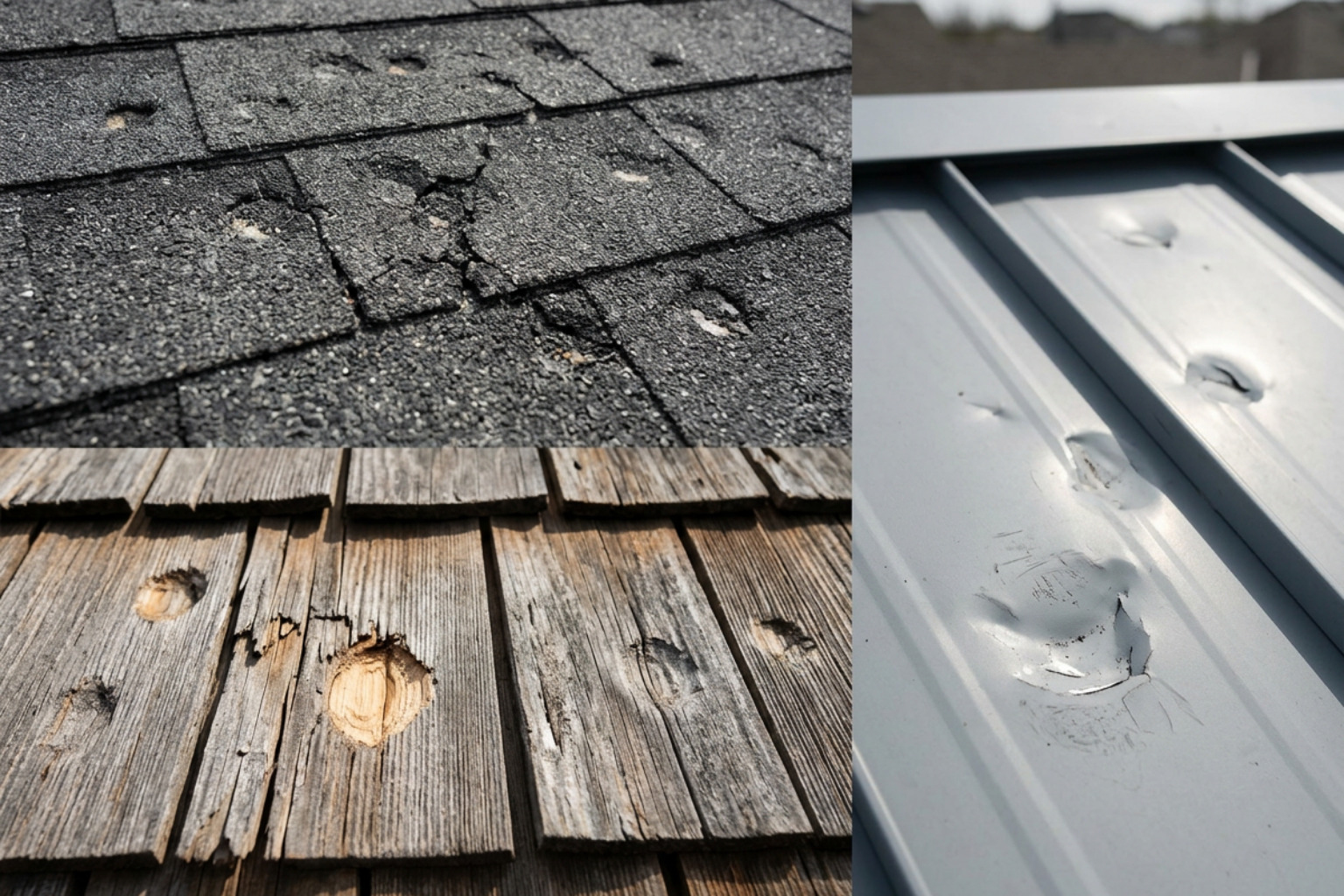
Asphalt shingles consist of a base fiberglass or organic mat coated with asphalt and topped with ceramic-coated mineral granules. Hail strikes damage this system in several distinct ways:
- Mat Bruising: When a hailstone strikes, it crushes the internal fiberglass core. Even if the surface appears intact, pressing the spot reveals a soft, spongy indentation similar to the feel of an apple bruise.
- Granule Loss: Impact knocks protective granules free, exposing the black bitumen beneath. In laboratory impact tests using 50.8 mm hailstones, experimental shingles averaged 7,687.2 mm² of granule loss per shingle.
- Exposed Bitumen and UV Decay: Without granules shielding the asphalt from sunlight, UV rays rapidly degrade the exposed binder, leading to brittleness and cracking within months.
- Adhesive Seal Failure: The shockwave of multiple impacts can break the factory sealant strip bonding overlapping shingle courses, leaving the roof vulnerable to wind uplift.
Evaluating Wood Shakes, Metal Panels, and Tile Roofs
Non-asphalt roofing materials display different failure patterns when subjected to storm conditions:
- Wood Shingles and Shakes: Hail splits wood along its natural grain. A fresh, storm-related split exhibits a bright orange or light brown cleavage with sharp, clean edges. In contrast, older splits caused by natural weathering show rounded, gray, deteriorated margins. Look for distinct impact indentations along the split line.
- Metal Roofing: Hail creates round dimples on metal panels. While minor dimpling on heavy-gauge standing seam metal may be cosmetic, deep dents can stretch the metal, disrupt protective galvanized or painted coatings, and deform interlocking standing seams, creating entry points for water.
- Tile Roofing (Concrete and Clay): Hail impacts create distinct corner breaks, transverse fractures, and star-shaped impact cracks. In tile assemblies, broken tiles allow rainwater to reach the underlying felt underlayment. In arid, sunny climates, this underlayment is often dry and brittle, and localized water penetration can travel laterally along battens before leaking into the living space.
Distinguishing Roof Hail Damage from Normal Wear and Blistering
One common issue in property claims is confusing storm damage with normal wear or manufacturing defects. Thermal blistering occurs when moisture or volatile gases trapped inside the shingle expand during high summer heat. These blisters rise toward the surface, forming small, hollow bubbles. When their tops pop off from foot traffic or natural weathering, they leave tiny pits that can look like hail hits at a glance.
Step-by-Step Process for Documenting Storm Impact
Proper documentation provides the factual basis for an accurate claim assessment. As a policyholder, your goal is to capture clear evidence of the storm event and its physical effects without placing yourself in danger.
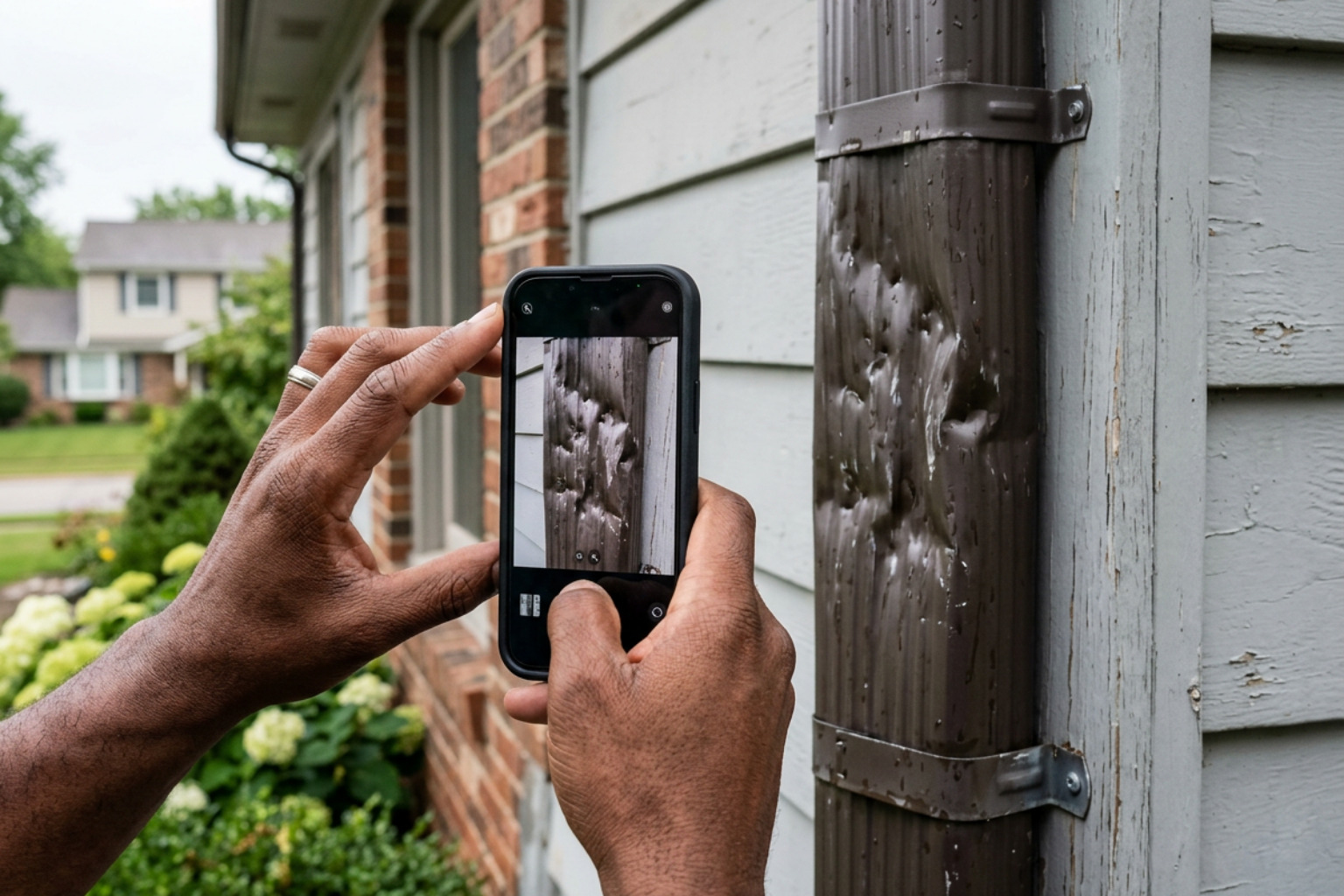
Begin by inspecting ground-level elements for collateral evidence. Hail rarely strikes a roof without leaving marks on surrounding structures. Checking these softer items establishes hail size and wind direction:
- Air-Conditioning Condenser Units: Examine the thin aluminum cooling fins on your exterior AC units. Hail leaves distinct crushed patterns across the metal fins.
- Gutters and Downspouts: Look along the painted surfaces of aluminum gutters for round dings. Hail strikes leave smooth, hemispherical indentations without scratches; paired scrapes spaced 16 inches apart indicate ladder rests rather than storm impacts.
- Window Screens and Painted Trim: Check for torn fiberglass mesh, dented metal frames, and spatter marks on painted wood siding or fences where hail knocked away surface oxidation or algae.
- Soft Metal Roof Accessories: Ground-visible roof components like aluminum box vents, turbine caps, and plumbing flashing show clear impact dents.
To maximize your residential property insurance claim, photograph every affected area using clear references for scale. Enable location services on your smartphone so each picture includes verifiable metadata, including GPS coordinates and timestamps. Pair these photos with official local meteorological data from the National Oceanic and Atmospheric Administration (NOAA) logging the exact time, date, and verified hailstone sizes for your ZIP code.
Professional Inspection Protocols and the 10×10 Test Square
While ground photos establish the storm’s presence, evaluating the roof surface requires a structured methodology. Certified roof inspectors follow established field protocols to eliminate guesswork.
The inspector outlines a 10-foot by 10-foot area (equaling 100 square feet, or one roofing “square”) on each distinct directional slope using chalk. Within this square, they document:
- Qualifying Functional Hits: The inspector physically examines shingles, circling bruises that exhibit mat fractures, missing granules, or tears. Industry standards generally consider 8 or more qualifying hits within a single 100-square-foot area as evidence that the slope has reached the end of its serviceable life.
- Component-Level Review: Beyond the shingles, inspectors check valleys, ridge caps, drip edges, chimney counter-flashings, and exhaust vent caps.
- Attic and Interior Evaluation: An inspector checks the underside of the roof decking inside the attic. Plywood or oriented strand board (OSB) sheathing can split under heavy impacts, and minor leaks around vent penetrations may go unnoticed from living areas below.
When dealing with large commercial facilities, built-up asphalt roofs, or single-ply membranes (such as TPO or PVC), specialized inspection techniques are necessary. For commercial properties, follow our step-by-step guide to assessing commercial roof damage to evaluate core samples, membrane punctures, and underlying insulation compression.
Navigating Insurance Settlements, Repairs, and Policy Upgrades
Understanding how insurance policies value roof damage helps property owners navigate the claims process with realistic expectations.
Settlements depend primarily on the specific coverage structure outlined in your policy declarations:
- Replacement Cost Value (RCV): Under an RCV policy, the insurer pays the full cost to repair or replace the damaged roof with new materials of like kind and quality, minus your deductible. This payout is typically released in two checks: first, an upfront Actual Cash Value payment; second, the remaining “recoverable depreciation” balance once repairs are completed and invoiced within policy deadlines (often 180 to 365 days).
- Actual Cash Value (ACV): If your policy is written on an ACV-only basis, the carrier deducts depreciation based on the age and pre-existing condition of your roof. On a 15-year-old roof, this depreciation deduction can exceed 50% of the total claim value, leaving the owner responsible for the difference.
- Percentage-Based Deductibles: In many storm-prone areas, property policies include separate wind and hail deductibles calculated as a percentage (typically 1% to 2%) of the home’s total insured dwelling value (Coverage A), rather than a standard flat $1,000 deductible.
For a mid-sized single-family home (1,800 to 2,400 square feet), average insurance settlements for hail-damaged residential roofs generally range from $9,000 to $15,000 before deductibles, depending on regional labor rates and roof pitch.
If your initial settlement offer omits key building code requirements—such as mandatory drip edge installations, ice-and-water barrier underlayments, or complete slope matching—be sure to review common signs an insurance company underpaid to determine if the loss scope warrants formal reassessment.
Repair Versus Full Roof Replacement Criteria
Deciding whether to spot-repair a damaged section or replace the entire roofing system involves balancing structural condition, material availability, and long-term costs:
When an asphalt roof reaches 12 to 15 years of age, thermal exposure makes the remaining shingles brittle. Attempting to lift adjacent tabs to replace a few damaged shingles often cracks the surrounding material, creating new failure points. Additionally, if the existing shingle line has been discontinued by the manufacturer, finding an exact match for size and color may be impossible. Many jurisdictions enforce matching regulations that require full replacement if a visually uniform repair cannot be achieved.
When a full replacement is necessary, consider upgrading to Class 4 Impact-Resistant (IR) shingles. These shingles undergo the UL 2218 standard test, in which a 2-inch steel ball is dropped twice from a height of 20 feet onto the same spot without fracturing the shingle backing.
While a Class 4 system typically adds $2,000 to $4,500 to the total cost of a standard residential roof replacement, many property insurance carriers offer annual premium discounts ranging between 20% and 35%. In hail-prone regions, these premium savings often recover the upgrade investment within 3 to 6 years.
Avoiding Post-Storm Contractor Scams and Claim Traps
Severe weather events often attract transient, door-to-door contractors. While many roofing companies are reliable, protecting yourself from predatory practices is essential.
A common property damage claim mistake is signing an assignment of benefits (AOB) or a high-pressure contract before having your damage independently evaluated. Never allow an unverified contractor onto your roof unsupervised, as unethical operators have been known to intentionally create damage with tools to manufacture claim evidence. Always demand proof of local licensing, verify active commercial liability insurance, and avoid paying large upfront deposits before materials are delivered.
Frequently Asked Questions About Storm Damage
What size hail is required to cause functional roof damage?
Hailstone diameter directly influences the type and severity of damage. Hail measuring 1.25 inches (roughly half-dollar sized) consistently produces functional damage on standard 3-tab and architectural asphalt shingles by fracturing the underlying fiberglass mat.
Aged or sun-weakened shingles may sustain damage from 1-inch stones (quarter sized), whereas heavy composite tiles and thick wood shakes generally require impacts of 1.5 inches or larger before structural cracking occurs.
How long do property owners have to file a hail damage claim?
Most standard property insurance policies require “prompt notice” of a loss, with explicit filing deadlines typically running between 180 days and one year from the date of the storm event, depending on state regulations and policy terms.
Because hail impacts can compromise a roof’s integrity for 12 to 18 months before internal ceiling leaks appear, scheduling an inspection shortly after a confirmed hailstorm helps preserve your ability to file within the required policy window.
Is upgrading to Class 4 impact-resistant shingles worth the investment?
For property owners in hail-prone regions, upgrading to Class 4 shingles is generally a cost-effective investment. Class 4 shingles meet the UL 2218 test standard, resisting impacts from 2-inch steel spheres dropped from 20 feet.
The upgrade typically adds $2,000 to $4,500 over a standard architectural shingle installation, but annual insurance premium discounts between 20% and 35% often offset this upfront difference within 3 to 6 years, while reducing future storm vulnerability.
Conclusion
A hailstorm can cause significant, hidden damage across residential and commercial roofing systems. Left unaddressed, bruised shingle mats, cracked tiles, and compromised flashing will gradually deteriorate under sunlight and weather, shortening your roof’s service life and leading to unexpected interior water damage.
Navigating property damage claims requires detailed evidence, accurate repair estimates, and a clear understanding of your policy coverage. Hudson Douglas Public Adjusters is a family-owned and operated, locally based Arizona business representing policyholders in residential and commercial property insurance claims. We work solely for you—never the insurance company.
We charge no upfront fees, receiving a 12% fee from the final insurance payout, meaning our clients pay nothing out of pocket. If you need help documenting storm damage, evaluating an initial settlement, or managing a disputed claim, explore our expert hail roof claim assistance to protect your property investment.