Understanding Hail Damage Home Repair Costs and Material Vulnerability
When hailstones strike your roof, they transfer kinetic energy directly into the exterior materials. The level of destruction depends on the size and density of the hailstones, wind speed, the age of the materials, and the specific roofing system installed on your home.
Understanding how different materials react to impacts helps you make informed choices about localized spot repairs versus a full roof replacement.
Identifying Roof Damage Across Asphalt, Tile, Metal, and Wood
Hail impact leaves distinct visual and structural marks depending on the surface material:
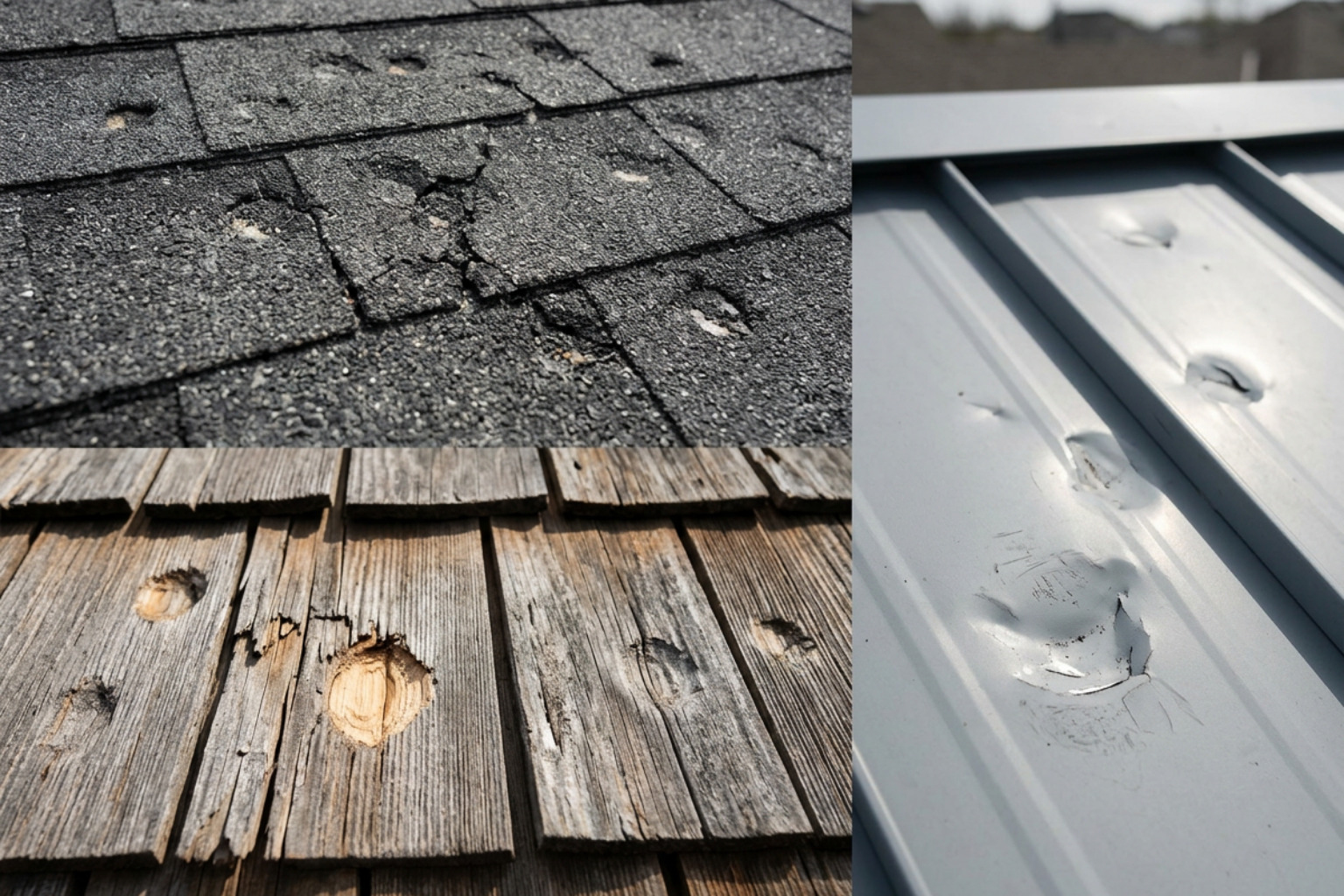
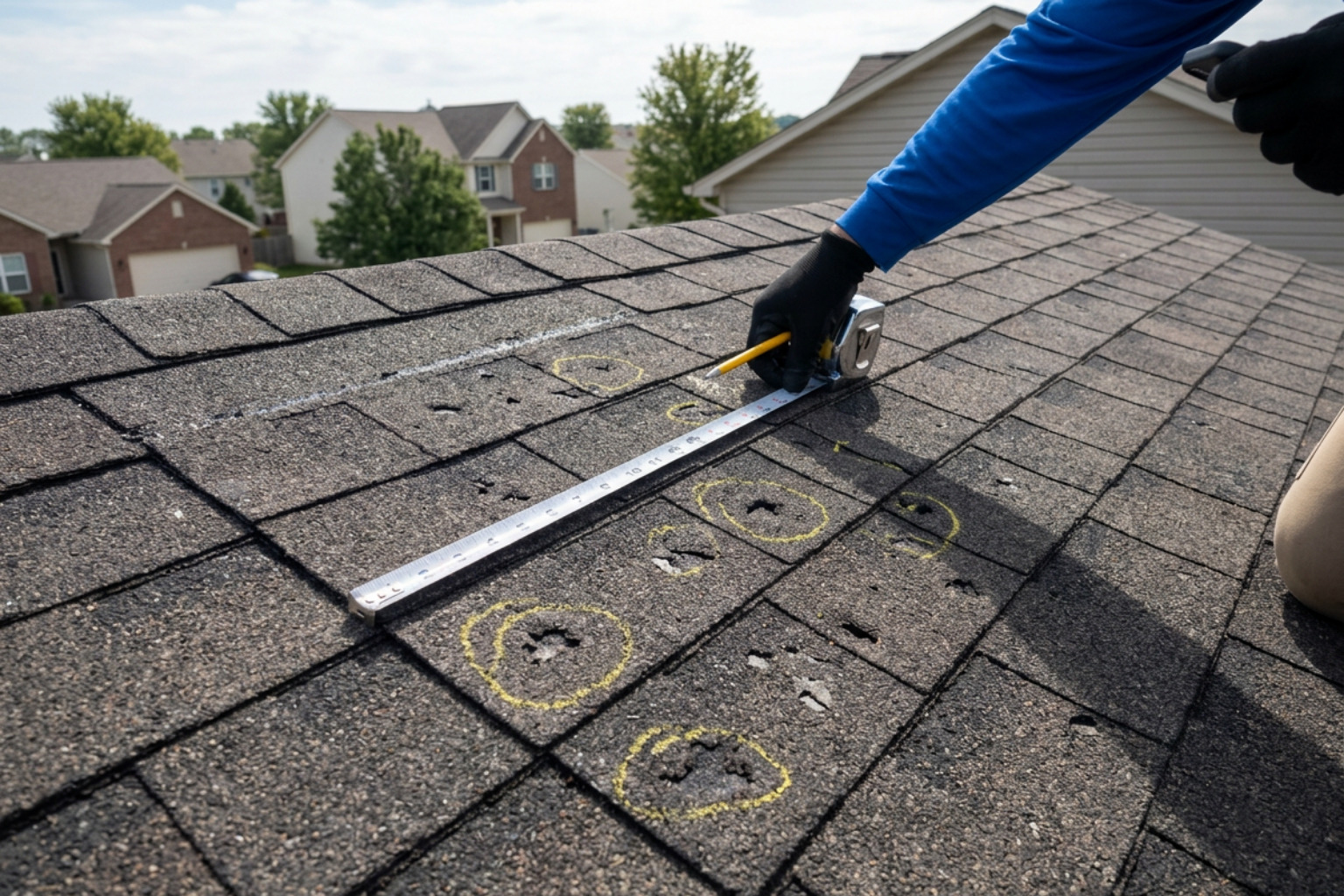
- Asphalt Shingles: Look for random, dark, circular divots where protective mineral granules have been knocked away. On standard 3-tab or architectural shingles, these spots often feel soft or spongy to the touch—similar to a bruised apple—because the underlying fiberglass matting has fractured beneath the asphalt layer.
- Clay and Concrete Tiles: Tile roofs common across Arizona communities—such as Paradise Valley, Scottsdale, and Gilbert—react differently. Hail impact creates sharp chips, shattered corners, and deep cracks across individual tiles. Even subtle hairline cracks allow water to seep through to the underlying felt, accelerating underlayment decay under high-temperature conditions.
- Metal Roofing: Metal panels develop visible dimples and surface dents. While minor indentations may seem purely aesthetic, severe impacts can break the protective factory coating, leaving vulnerable metal exposed to rust and corrosion over time.
- Wood Shakes and Shingles: Heavy hail causes clean splits along the natural grain of wood shakes. These fresh splits feature unoxidized, bright wood inside the crack, distinguishing storm damage from normal age-related weathering and edge rot.
Estimating Your Hail Damage Home Repair Budget
Repairing storm-related damage requires balancing labor rates, roof pitch, material selection, and total damaged square footage. Roofing professionals price work by the “square,” which represents a 10-foot by 10-foot area (100 square feet) of roof surface.
| Roofing Material | Vulnerability Level | Average Spot Repair Cost | Full Replacement Cost Range |
|---|---|---|---|
| Asphalt Shingles | Moderate to High | $350 – $1,200 | $4,000 – $16,000 |
| Clay / Concrete Tile | Moderate (Brittle) | $450 – $1,500 | $10,000 – $25,000+ |
| Metal Panels | Low to Moderate (Denting) | $500 – $1,800 | $9,000 – $22,000 |
| Wood Shake | High | $400 – $1,600 | $8,500 – $20,000 |
Across the country, the national average to repair a hail-damaged roof sits at approximately $4,250, with most property owners spending between $1,500 and $8,000. Minor spot patching on an accessible single-story asphalt roof might cost as little as $375, while full structural replacements on steep, high-end tile roofs can exceed $16,000 to $25,000.
A professional inspection typically costs between $125 and $600, though this fee is often absorbed into the overall restoration contract. Labor rates vary regional demand, with standard labor ranging from $35 to $75 per hour per worker.
How to Safely Inspect and Protect Your Property Post-Storm
Safety must always come first immediately following a major weather event. Walking onto a damaged, wet, or pitch-steepened roof is highly hazardous due to loose granules, cracked tiles, and weakened decking.
Instead of climbing a ladder, start your initial inspection safely from the ground using standard binoculars or a high-resolution camera zoom.
Immediate Emergency Steps to Prevent Secondary Water Damage
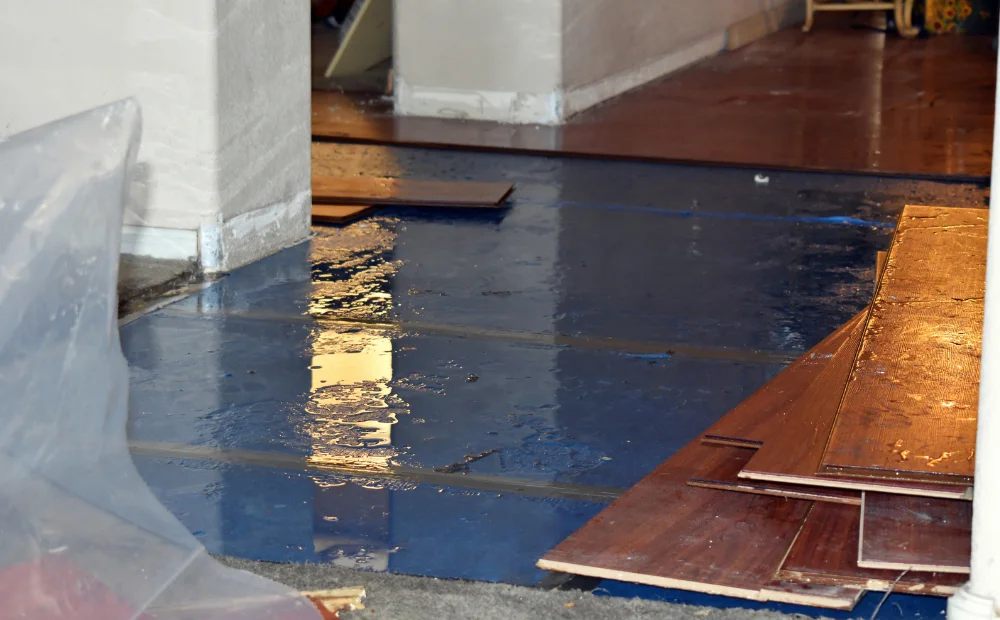
When storm damage leaves your home exposed, rapid mitigation prevents secondary interior decay and mold growth. Standard insurance policies require property owners to take reasonable steps to protect their structure from further damage following a loss.
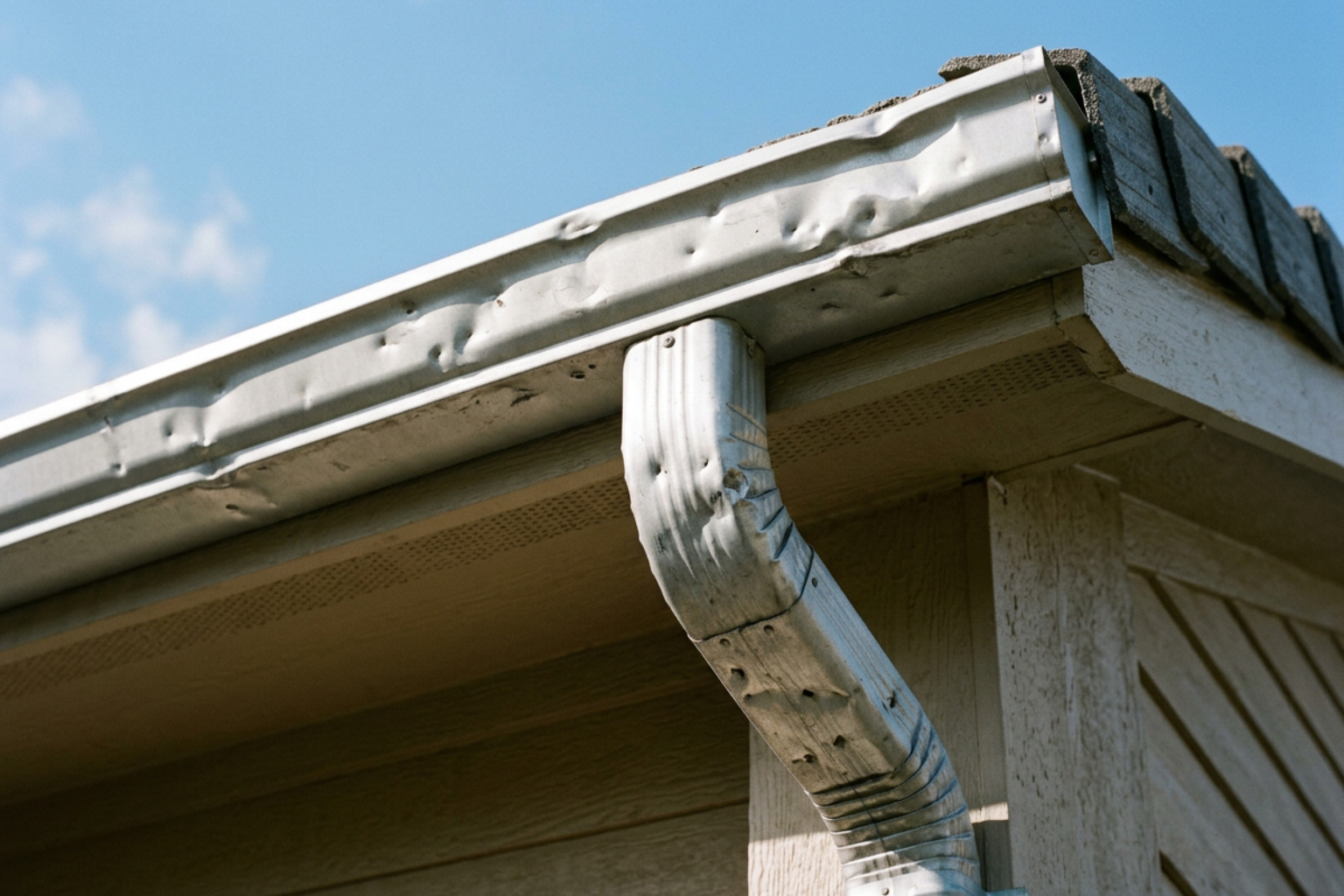
- Check Street-Level Collateral First: Examine soft metals around your property line. Look at mailboxes, outdoor AC unit cooling fins, metal window screens, and downspouts. Dents on aluminum gutters provide clear physical evidence of the size and direction of hailstones.
- Inspect Interior Upper Levels: Walk through your top floor and attic space. Check ceilings and drywall joints for fresh water rings, moisture discoloration, or active drips.
- Deploy Safe Temporary Tarping: If missing shingles or cracked tiles have created open pathways for water, hire a licensed local professional to install heavy-duty, properly weighted tarps over vulnerable roof sections.
- Save Every Receipt: Keep complete records and itemized receipts for all emergency mitigation purchases, tarping services, and board-up supplies. These expenses qualify as part of your overall Property Loss Claim reimbursement.
Choosing a Reputable Contractor and Avoiding Storm-Chaser Scams
Widespread hail events frequently attract transient, out-of-state “storm-chasing” contractors who travel from city to city following storm radar maps. They often pressure property owners into quick contracts, perform hasty or substandard work, and disappear before long-term issues become apparent.
Protect yourself by vetting contractors carefully before signing any representation agreements:
- Verify Local Roots: Choose contractors with an established physical office, local state trade license, active bonding, and comprehensive general liability insurance in Arizona.
- Refuse Deductible Absorption Schemes: Be cautious of any contractor offering to “absorb,” “waive,” or write off your insurance deductible. In nearly all jurisdictions, absorbing insurance deductibles constitutes insurance fraud.
- Avoid Blanket Assignment of Benefits (AOB): Never sign an agreement that transfers your entire insurance claim rights and policy benefit payouts directly to a contractor. You retain full right to manage your claim and review all settlement terms.
- Require Clear Written Scopes: Demands itemized pricing broken down by material costs, square quantities, and labor rates before authorizing permanent repair work.
Before signing contracts or committing to major restoration work, learn how to safeguard your rights by reading Don’t Let Your Insurance Claim Become a Total Wreck.
Navigating Insurance Claims and Settlement Disputes
Filing an insurance claim for hail damage seems straightforward on paper, but navigating adjuster meetings, line-item estimates, and policy conditions requires careful attention to detail.
Functional vs Cosmetic Damage in Policy Terms
Insurance carriers draw a strict distinction between functional damage and cosmetic damage.
- Functional Damage: Occurs when hail impacts reduce the roof system’s structural integrity, impair its water-shedding capability, or shorten its remaining useful lifespan. Fractured shingle matting, broken tiles, and torn underlayment are functional damages eligible for full coverage under standard property policies.
- Cosmetic Damage: Refers to surface-level changes—such as slight metal panel dimpling or minor superficial marring—that alter appearance without reducing weatherproofing capability or expected lifespan. Many policies contain explicit cosmetic damage endorsements or exclusions that limit payouts for surface dings on metal roofs or accent features.
Insurance adjusters evaluate damage using the “Test Square” methodology. The adjuster outlines a 10-foot by 10-foot square area (100 square feet) on representative roof slopes—typically selecting the most heavily impacted orientations.
If the adjuster counts between 8 and 10 verified hail impact marks within that test square on two or more roof slopes, the industry standard generally qualifies the entire roof slope or full structure for full replacement.
If an adjuster labels severe mat fracturing as cosmetic or offers a payout that leaves you short on repair funds, consult Signs Insurance Company Underpaid and request a formal Second Opinion Insurance Claim.
Key Steps in the Hail Damage Home Repair Process
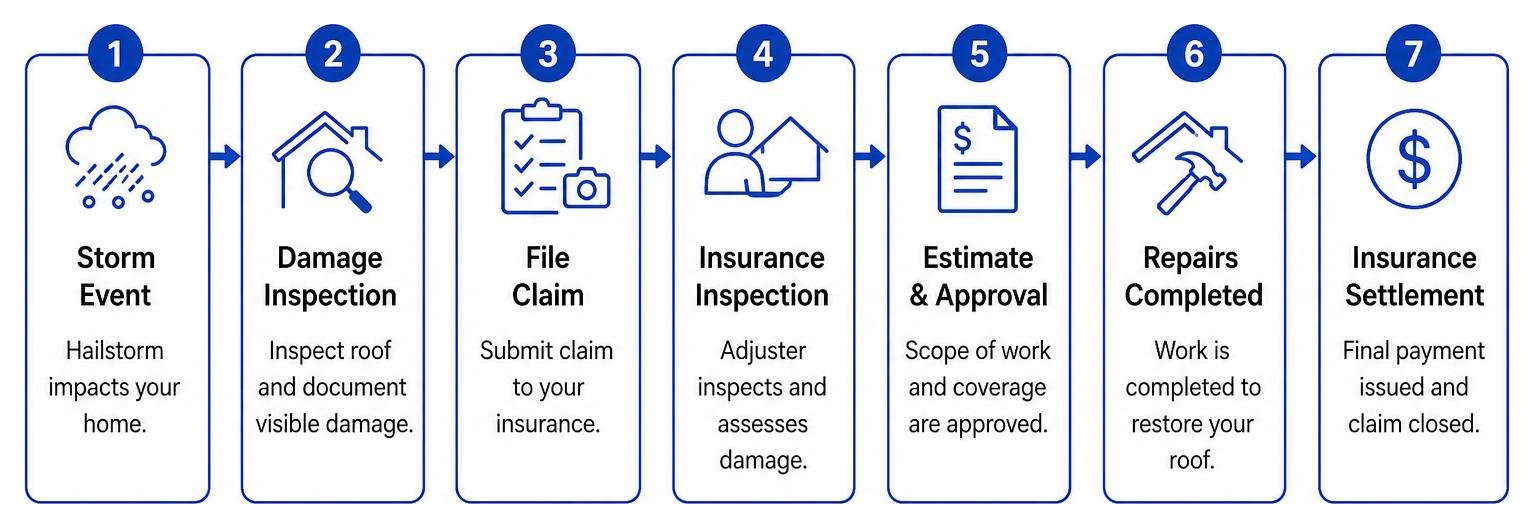
Navigating your claim effectively involves a structured, step-by-step approach:
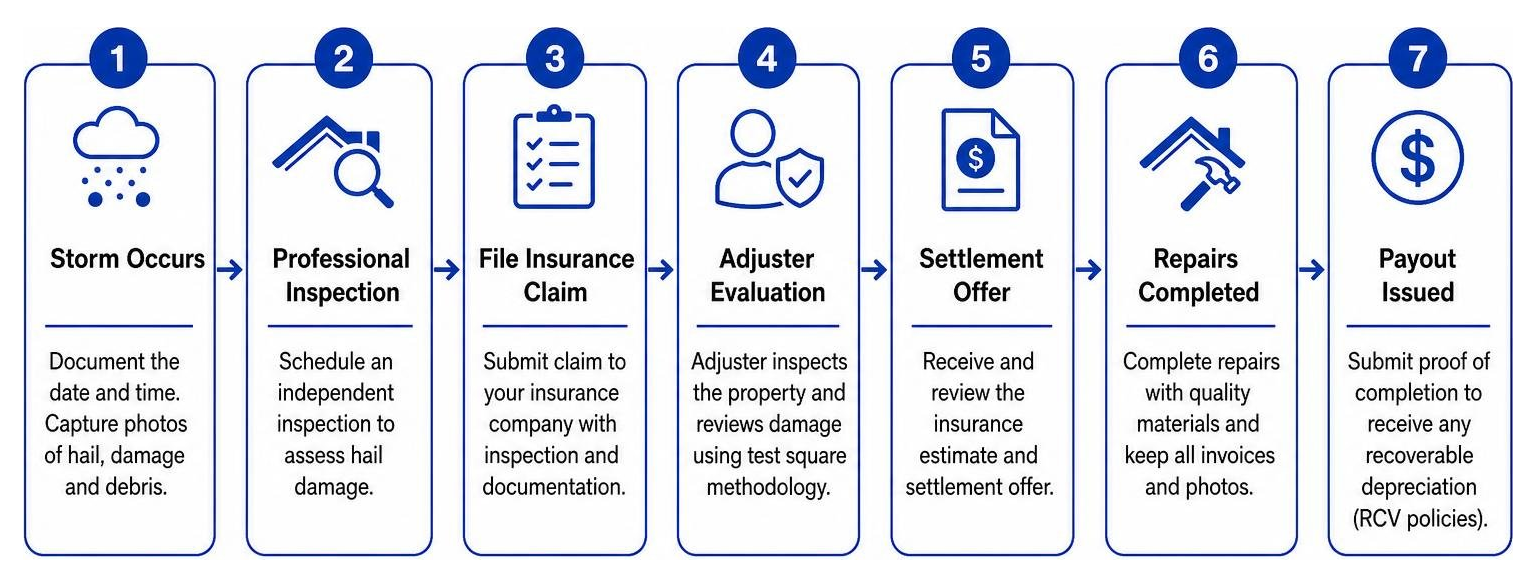
- Detailed Evidence Collection: Record the exact date and estimated time of the storm. Photograph storm debris, fallen hailstones alongside reference scales (such as a ruler or coin), dented gutters, and any interior water leaks.
- Understand Policy Types (ACV vs. RCV):
- Actual Cash Value (ACV): Pays out the current value of your roof, deducting depreciation based on its age and wear. On an older roof, ACV payouts may leave significant out-of-pocket gaps.
- Replacement Cost Value (RCV): Pays the actual current cost to repair or replace your roof with materials of like kind and quality. RCV policies disburse an initial ACV payment, followed by the remaining recoverable depreciation once repairs are completed and invoices submitted.
- Avoid Claims Pitfalls: Avoid opening an official insurance claim before having an independent inspection confirm structural damage. Opening claims for minor damage that falls below your policy deductible can register negatively on your policy claims history without providing financial recovery. Avoid common mistakes by reviewing Common Property Damage Claim Mistake.
- Explore Impact-Resistant Upgrades: When replacing a damaged roof, consider upgrading to Class 4 Impact-Resistant (IR) materials tested under UL 2218 standards. These modified polymer shingles resist hail impacts up to 2 inches in diameter. Beyond superior structural protection, upgrading to Class 4 materials often qualifies policyholders for annual home insurance premium discounts between 10% and 30%.
- Get Independent Policyholder Advocacy: Insurance company adjusters work on behalf of the insurer. Hiring a licensed public adjuster ensures you have an experienced professional acting solely on your behalf to quantify, document, and negotiate a fair settlement. Learn more about policyholder representation at Public Adjuster for Homeowners.
Frequently Asked Questions About Hail Damage Home Repair
How soon after a storm should I schedule a roof inspection?
You should arrange a professional roof inspection within 24 to 48 hours following a major hailstorm, and ideally within two weeks. Early detection helps catch silent leaks before moisture saturates roof decking, insulation, or internal ceiling structures.
In addition, prompt inspection establishes a direct chronological link between the verified weather event and your property damage, preserving your claim rights within strict policy filing windows.
What is the difference between cosmetic and functional hail damage?
Cosmetic damage alters surface appearance—such as shallow dings on metal vents or gutters—without compromising the roof’s structural integrity or weatherproofing capability. Functional damage occurs when hail fractures underlying shingle mats, shatters tiles, or compromises underlayment, directly reducing the roof’s water-shedding performance and expected service life. Insurance policies generally cover functional damage, whereas cosmetic coverage depends on specific endorsement terms.
Will my insurance cover a full roof replacement or just spot repairs?
Whether your carrier approves localized spot repairs or a complete roof replacement depends on the extent of verified damage, overall roof age, and local building codes. If an adjuster counts 8 to 10 or more functional impacts within a designated 10×10 foot test square across multiple slopes, a full replacement is typically warranted.
Furthermore, under local building codes (such as regulations triggering full code-compliant replacement when over 25% of a roof surface area is compromised) or material matching standards, partial slope damage often legally mandates full roof replacement.
Conclusion
Restoring your property after a severe hailstorm requires careful handling, accurate estimation, and clear documentation. Hail damage can compromise your roof’s weatherproofing long before visible ceiling leaks appear inside your home. Navigating contractor quotes, policy terms, depreciation schedules, and adjuster scopes can feel overwhelming, but you do not have to handle the process alone.
At Hudson Douglas Public Adjusters, we represent property owners—never insurance companies. As a family-owned and operated business based in Arizona, our team brings over 40 years of combined industry expertise across 10 states. We operate with absolute transparency: we charge no upfront out-of-pocket fees and earn a standard 12% fee only when we secure your policy payout.
Whether your property is located in Paradise Valley, Queen Creek, Gilbert, Scottsdale, Chandler, Goodyear, Mesa, San Tan Valley, Flagstaff, Prescott, or surrounding regions, our team provides 24/7 bilingual (English/Spanish) support to protect your financial rights.
If you suspect your insurance carrier underpaid your hail claim, delayed your settlement, or denied valid storm damage, learn about the real Cost of Not Hiring Public Adjuster. Take control of your recovery today by scheduling a Public Adjuster Free Consultation or visiting our dedicated Hail Roof Claim Type page to make sure your claim receives the full payout it deserves.