The Essential Guide to Arizona Property Loss Advocacy: Public Adjusters vs. Insurer Adjusters
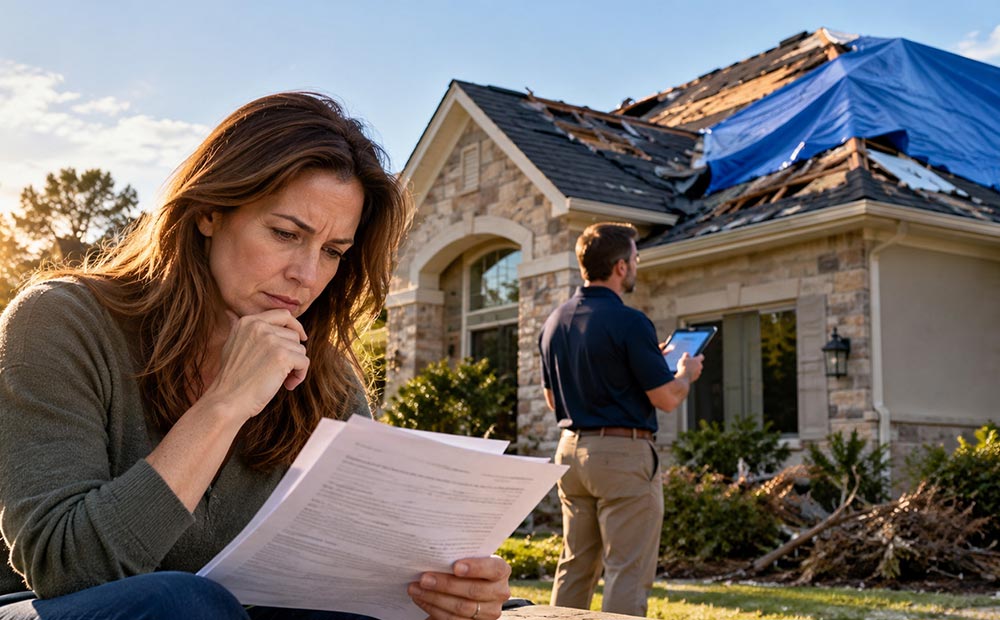
When your property sustains severe structural or water damage, navigating the claims process alone can be overwhelming. Understanding who sits on which side of the negotiating table is the foundation of effective claim advocacy.
Every insurance claim involves various professionals, but their legal duties and financial incentives differ significantly.
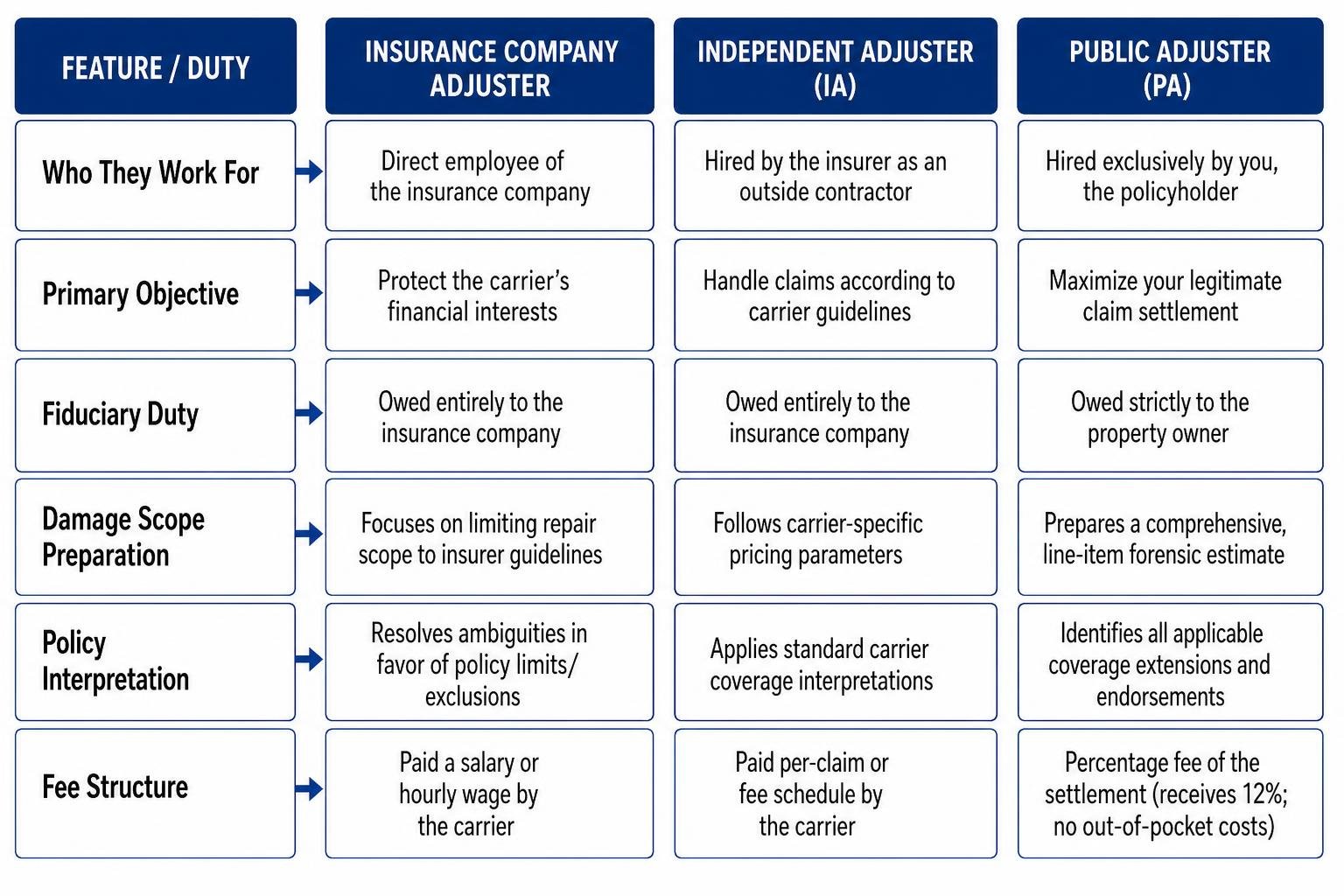
| Feature / Duty | Insurance Company Adjuster | Independent Adjuster (IA) | Public Adjuster (PA) |
|---|---|---|---|
| Who They Work For | Direct employee of the insurance company | Hired by the insurer as an outside contractor | Hired exclusively by you, the policyholder |
| Primary Objective | Protect the carrier’s financial interests | Handle claims according to carrier guidelines | Maximize your legitimate claim settlement |
| Fiduciary Duty | Owed entirely to the insurance company | Owed entirely to the insurance company | Owed strictly to the property owner |
| Damage Scope Preparation | Focuses on limiting repair scope to insurer guidelines | Follows carrier-specific pricing parameters | Prepares a comprehensive, line-item forensic estimate |
| Policy Interpretation | Resolves ambiguities in favor of policy limits/exclusions | Applies standard carrier coverage interpretations | Identifies all applicable coverage extensions and endorsements |
| Fee Structure | Paid a salary or hourly wage by the carrier | Paid per-claim or fee schedule by the carrier | Percentage fee of the settlement (Hudson Douglas receives 12%; no out-of-pocket costs) |
Understanding Policyholder Rights and the Adjuster Divide
Many policyholders assume that the adjuster sent by their insurance carrier is an unbiased evaluator. In reality, both company staff adjusters and third-party independent adjusters report directly to the insurer. Their job performance is tied to settling claims within strict corporate guidelines and controlling loss ratios.
A licensed public adjuster operates with an exclusive fiduciary duty to the policyholder. Exploring a public adjuster vs insurance adjuster comparison reveals that public adjusters do not represent insurance companies, handle auto policies, or answer to corporate claims committees.
Instead, our role focuses entirely on inspecting the full physical loss, interpreting complex policy endorsements, creating Xactimate-based line-item restoration estimates, and representing your financial interests during settlement talks.
When to Hire Professional Arizona Property Loss Advocacy
While minor property claims with straightforward repairs might be manageable on your own, complex or high-dollar losses benefit significantly from professional support. When considering a public adjuster, consider whether your claim involves any of the following scenarios:
- Widespread Structural Damage: Major structural compromises requiring engineering assessments, framing repairs, or roof replacements.
- Large-Scale Commercial Losses: Business interruptions, inventory write-offs, and multi-unit tenant disruptions.
- Scope Disputes and Severe Underpayments: The carrier’s initial payout fails to cover local material and labor costs.
- Hidden or Secondary Damage: Unseen moisture intrusion behind drywall, thermal insulation degradation, or ductwork smoke contamination.
- Complex Policy Endorsements: Navigating ordinance or law coverage, matching provisions, and depreciation recovery.
Navigating Complex Arizona Property Damage and Peril Exposures
Arizona presents unique environmental perils that can challenge standard property insurance policies. From the Sonoran Desert to the high country of Flagstaff and Sedona, property owners face distinct weather patterns that lead to complicated structural damage. Filing a comprehensive property loss claim requires understanding how specific perils are handled under Arizona law.
Monsoon Storms, Hail, and 100 MPH Microbursts
Arizona’s monsoon season, running from mid-June through September, brings violent atmospheric disturbances. Severe thunderstorms regularly generate microbursts—intense downdrafts capable of producing straight-line winds exceeding 100 mph.
These severe storm events cause significant structural damage across the Valley and surrounding regions:
- Wind Uplift and Flashing Failures: High-velocity winds tear away concrete and clay tile roofing, puncture foam roofs, and separate metal flashings, allowing torrential rain to enter attic spaces.
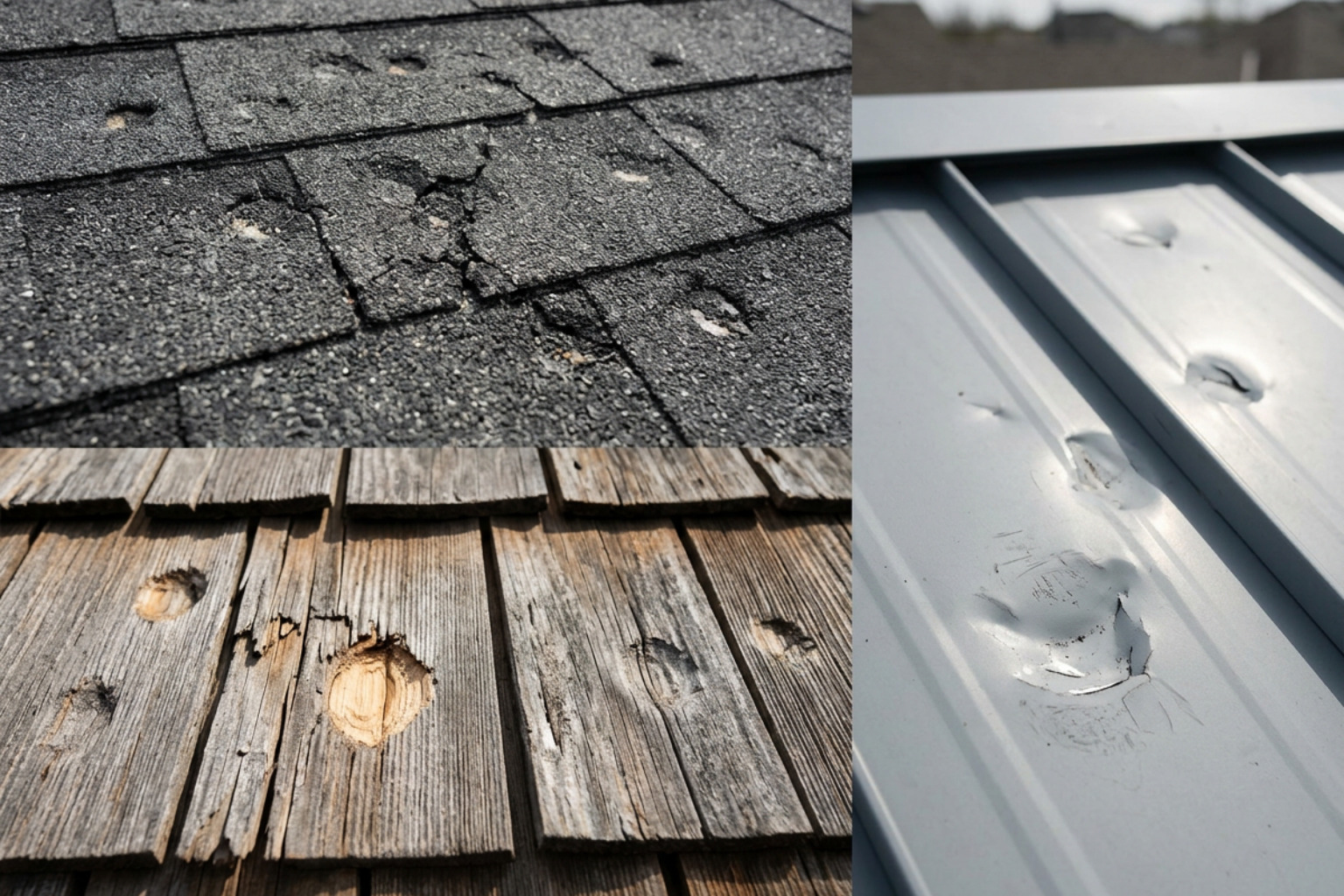
- Severe Hail Impacts: Hailstones batter roof membranes, shatter skylights, destroy outdoor mechanical HVAC equipment, and dent stucco surfaces.
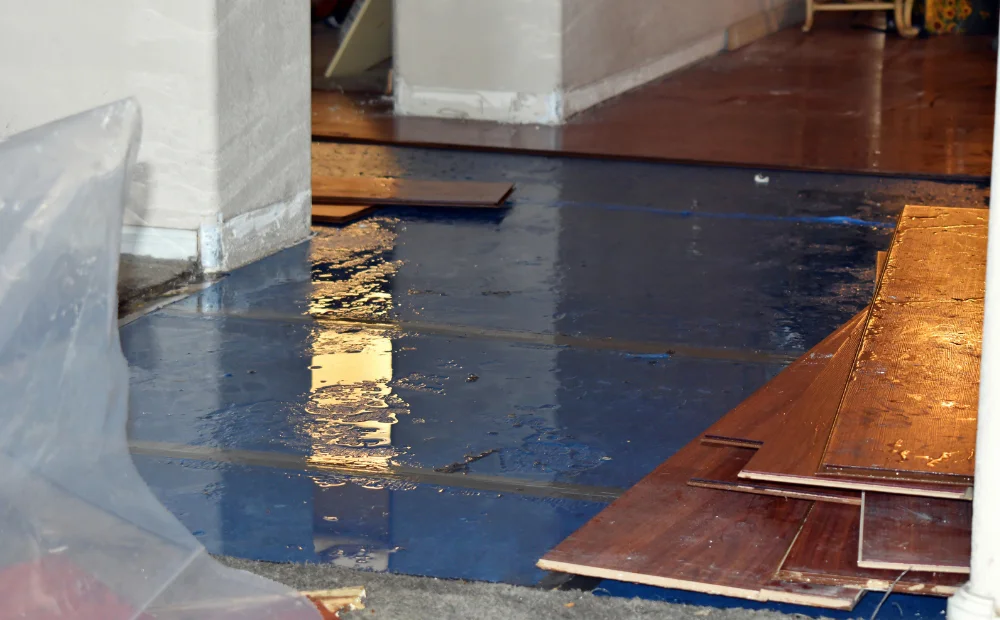
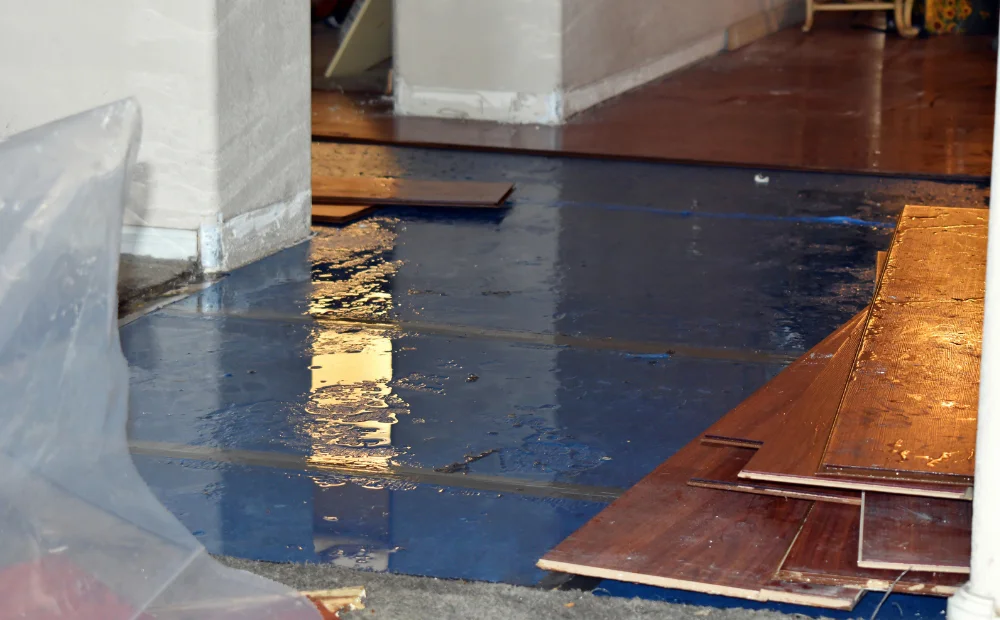
- Hidden Water Migration: Driven by heavy winds, rainwater can enter through exterior weep screeds, window seals, and parapet walls, creating internal mold and drywall rot that may go unnoticed during a surface-level carrier inspection.
Wildfire Risks and Secondary Flood Complexities
Wildfires represent an ongoing threat to Arizona communities, with the state experiencing over 1,500 wildfires each year. From suburban brushfires in Cave Creek, Scottsdale, and Goodyear to timber fires in Prescott and Flagstaff, the resulting destruction goes far beyond charred structures.
- Smoke, Ash, and Char Contamination: Even properties miles away from active flames can suffer significant damage from acidic particulate matter settling into HVAC systems, porous building materials, and personal property.
- Burn Scar Runoff: Post-wildfire environments create severe risks of flash floods and mudflows because incinerated soil loses its ability to absorb water.
- Critical Policy Exclusions: Standard homeowners and commercial property policies strictly exclude damage caused by rising surface water, flash flooding, and mudslides. Even if a wildfire was the direct cause of the destabilized terrain, carriers often deny subsequent flood damage under the anti-concurrent causation clause unless the owner holds a dedicated flood insurance policy.
Understanding Arizona Property Loss Advocacy for Disaster Claims
When catastrophic weather strikes, the path to recovery requires detailed technical documentation. Commercial enterprises face significant vulnerabilities, including structural losses, ruined inventory, and lost operational revenue.
Working to maximize your commercial property damage claim involves preparing forensic accounting reports, measuring business interruption impacts, and validating building code upgrade requirements.
Forensic scoping ensures that every affected square foot—from foundation movement caused by soil expansion to hidden structural charring—is documented in the initial proof of loss before cleanup begins.
Critical Arizona Insurance Deadlines and Regulatory Protections
Arizona law provides clear consumer protections to prevent insurance carriers from indefinitely delaying or underpaying valid claims. Knowing these rules helps ensure your carrier handles your claim fairly and in good faith. If you notice signs your insurance company underpaid, state-mandated timelines give you a clear framework to hold them accountable.
Arizona Insurance Regulatory Timelines
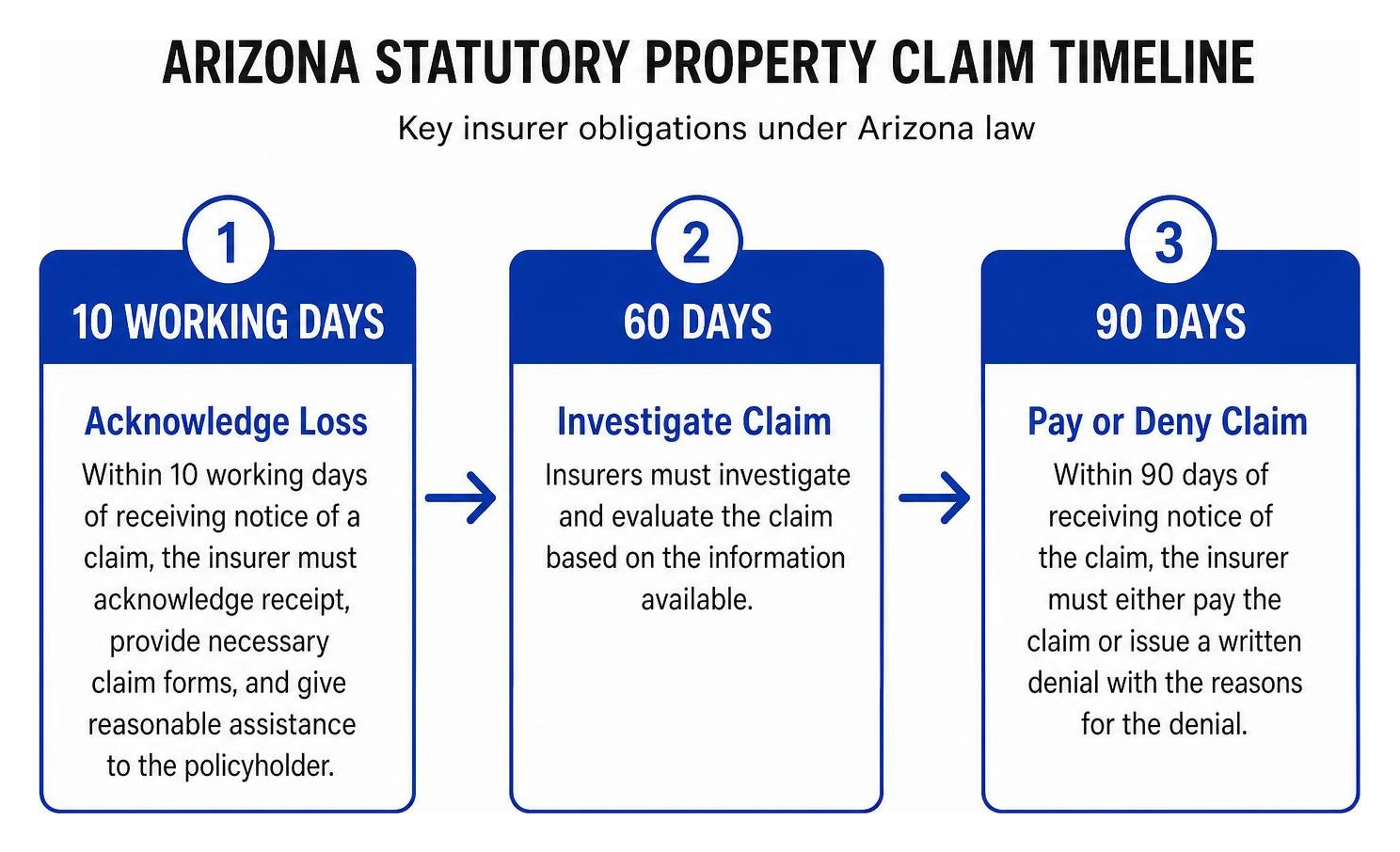
The Arizona Department of Insurance and Financial Institutions (DIFI) enforces strict regulatory timelines that insurers must meet throughout the adjustment process:
- 10 Working Days to Acknowledge Loss: Within 10 working days of receiving notice of a claim, the insurer must acknowledge receipt, provide necessary claim forms, and give reasonable assistance to the policyholder.
- 30 Calendar Days to Complete Investigation: The carrier must complete its investigation within 30 days after receiving notification, unless the investigation cannot reasonably be completed within that timeframe. If extended, the insurer must provide written updates explaining the delay. Understanding the home insurance claim investigation process helps you spot when an investigation is running off track.
- 15 Calendar Days to Accept or Deny: The insurer must accept or deny a claim, in whole or in part, within 15 working days after receiving a properly executed proof of loss and supporting documentation.
- 15 Calendar Days to Issue Payment: Once a claim or portion of a claim is approved and a settlement figure is agreed upon, the insurer must issue payment within 15 days.
Overcoming Claim Denials, Underpayments, and Bad Faith
When an insurance carrier issues a lowball offer or denies coverage without a solid contractual basis, policyholders have legal remedies. Under Arizona law, insurance companies owe their insureds an implied covenant of good faith and fair dealing.
If an insurer’s actions cross the line into deceptive or dilatory tactics, policyholders can pursue bad-faith remedies. For an in-depth breakdown of your rights, review our guide on when your insurer plays dirty and acts in bad faith.
Property owners can also file an administrative complaint with Arizona DIFI or consult legal counsel to protect their rights.
Step-by-Step Claim Strategy and Contractor Fraud Prevention
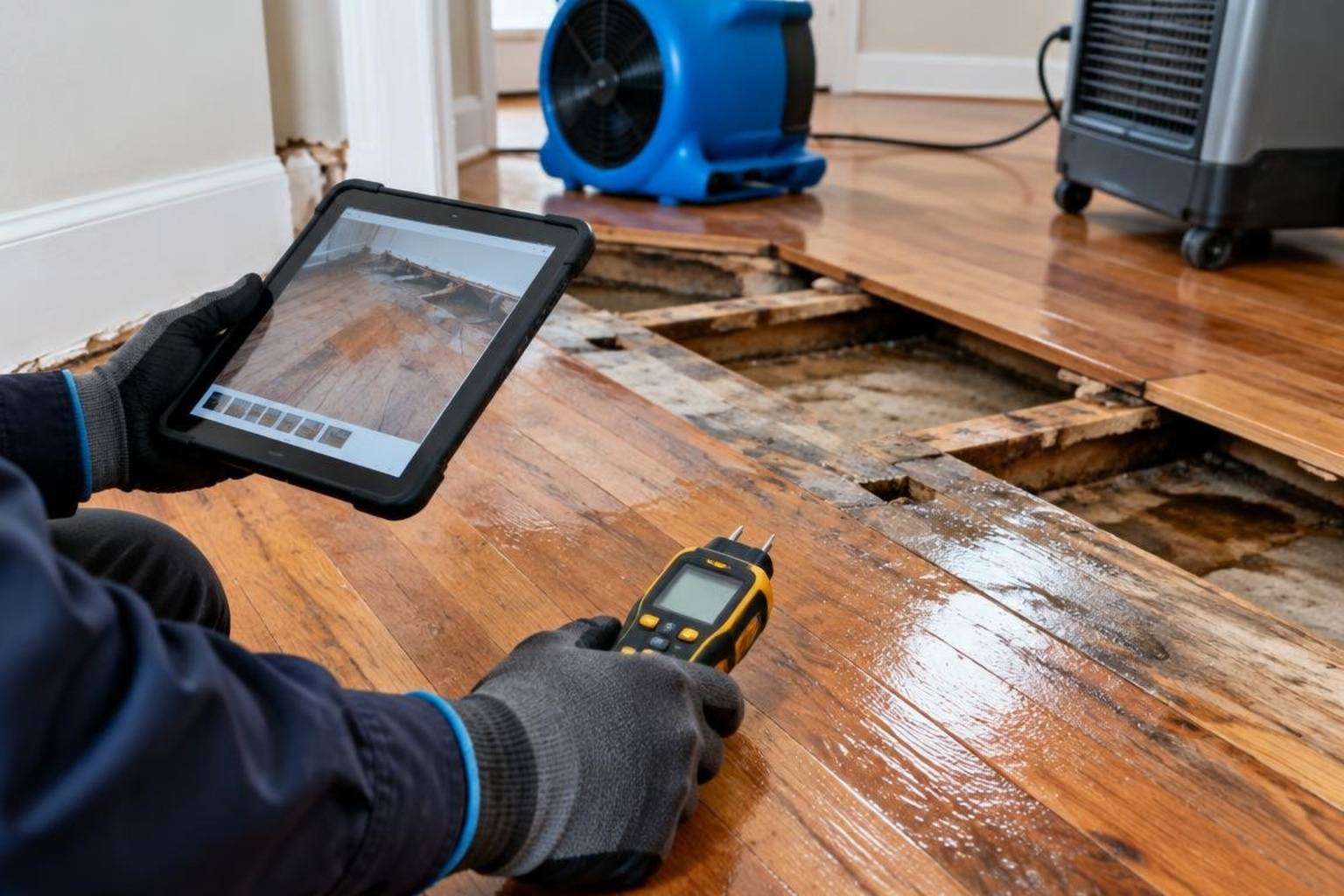
A successful property claim depends heavily on the actions you take in the first 48 hours following a loss. Managing your claim carefully from day one helps prevent disputes over preexisting conditions, delayed reporting, or inadequate mitigation.
Immediate Mitigation and Damage Documentation Protocols
Taking organized, proactive steps immediately following property damage protects your rights and prevents complications during the adjustment process:
- Ensure Safety First: Confirm that the property is structurally safe, shut off main water valves in flood situations, and turn off electricity if standing water is present.
- Document Extensively Before Cleanup: Take high-resolution photographs and wide-angle video of all affected areas, structural elements, personal belongings, and inventory before moving debris or starting cleanup.
- Perform Reasonable Emergency Mitigation: Board up broken windows, place tarps over roof penetrations, and extract standing water to prevent secondary mold growth. To avoid common pitfalls, read our guide on how to file a property insurance claim correctly.
- Retain Every Receipt: Save all invoices and receipts for temporary tarps, plywood, emergency dry-out services, and temporary living expenses.
- Maintain a Communication Log: Record dates, times, names, and summaries of every phone call, email, and on-site conversation with your insurance company representatives.
- Avoid Common Early Mistakes: Discarding damaged items before the adjuster inspects them is a common property damage claim mistake that can lead to coverage disputes.
Vetting Restoration Contractors and Avoiding Post-Disaster Scams
Natural disasters often attract unlicensed operators and out-of-state storm chasers. Property owners must remain cautious to avoid predatory repair contracts and assignment-of-benefits schemes.
- Verify Licensing with the Arizona ROC: Always verify that any general contractor, roofer, or remediation specialist holds an active, unencumbered license with the Arizona Registrar of Contractors (ROC).
- Reject High-Pressure Door-to-Door Solicitations: Avoid contractors who demand immediate contract signatures or offer to “waive your deductible,” which is illegal under Arizona law.
- Do Not Sign Broad Assignment of Benefits (AOB): Retain direct ownership and control of your insurance claim. Authorize contractors to perform specific emergency work scopes without assigning away your full policy rights.
- Demand Detailed, Written Estimates: Never accept vague lump-sum estimates. Require line-item breakdowns that clearly detail material specifications, labor rates, and building code compliance items.
- Tie Payments to Measurable Milestones: Never pay the full contract balance upfront. Structure payments around verifiable project milestones and ensure building code inspections are completed at each phase.
Frequently Asked Questions About Arizona Property Insurance Claims
How long does an insurer have to investigate a property claim in Arizona?
Under Arizona administrative standards enforced by DIFI, an insurance company must complete its claim investigation within 30 days of receiving notice of the loss. If the carrier cannot complete the investigation within that timeframe due to complex technical issues, it must provide the policyholder with written notice explaining the specific reasons for the delay, followed by regular updates.
Does standard property insurance in Arizona cover monsoon flash flooding?
No. Standard residential and commercial property policies strictly exclude damage caused by rising surface water, overflowing washes, and flash floods. Protection against flash flood events requires a separate flood insurance policy through the National Flood Insurance Program (NFIP) or a private flood insurer. These policies generally carry a mandatory 30-day waiting period before coverage becomes active.
What is the difference between a public adjuster and an insurance company adjuster?
An insurance company adjuster is employed by the insurer and works to protect the carrier’s financial interests and adjust claims according to corporate guidelines. A public adjuster is an independent professional licensed to represent policyholders exclusively. Public adjusters manage the claim preparation, prepare detailed damage estimates, interpret policy coverage, and negotiate directly with the insurer to secure a fair and equitable settlement.
Conclusion
Recovering from property damage shouldn’t involve fighting an uphill battle against your own insurance company. The path to a fair settlement starts with knowing your rights, documenting every detail of your loss, and securing dedicated support when adjustments become complex or contentious.
Hudson Douglas Public Adjusters is a family-owned and operated, locally based Arizona business serving Arizona homeowners and commercial property owners. We represent policyholders exclusively in residential and commercial property damage claims, helping our clients navigate complex losses with confidence.
Hudson Douglas receives a 12% fee from the final claim payout, meaning our clients never pay out of pocket for our adjusting services. With 24/7 availability and bilingual support, we bring over four decades of practical experience to protecting your property investments.
If you are dealing with storm damage, wildfire contamination, or an underpaid claim, visit Hudson Douglas Public Adjusters for a complimentary review of your policy and claim.