
What You Need to Know About Business Interruption Claims
Business interruption claims are how businesses recover lost income and ongoing expenses after a covered disaster forces them to slow down or shut their doors.
Here is a quick overview of how they work:
- A covered event occurs – fire, storm, vandalism, or another qualifying peril damages your property
- Operations are suspended or reduced – you cannot run your business normally
- You file a claim – with your commercial property insurer under your business interruption (BI) coverage
- The insurer pays for – lost net income, continuing fixed costs (payroll, rent, utilities), and sometimes extra expenses you incur to stay open
- Coverage runs until – your property is restored to working condition, within your policy’s defined period of restoration
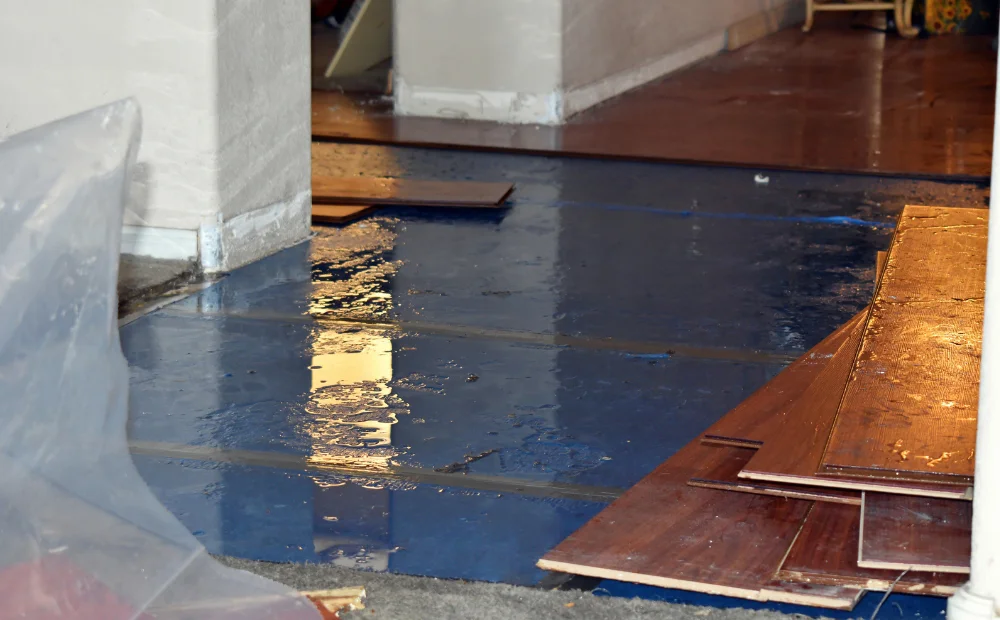
When a disaster hits your business, the physical damage is the part you can see. Broken windows, burned walls, water-soaked floors. But for most business owners, the part that keeps them up at night is what they cannot see: the income that stops coming in while the building is being repaired.
According to FEMA, about 25% of businesses never reopen after a major disaster. That is not just a statistic. It represents real livelihoods, real employees, and real communities.
Business interruption coverage exists to prevent that outcome. It is not a separate policy on its own – it is typically bundled into your commercial property insurance or a Business Owner’s Policy (BOP). And yet, of the more than 200,000 COVID-19 related BI claims filed in the U.S., the vast majority were closed without payment. The process is rarely straightforward.
At Hudson Douglas Public Adjusters, we are a family-owned, Arizona-based team that works only for policyholders – never the insurance company. We have seen how overwhelming this process can feel, especially when you are already dealing with the stress of a damaged property and uncertain income. This guide walks you through everything you need to know to file a successful business interruption claim, protect your recovery, and understand your rights.
We handle the complexity so you can focus on getting your business back on its feet. And you pay nothing out of pocket – our fee is 12% of the payout, only collected after you recover.
Hablamos español. Nuestro equipo está completamente disponible para ayudarle en español, no como una excepción, sino como parte de cómo trabajamos.
Understanding Business Interruption Claims and How They Work
At its heart, a business interruption claim is designed to put your business back in the financial position it would have been in had the loss never occurred. Think of it as a financial bridge that carries you from the moment of the disaster until you are back to full strength.
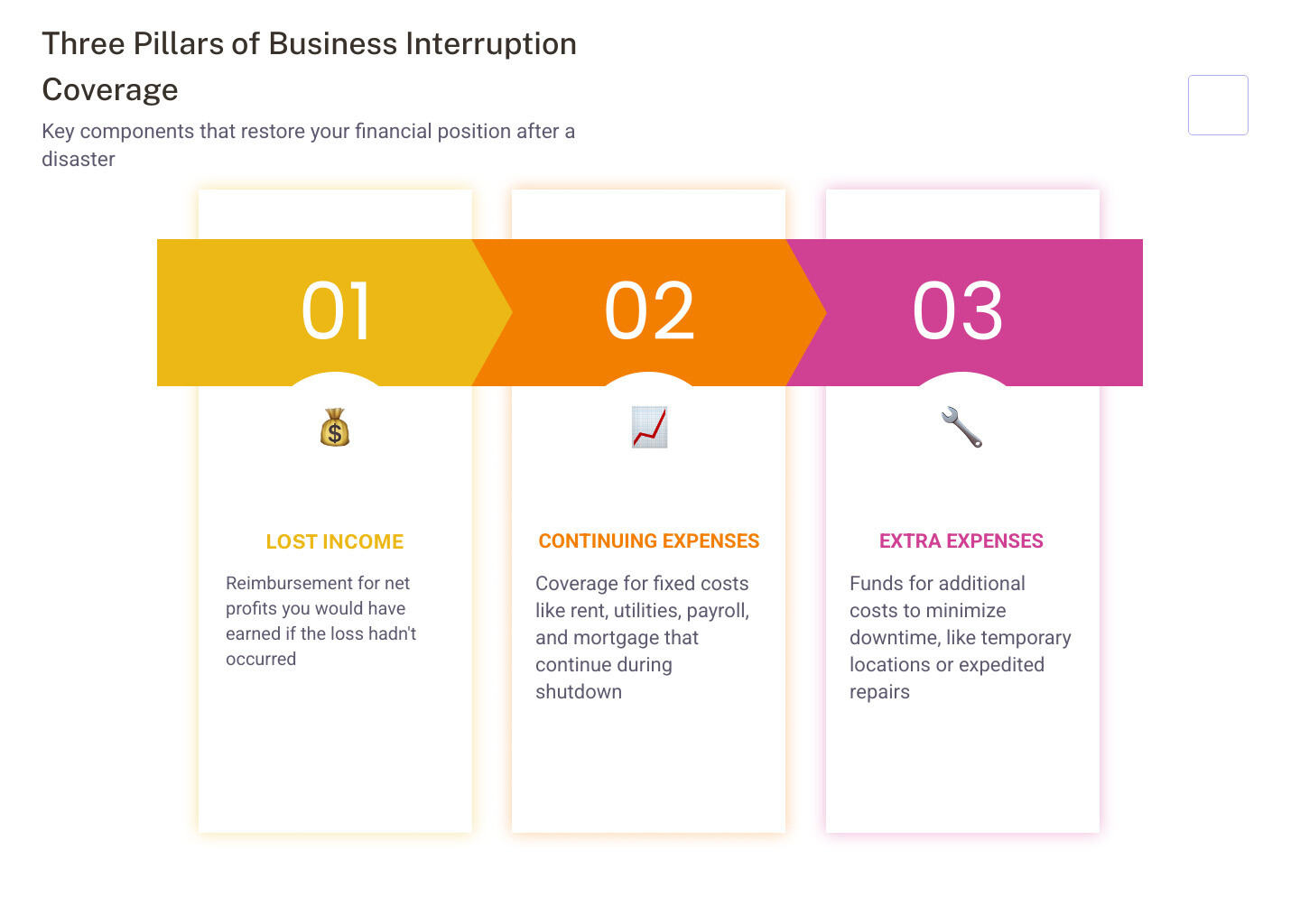
When we talk about Business interruption claims, we aren’t just talking about a single check for “lost profits.” These claims are composed of several critical layers:
- Lost Net Income: This is the profit you would have earned if the doors had stayed open.
- Fixed Operating Costs: Even if you aren’t selling anything, the bills don’t stop. This covers rent, Loss of Use Property Damage, and mortgage payments.
- Employee Payroll: Keeping your key staff is vital for reopening. BI coverage helps you continue paying your team so they don’t have to find work elsewhere during your closure.
- Tax Obligations: You still owe the government, and BI insurance can cover these ongoing costs.
- Loan Payments: If you have business loans, these policies help ensure you don’t default while your revenue is at zero.
For many small businesses in Arizona, Nevada, and Utah, this coverage is found within a Business Owner’s Policy (BOP). A BOP is the most commonly purchased policy for small businesses because it bundles general liability, property insurance, and business interruption into one package.
The stakes are high. Federal Emergency Management Agency (FEMA) data shows that a quarter of businesses fail to reopen post-disaster. Having this insurance is a major step toward resilience, but as we often tell our clients in Chandler and Scottsdale, having the policy is only half the battle—knowing how to prove your loss is the other half.
Triggers, Exclusions, and Civil Authority Coverage
One of the most common points of confusion we see is what actually “triggers” a business interruption claim. In the vast majority of commercial policies, there is a fundamental requirement: direct physical loss or damage.
This means that a general economic downturn or a loss of customers due to a nearby road closure usually isn’t enough to trigger a claim unless your property itself was physically damaged by a covered peril. Common triggers include:
- Fire and Smoke: This is the most frequent trigger for BI claims.
- Wind and Storms: Whether it’s a monsoon in Phoenix or a winter storm in the Wasatch Front, Hurricanes & Storms Claims can lead to significant downtime.
- Vandalism and Theft: Damage caused during riots, civil commotion, and vandalism can trigger coverage if it results in a suspension of operations.
Exclusions to Watch For
Not all disasters are treated equally. Standard policies often exclude:
- Floods: Unless you have a specific flood endorsement, water damage from rising outdoor water is usually excluded.
- Earthquakes: Common in parts of Nevada and Utah, this usually requires a separate rider.
- Viruses and Pandemics: This became a massive issue during COVID-19. Many insurers added specific exclusions for viral contamination after the SARS outbreak in 2003, which resulted in a $16 million BI payout to the Mandarin Oriental hotel chain. Today, 83% of policies have a virus exclusion.
Civil Authority Coverage
There is one important exception to the “damage to your own property” rule. Civil authority coverage can kick in when a government entity (like a fire marshal or health department) prohibits access to your business because of physical damage to a neighboring property from a covered peril.
For example, if a fire breaks out at a neighboring warehouse in Mesa and the fire department cordons off your street for a week, you may be able to file a claim for lost income during that time, even if your building is untouched. certain provisions usually apply, such as a 72-hour waiting period and a limit on how long the coverage lasts (often two weeks).
How to Calculate Your Business Interruption Loss
Calculating Business interruption claims is where things get technical. You aren’t just guessing what you might have made; you must provide a “but-for” analysis—showing what the business would have done but for the disaster.
| Coverage Type | What it Covers | When it Applies |
|---|---|---|
| Standard BI | Lost income and fixed costs during the restoration period. | When your own property is damaged. |
| Contingent BI | Lost income due to damage at a supplier or key customer’s property. | When a “dependent property” is hit by a disaster. |
| Extended BI | Income loss that continues after repairs are finished. | When it takes time to get customers back after reopening. |
To Maximize Your Commercial Property Damage Insurance Claim, you will need to gather several years of historical financial records. This includes:
- Profit and Loss (P&L) statements.
- Sales receipts and tax returns.
- Payroll records.
- Budgets or projections made before the disaster.
Most policies include a 72-hour waiting period. This is essentially a “time deductible”—the insurance company won’t pay for the first three days of your closure. However, they may reimburse “extra expenses”—costs you incur to minimize the loss, such as renting a temporary space or leasing equipment to keep operations running. We always tell our clients: if spending $1,000 on a generator saves you $10,000 in lost inventory, the insurance company is usually happy to pay for that generator.
Determining the Period of Restoration for Business Interruption Claims
The “period of restoration” is the length of time your BI coverage lasts. It begins on the date of the damage and ends when the property should be repaired or replaced with “reasonable speed and similar quality.”
This is often a major point of contention. The insurance company might say your retail store in Goodyear should be fixed in two months, but supply chain delays or permit processing in Maricopa County might push that to four months. We help our clients argue for a realistic timeframe that accounts for:
- Local permit delays.
- Availability of specialized contractors.
- Material lead times.
A Step-by-Step Guide to Filing Your Claim
Filing a claim while trying to run a business is exhausting. Here is how we recommend approaching it to ensure nothing falls through the cracks.
- Review Your Policy: Before you call the insurer, read the policy language. Look for the “Business Income” or “Time Element” section. Is it a “named peril” policy (covers only what is listed) or “all-risk” (covers everything except what is excluded)?
- Provide Prompt Notice: Insurance companies require “timely notice.” Don’t wait. Even if you don’t have all the numbers yet, get the claim on the record.
- Understand the Adjuster’s Role: The insurance company will send their own adjuster. It is important to know the difference between a Public Adjuster vs. Insurance Adjuster. Their adjuster works for the insurance company’s bottom line; we work for yours.
- Document Everything: Take photos of the physical damage immediately. Create a “disaster folder” for every receipt, invoice, and email related to the closure.
- Request an Interim Payment: You don’t have to wait until the very end to get paid. If your cash flow is tight, we can often negotiate an advance or interim payment to help you cover payroll and rent while the full claim is being calculated.
Step-by-Step Guide to Filing Business Interruption Claims
To be successful, you must be meticulous. We suggest keeping a contemporaneous log. Every day your business is closed or limited, write down why. Did a vendor cancel because they couldn’t access your loading dock? Did you have to turn away a large order?
This log becomes invaluable when we build your “sales projection.” We look at your sales from the same month in previous years, adjust for any growth trends you were seeing before the disaster, and present a professional “but-for” analysis that is hard for the insurer to dispute.
Why Claims Are Denied and How to Respond
It is a frustrating reality: Business interruption claims are frequently denied or underpaid. Insurers are businesses, too, and they use several tactics to limit their payouts:
- The “No Physical Loss” Argument: This was the primary tactic used to deny COVID-19 claims. Insurers argued that since the virus didn’t “break” the building like a fire would, there was no physical loss.
- Cherry-Picking Data: An insurer might look at your slowest month of the previous year to set your “expected income,” ignoring the fact that you were on track for a record-breaking season.
- Shortening the Restoration Period: They may claim repairs should take 30 days when local reality dictates 90.
- Applying Coinsurance Penalties: If you didn’t insure your business for its full value, the insurer might reduce your payout proportionally.
If you see Signs Your Insurance Company Underpaid, such as a lowball initial offer or a flat denial based on a narrow reading of the policy, don’t give up.
You have the right to appeal. This often involves bringing in experts like forensic accountants to re-calculate the loss or a public adjuster to re-evaluate the physical damage that triggered the interruption. In some cases, if an insurer is being intentionally unreasonable, bad faith considerations may come into play.
Frequently Asked Questions about Business Interruption Claims
What is the difference between extra expense and expediting expense?
Extra expenses are costs you incur to continue operating (like renting a temporary office). Expediting expenses are costs incurred to speed up the repair of the property itself (like paying a contractor for overnight shifts to finish a roof faster). Both are important, but they often fall under different sub-limits in your policy.
Does business interruption insurance cover pandemic-related shutdowns?
In most cases, no. Since 2006, the Insurance Services Office (ISO) has included standard exclusions for “Loss Due to Virus or Bacteria.” While there was drafted legislation in several states to force payouts, most of these efforts failed due to the Contract Clause of the U.S. Constitution. However, every policy is different, and some “all-risk” policies without this specific exclusion have seen successful litigation.
How long does it typically take to receive a BI payout?
There is no set timeline, but the more organized your documentation is, the faster it goes. A simple claim might be settled in a few months, while complex cases involving forensic accounting can take longer. This is why requesting interim payments is so vital for maintaining your business’s health.
Conclusion
Navigating Business interruption claims is one of the most complex challenges a business owner can face. Between the technical accounting requirements and the dense legal language of insurance policies, it is easy to feel like the deck is stacked against you.
At Hudson Douglas Public Adjusters, we believe you shouldn’t have to fight that battle alone. As a family-owned and operated firm with over 40 years of expertise, we’ve helped thousands of property owners across Arizona, Nevada, and Utah secure the settlements they deserve. We understand the local landscape—from the unique risks of the desert to the regulatory environment of our local municipalities.
We are proud to serve our community with transparency and integrity. We offer 24/7 availability and full bilingual support in English and Spanish to ensure all our neighbors have access to expert advocacy. We only get paid if you do—12% of the final settlement, with no upfront costs to you.
If your business has suffered a loss and you are worried about the road ahead, reach out to us. Let us handle the insurance company so you can focus on your family, your employees, and your future.
Business Interruption Claims are our specialty. Let’s get your business back to work.