What Every Arizona Commercial Property Owner Should Know About Commercial Roof Damage
Commercial roof damage is one of the most costly and disruptive events a property owner can face — and in Arizona, it’s not a matter of if it happens, but when.
Quick answer: What should you do if you have commercial roof damage?
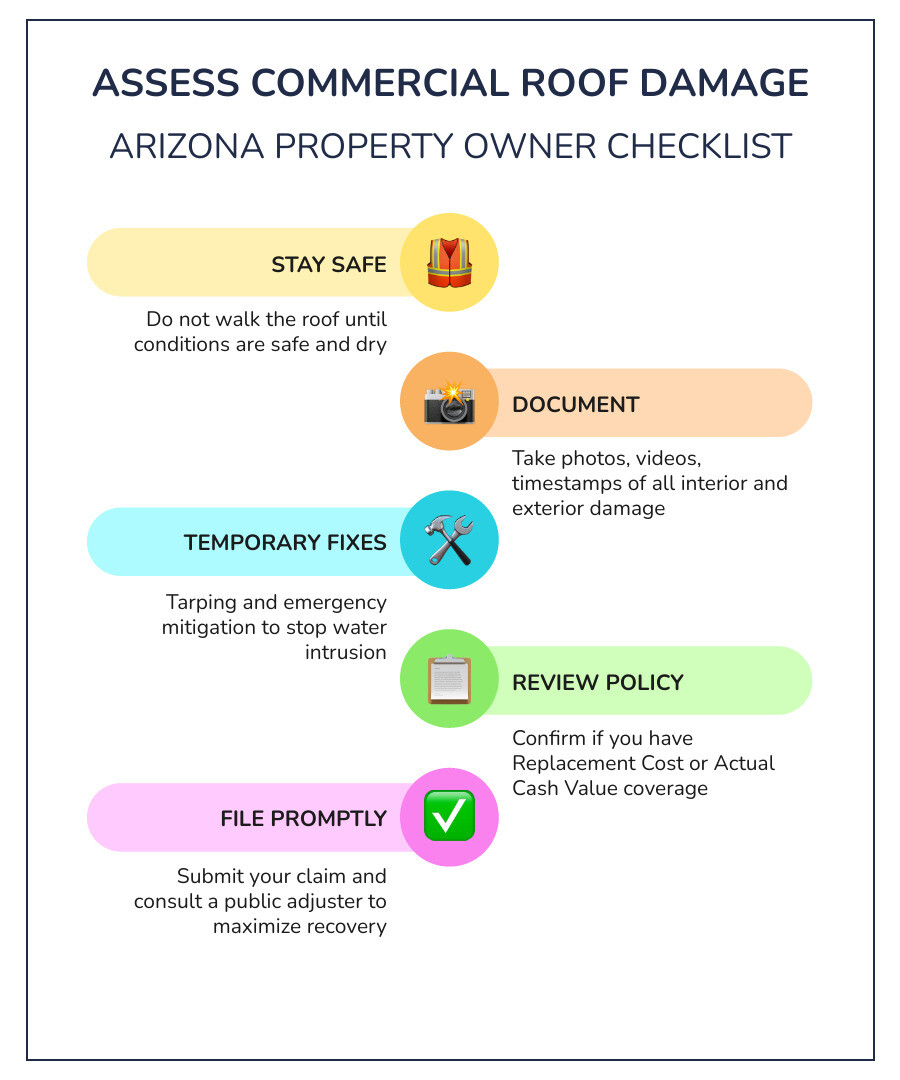
- Stay safe — do not walk the roof until conditions are safe and dry
- Document everything — photos, videos, timestamps, interior and exterior
- Make temporary repairs only — tarping and emergency mitigation to stop active water intrusion
- Do not make permanent repairs before your insurance claim is filed and reviewed
- Review your policy — understand whether you have Replacement Cost or Actual Cash Value coverage
- File your claim promptly — delays can hurt your case
- Consider a public adjuster — someone who works exclusively for you, not the insurer
Arizona’s monsoon season brings intense hail, high winds, and sudden heavy rain that can stress even a well-maintained commercial roof. Flat and low-slope roofing systems — common on warehouses, retail centers, and office buildings across the state — are especially vulnerable. Damage can range from obvious membrane tears to hidden insulation compression that won’t show up as a leak for weeks.
The frustrating reality is that the damage you can see is often only part of the story. And when it comes time to file an insurance claim, what you don’t document — or don’t know to look for — can cost you significantly.
At Hudson Douglas Public Adjusters, we’re a family-owned, Arizona-based team that has helped commercial property owners navigate exactly this situation. we work only for policyholders. We handle the inspections, documentation, and negotiations so you can focus on keeping your business running. Our fee is 12% of the final settlement — no out-of-pocket cost to you.
This guide walks you through every step of assessing commercial roof damage, from identifying what you’re looking at to protecting your claim and your building.
Key terms for commercial roof damage:
Identifying Common Types of Commercial Roof Damage
In our 40+ years of experience, we’ve seen that commercial roof damage rarely looks the same on two different buildings. The way your roof responds to a storm depends heavily on the material it’s made of. Whether you are in Scottsdale, Gilbert, or Goodyear, the intense Arizona sun and monsoon patterns play a major role in how materials degrade.
Common Roofing Materials and Their Vulnerabilities
- TPO (Thermoplastic Polyolefin): These white, reflective membranes are popular for energy efficiency. However, they can develop hairline cracks or seam failures as they age. Large hail can cause “spiderweb” cracking that might not leak immediately but will fail during the next heavy rain.
- EPDM (Ethylene Propylene Diene Terpolymer): A durable rubber membrane. While it’s flexible, hail can puncture it or “bruise” the insulation underneath, leading to soft spots.
- PVC (Polyvinyl Chloride): Similar to TPO but often more resistant to chemicals. Over time, UV exposure can make PVC brittle, making it susceptible to shattering during a hailstorm.
- BUR (Built-Up Roofing): These “tar and gravel” roofs are tough, but wind can scour the gravel away, exposing the underlying asphalt to UV damage. Hail often causes “bruises” or fractures in the asphalt flood coat.
- Modified Bitumen: These systems use reinforced fabric plies. Damage often shows up as granule loss or delamination between layers.
The Impact of Arizona Weather
Our local weather is unique. We don’t just deal with rain; we deal with extreme thermal expansion. A roof can reach 160°F during a July day and then be hit by a 70°F downpour during a monsoon. This “thermal shock” causes materials to expand and contract rapidly, stressing seams and flashing. Recognizing the Signs of Storm Damage on Your Commercial Roof is essential for catching these issues before they lead to a full building shutdown.
Wind uplift is another major concern. In flat roofing, wind blowing over parapet walls creates negative pressure that can literally peel the membrane away from the deck if the fasteners or adhesives are weakened.
Visible and Hidden Signs of Commercial Roof Damage
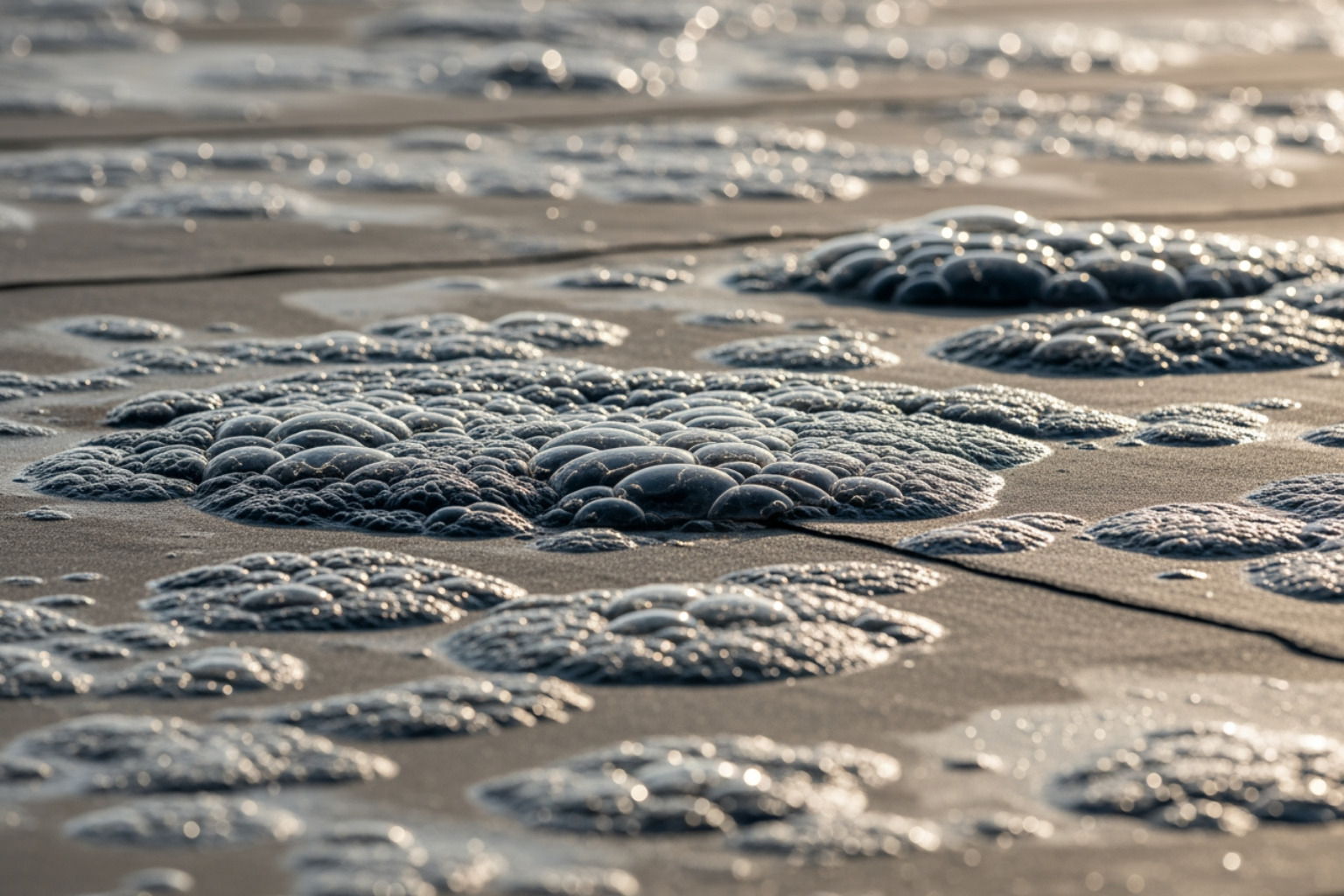
If you see water dripping into your warehouse, you know you have a problem. But many of the most expensive types of commercial roof damage are invisible from the ground—and sometimes even from the roof surface itself.
Visible vs. Hidden Damage Indicators
| Visible Signs | Hidden Signs |
|---|---|
| Standing water (ponding) for >48 hours | Compressed or “crushed” insulation boards |
| Blistering or bubbling of the membrane | Adhesive bond failure (delamination) |
| Gaps or tears in the flashing around HVAC units | Moisture trapped in the roof assembly (latent damage) |
| Interior water stains or peeling paint | Unexplained spikes in HVAC cooling costs |
| Clogged drains or displaced ballast (gravel) | Fastener back-out or rusted deck components |
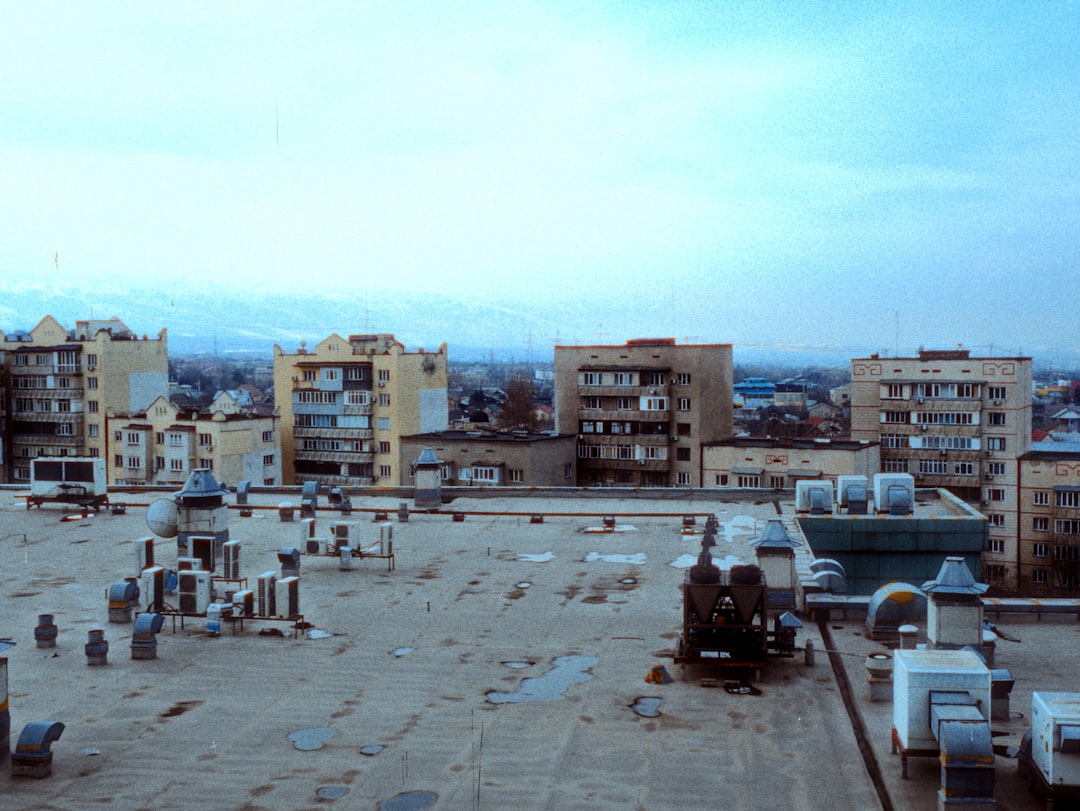
One of the most dangerous hidden issues is ponding water. One gallon of water weighs about 8.34 pounds. If you have 100 gallons of water sitting on a sagging section of your roof, that’s over 800 pounds of “dead weight” that your structure wasn’t designed to hold indefinitely. This can lead to structural sagging or even a total collapse.
Detecting Early Commercial Roof Damage Signs
You shouldn’t wait for a storm to look at your roof. Early detection can save you tens of thousands of dollars. We recommend looking for:
- Seam Separation: Wind and heat can pull at the seams of TPO or EPDM. If you can slide a credit card into a seam, it’s failing.
- UV Discoloration: If your membrane is turning yellow or brittle, it has lost its elasticity.
- Surface Abrasions: Often caused by foot traffic from HVAC technicians, these small punctures can allow moisture to seep into the insulation for months before a leak appears.
For more technical details on spotting these early indicators, you can refer to this guide on How to Spot Early Roof Damage on Commercial Buildings.
Immediate Steps After Discovering a Damaged Roof
When you discover commercial roof damage, your first instinct might be to call a contractor for a permanent fix. Wait. Before you do anything permanent, you must protect your right to a fair insurance settlement.
- Safety First: Arizona roofs can be incredibly slick when wet, and storm-damaged roofs may have compromised structural integrity. Never send staff onto a roof without proper safety gear.
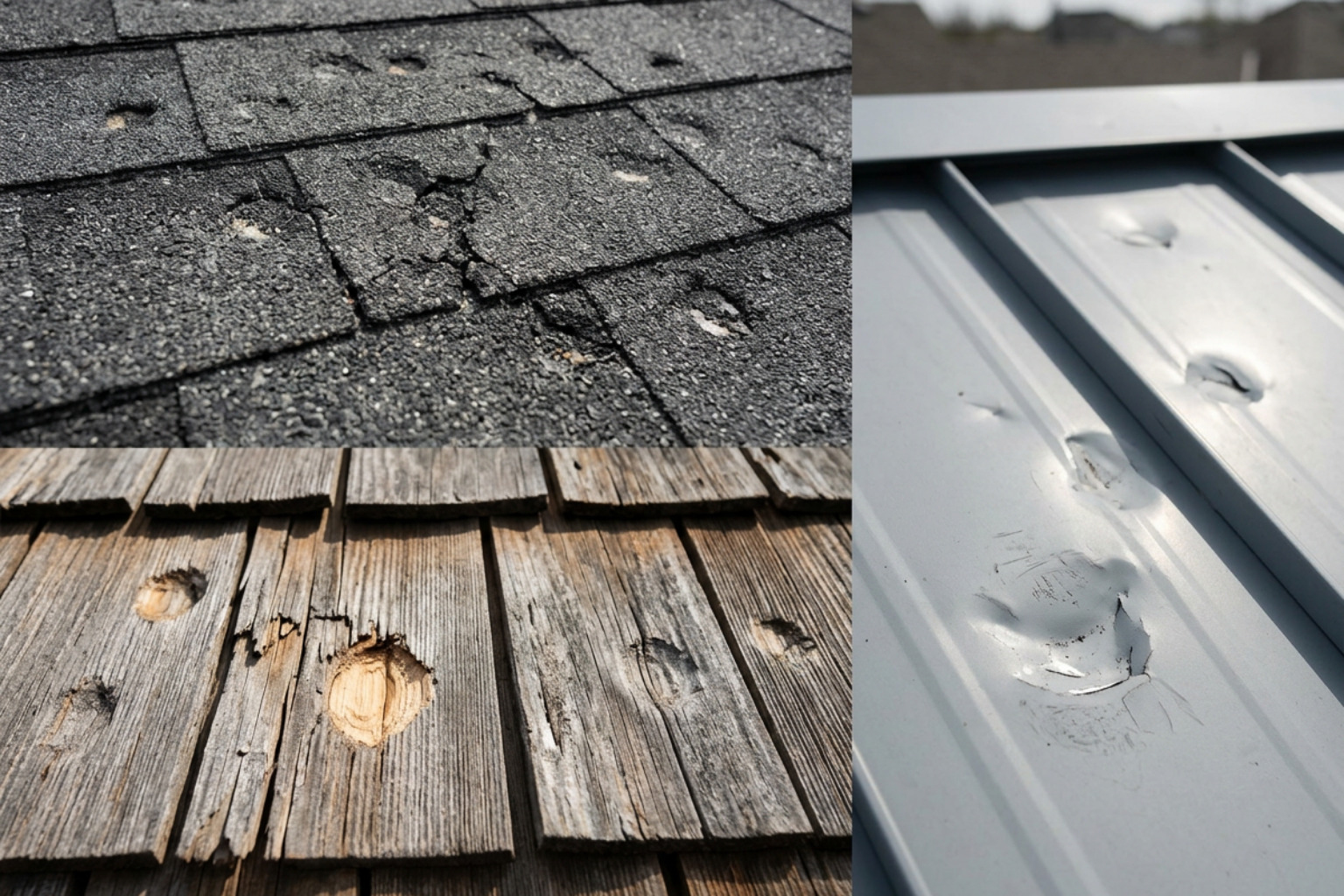
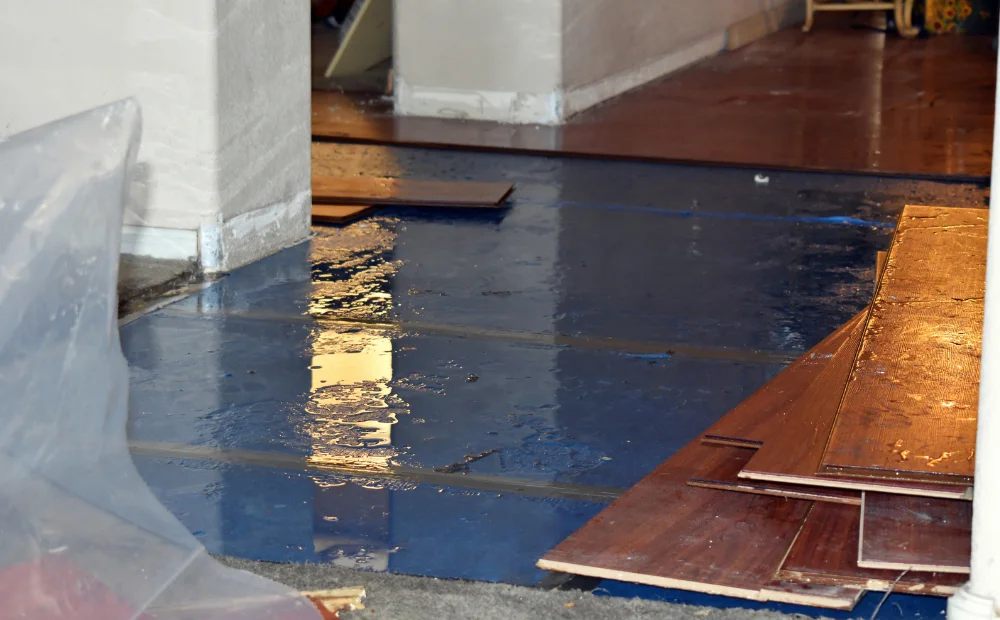
- Document the Evidence: Take wide-angle photos of the entire roof and close-up shots of specific damage points. Use a common object (like a coin) next to hail dents for scale. Don’t forget the interior—document warped ceiling tiles, wet inventory, or mold growth.
- Mitigate Further Damage: Your insurance policy likely requires you to prevent “further loss.” This means you should clear blocked drains and install temporary tarps.
- Save Everything: If a piece of metal flashing blows off, save it. If a contractor performs emergency tarping, keep the receipts.
- Call a Professional: Whether it’s a trusted roofer for an inspection or a public adjuster to manage the claim, getting an expert opinion early is vital.
For specific advice on handling hail-related issues, see our resource on Hail & Roof Damage.
Navigating the Commercial Roof Damage Insurance Claim
Filing a claim for commercial roof damage is significantly more complex than a residential claim. Commercial policies often contain specific “endorsements” or “exclusions” that can catch property owners off guard.
Understanding Your Coverage
- Replacement Cost Value (RCV): This pays to replace the damaged roof with a new one of similar quality at today’s prices.
- Actual Cash Value (ACV): This pays the depreciated value of the roof. If your 20-year-old roof is damaged, the payout may be significantly less than the cost of a new one.
- Functional Replacement: In some cases, an insurer may argue to replace a high-end material (like tile) with a cheaper “functional equivalent” (like asphalt).
The insurance company’s adjuster works for the insurance company. Their goal is to settle the claim for as little as possible. This is where the Public Adjuster vs Insurance Adjuster distinction becomes critical. As public adjusters, we work exclusively for you, the policyholder. We don’t have a conflict of interest; our goal is to ensure you get every penny you are owed under your policy.
To learn more about how to Maximize Your Commercial Property Damage Insurance Claim, it’s important to look at the total impact on your business, not just the shingles or membrane.
Maximizing Recovery for Commercial Roof Damage
A roof claim isn’t just about the roof. It’s about everything underneath it. We look for:
- Business Interruption: If you have to close your doors or move inventory during repairs, your policy may cover the lost income.
- Ordinance and Law: If local building codes in Phoenix or Mesa have changed since your roof was built, you may be required to upgrade your insulation or drainage. This coverage helps pay for those mandatory “code upgrades.”
- Forensic Accounting: We use specialized experts to calculate the true cost of your business’s downtime.
If you’ve already received an offer that feels too low, check out these Signs Your Insurance Company Underpaid.
Repair vs. Replacement: Making the Right Decision
One of the most common questions we hear is: “Can I just patch it?”
While a patch might stop a leak today, it won’t fix a compromised roofing system. In the industry, we often use the 25% Rule: if more than 25% of the roof is damaged, or if the underlying insulation is saturated with water, a full replacement is usually more cost-effective in the long run.
Factors to Consider:
- Roof Age: Most commercial membrane systems have a 20-year lifespan. If your roof is 18 years old and sustains storm damage, patching it is often a waste of money. Many insurers will even exclude coverage for roofs over 20 years old.
- Insulation Integrity: If water has reached the insulation, it loses its R-value (insulating power) and can become a breeding ground for mold. We often take “core samples” to see what’s happening beneath the surface.
- Structural Integrity: As mentioned, the weight of ponding water can stress the building’s frame. If the deck is rusted or sagging, a simple repair won’t suffice.
A professional cost-benefit analysis will compare the price of constant patching against the long-term savings of a new, warrantied system that improves your building’s energy efficiency.
Frequently Asked Questions about Commercial Roof Damage
What types of roof damage are typically excluded from insurance?
Most policies exclude damage caused by “wear and tear,” lack of maintenance, or pre-existing defects. If you haven’t had your roof inspected in five years and it leaks during a minor rainstorm, the insurer may claim “neglect.” This is why keeping maintenance records is so important. Additionally, some policies exclude specific perils like “cosmetic” hail damage or damage to roofs over a certain age.
How can I distinguish between cosmetic and functional hail damage?
Insurers often try to label hail dents as “cosmetic,” meaning they only affect the look of the roof, not its performance. However, on a commercial membrane, a “cosmetic” dent often stretches the material, thinning it out and creating a weak spot that will fail prematurely. We argue that if the damage reduces the “service life” of the roof, it is functional damage and should be covered.
When is it better to repair versus fully replace a damaged roof?
If the damage is localized (like a single puncture from a dropped tool) and the rest of the roof is in good condition, a repair is fine. However, if you have widespread seam failure, saturated insulation, or if the roof is near the end of its expected life, replacement is the smarter move. A full replacement also gives you a fresh manufacturer’s warranty, which a repair does not.
Conclusion
Dealing with commercial roof damage is a heavy burden for any business owner. Between managing operations and trying to decipher complex insurance jargon, it’s easy to feel overwhelmed.
At Hudson Douglas Public Adjusters, we take that weight off your shoulders. We are a family-owned and operated firm with deep roots in Arizona. Whether your property is in the Catalina Foothills, Sedona, or the heart of Flagstaff, we understand the local challenges you face. Our team provides bilingual support in both English and Spanish, ensuring that all our clients are fully heard and represented.
With over 40 years of expertise across 10 states, we have the “quiet authority” that comes from handling thousands of claims. We don’t get paid unless you do—our fee is a flat 12% of the settlement, and there are never any upfront costs.
If you suspect your building has sustained storm damage or if you’re struggling with a low-ball offer from your insurance company, don’t wait. Contact Hudson Douglas Public Adjusters today for a complimentary review of your claim. Let us be your advocate and ensure your business gets the recovery it deserves.