Understanding Your Fire Damage Claim Adjuster: Who’s Really on Your Side?
A fire damage claim adjuster is a professional who evaluates your fire loss and determines the payout you’ll receive from your insurance company. However, there are two very different types of adjusters, and understanding the difference is critical to your recovery.
Quick Answer: Types of Fire Damage Claim Adjusters
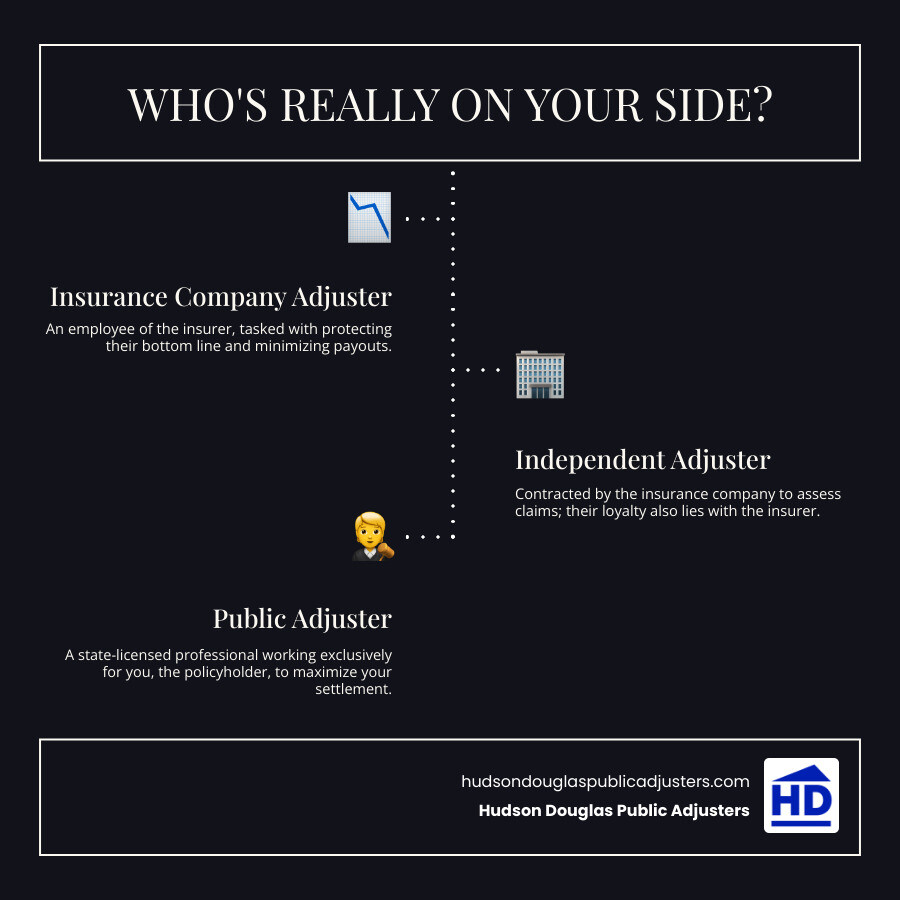
- Insurance Company Adjuster – Works for your insurance company to assess damage and minimize payout
- Public Adjuster – Works exclusively for you, the policyholder, to maximize your settlement
- Independent Adjuster – Contracted by insurance companies to handle claims on their behalf (also works for the insurer, not you)
When a catastrophic fire wreaks havoc on your home or business, the aftermath can be devastating. The physical destruction is only part of the story. Property owners also face emotional trauma, financial uncertainty, and the overwhelming complexity of filing an insurance claim.
According to research, global insured losses from wildfires have skyrocketed from around $9 billion in the 2000s to over $56 billion in the 2010s. Single events like the Camp Fire caused $12.5 billion in insured losses alone. These staggering numbers reflect not just the frequency of fires, but also the complexity of the claims that follow.
During these challenging times, you need an advocate. Someone who understands insurance policies inside and out. Someone who can document every aspect of your loss, from obvious structural damage to hidden smoke contamination. Someone who will fight for every dollar you’re entitled to under your policy.
That advocate is a public adjuster – a state-licensed professional who works exclusively for you, not the insurance company. While your insurer’s adjuster is tasked with protecting the company’s bottom line, a public adjuster’s sole mission is to maximize your settlement and guide you through every step of the claims process.
The Two Sides of the Claim: Public Adjuster vs. Insurance Company Adjuster
When your property is damaged by fire, your insurance company will assign an adjuster to evaluate your claim. This individual, whether a staff adjuster (an employee of the insurance company) or an independent adjuster (contracted by the insurance company), is paid by and represents the interests of the insurer. Their primary objective, while assessing damage, is to ensure the company’s financial interests are protected, which often means minimizing the payout.
This dynamic creates an immediate disadvantage for policyholders, who are often in a state of shock and distress after a fire. We understand that navigating dense policy language and negotiating with an experienced professional whose loyalty lies elsewhere can feel like an impossible task.
In contrast, a public adjuster is a state-licensed expert whose loyalty is exclusively to you, the policyholder. We work to protect your rights and interests, ensuring you receive the maximum settlement your policy allows. Our goal is to level the playing field, making sure no detail is overlooked in your claim.
Here’s a quick comparison:
| Feature | Insurance Company Adjuster (Staff/Independent) | Public Adjuster |
|---|---|---|
| Who they work for | The insurance company | The policyholder (you) |
| Their goal | Minimize the insurance company’s payout | Maximize the policyholder’s settlement |
| Who pays them | The insurance company | The policyholder (typically a percentage of the final settlement) |
Who Does the Insurance Company’s Adjuster Work For?
The adjuster assigned by your insurance company, whether an in-house employee or an independent contractor, works directly for the insurance provider. Their role is to investigate the cause of the fire, evaluate the extent of the damage, and estimate the repair or replacement costs. While they are bound to act in good faith, their ultimate responsibility is to the insurance company’s bottom line. This means they are often tasked with finding ways to limit the insurer’s financial exposure, which can result in lowball offers or even denials.
Their report forms the basis for the insurance company’s decision on compensation. This inherent conflict of interest means that their findings may not always reflect the full scope of your loss, especially when dealing with complex fire damage.
Who Does a Public Adjuster Work For?
A public adjuster works exclusively for you, the policyholder. We are your dedicated advocate throughout the entire fire damage claim process. Our mission is to ensure you receive every dollar you’re entitled to under your policy. We bring our expertise and experience to level the playing field, ensuring no detail is overlooked and that your claim is fully documented and properly valued.
Our team, for example, operates across states like Alaska, Arizona, California, Colorado, New Mexico, Nevada, Oregon, Texas, Utah, and Washington, understanding the specific regulations and challenges in each. We become your ally, ready to fight for what is rightfully yours, changing an often overwhelming and complex process into a manageable path toward recovery.
The Critical Role of a Fire Damage Claim Adjuster
A fire damage claim adjuster plays a crucial role in your recovery after a devastating fire. While the insurance company’s adjuster works for them, a public adjuster works for you. Our primary function is to interpret your complex insurance policy, carefully assess all damages, build an ironclad claim, and negotiate with the insurance company on your behalf. This comprehensive approach is designed to relieve your stress and ensure you receive a fair and full settlement.
Key Responsibilities of Your Fire Damage Claim Adjuster
Our responsibilities as your fire damage claim adjuster are extensive and crucial to securing a fair settlement. We take on the burden of the claims process so you can focus on rebuilding your life. Here’s what we do:
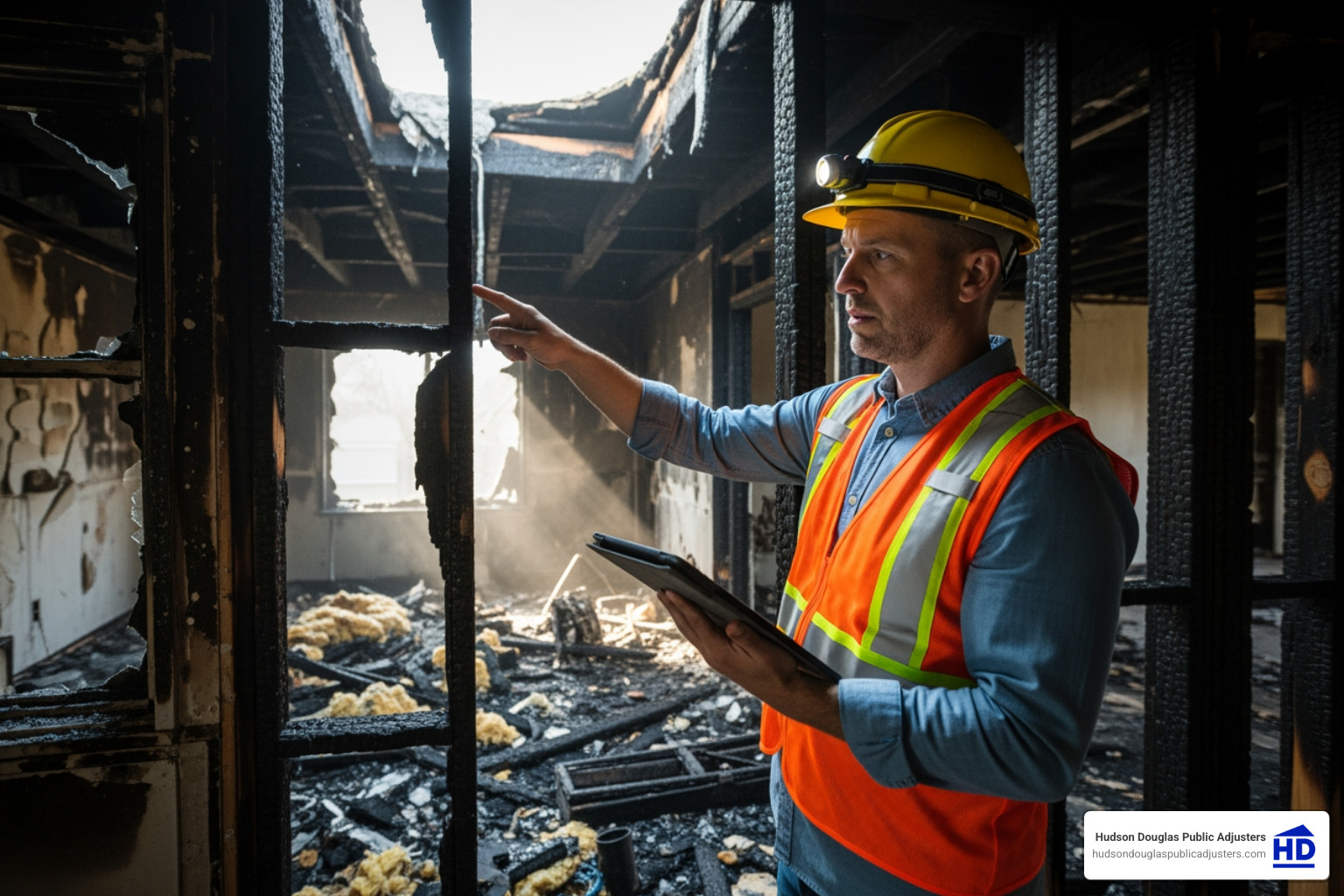
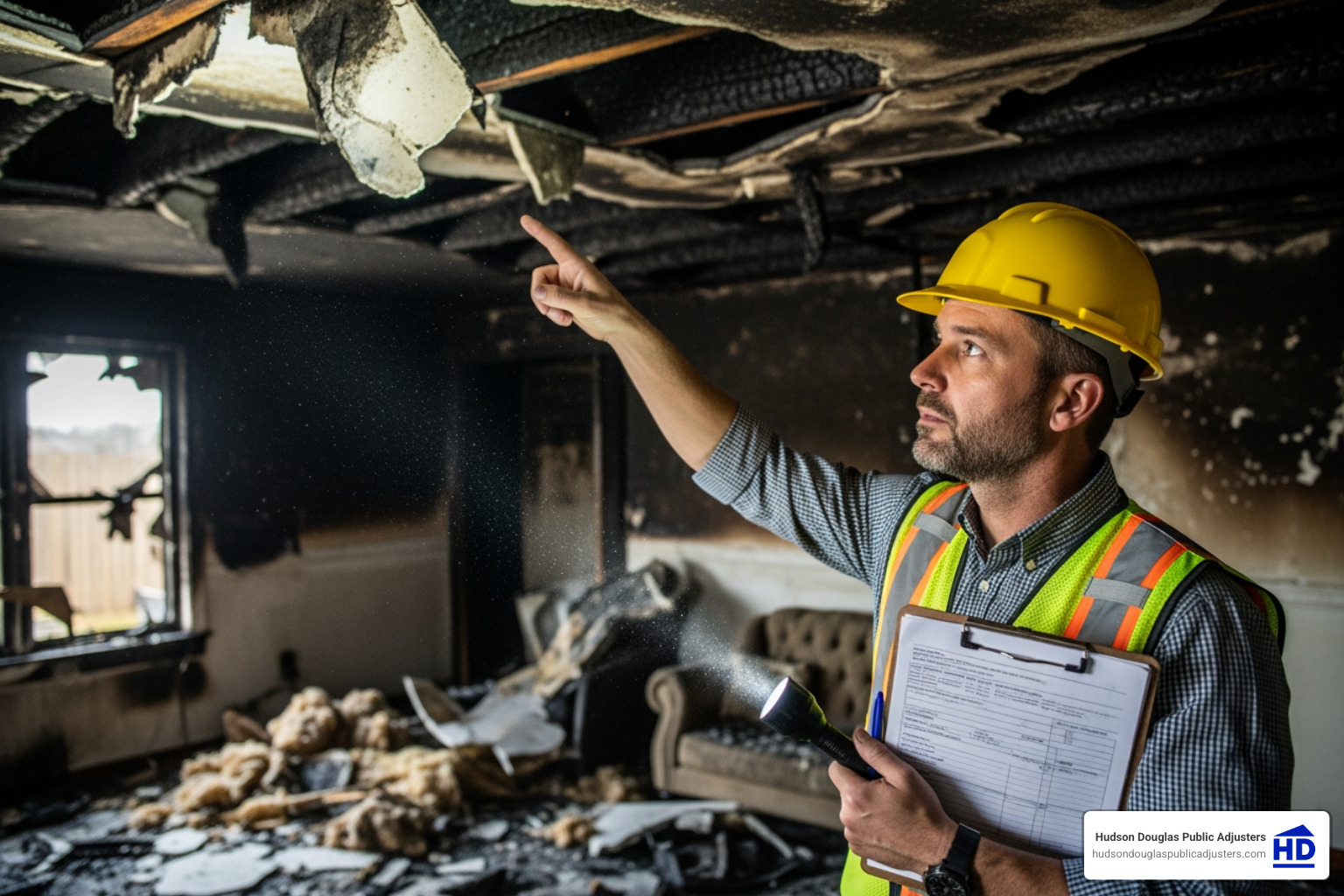
- Conduct Thorough On-Site Evaluations: We perform meticulous on-site inspections of your fire-damaged property. This involves a thorough inspection to determine the full extent of the damage and estimate the cost of repairs or replacements. We use diverse fire damage evaluation techniques to ensure nothing is missed.
- Document All Damage Extensively: We carefully document every aspect of the destruction through extensive photographs, videos, detailed notes, and evidence collection. This includes visible damage, as well as hidden issues that might not be immediately apparent. For example, in California, thorough documentation is essential to supporting your claim.
- Estimate Repair or Replacement Costs Accurately: We work with professional assessors and contractors to get accurate estimates for repairs and replacements. This includes calculating fire damage repair costs, considering the current market prices for materials and labor in your area, and accounting for potential code upgrades required in states like California.
- Review Your Insurance Policy in-depth: We carefully analyze your insurance coverage, terms, conditions, limits, and endorsements. An essential part of this analysis is identifying and addressing potential coverage exclusions that might limit your claim. We ensure your policy is properly interpreted to your benefit.
- Identify Hidden Damages: Fire damage often extends beyond what’s visible. We look for smoke and soot damage that can permeate walls and HVAC systems, water damage from firefighting efforts that can lead to mold, and structural compromises that may not be immediately obvious. We assemble teams of specialists, including engineers and hygienists, to build an irrefutable case for all damages.
- Act as Your Bridge to the Insurance Company: We handle all communications and negotiations with your insurance company, serving as your primary point of contact. This ensures consistent communication and prevents you from making inadvertent mistakes during stressful conversations.
Our expertise in handling fire and smoke damage claims is specifically designed to cover all these intricate aspects. Learn more about our specialized fire & smoke damage public adjusters.
Why Hiring a Public Fire Damage Claim Adjuster is Crucial
Hiring a public fire damage claim adjuster is not just an option; it’s often a necessity for navigating the complex aftermath of a fire. Here’s why it’s so crucial:
- Complexity of Fire Claims: Fire claims are notoriously complex. They involve not just the direct burn damage, but also smoke, soot, and extensive water damage from firefighting efforts. The average policyholder, already reeling from the trauma of the event, is ill-equipped to manage the intricate details required for a comprehensive claim.
- Overwhelming Process: The insurance claim process involves multiple distinct stages, from initial contact and damage assessment to policy review, documentation, negotiation, and settlement. This can be overwhelming, especially when you’re trying to rebuild your life.
- The Insurer’s Advantage: Insurance companies have vast resources and experienced adjusters whose goal is to protect their profits. They often make initial offers that are significantly lower than what you’re truly owed. Without an expert on your side, you’re at a distinct disadvantage.
- Maximizing Your Payout: Public adjusters are experts in handling insurance companies and understanding policy details. We understand the nuances of policy language, identify all covered losses, and ensure you receive the full compensation for repairs, replacements, and additional living expenses. Studies show that policyholders who hire public adjusters often receive significantly higher settlements.
- Faster Claim Resolution: With our expertise, we can expedite the settlement process. We know the deadlines, the required documentation, and the negotiation strategies to move your claim forward efficiently.
- Avoiding Common Mistakes: Policyholders often make critical mistakes that can jeopardize their claim, such as cleaning up too soon, disposing of damaged items prematurely, or signing documents without understanding their implications. We guide you to avoid these pitfalls.
The cost of not hiring a public adjuster can be substantial, as you risk leaving significant money on the table that could otherwise fund your recovery. Understand the true cost of not hiring a public adjuster.
Mastering the Fire Claim: How a Public Adjuster Fights for You
After a fire, you’re not just dealing with physical damage; you’re often facing a battle with your insurance company. Many insurers employ tactics like lowball offers, strategic delays, and even outright denials to minimize payouts. This is where a public fire damage claim adjuster becomes your most valuable asset. We understand these tactics and are equipped to dismantle them, building an ironclad claim that ensures you receive fair compensation.
Gathering Evidence and Documenting Your Loss
The foundation of a successful fire damage claim lies in meticulous documentation. We ensure that every piece of evidence is gathered and presented to support your claim:
- Detailed Inventory of Personal Property: One of the most common mistakes policyholders make is failing to carefully document their personal property (contents) loss. We guide you in creating a comprehensive inventory list of all damaged or destroyed items. This includes gathering receipts, photographs, videos, and any other proof of ownership. We’ve seen cases where accurately documenting contents lost can even outweigh the amount received for structural repairs.
- Photographing and Videoing Damage: We take extensive photographs and videos of all damaged areas, including close-ups of specific items and wide shots to show the overall extent of the damage. This visual evidence is crucial for illustrating the full scope of your loss.
- Securing Repair Estimates: We work with reputable contractors and specialists to obtain detailed, line-item repair and replacement estimates for your structure. This ensures that all damages, including hidden ones and required code upgrades, are accounted for.
- Documenting Additional Living Expenses (ALE): If your home is uninhabitable, your policy likely covers Additional Living Expenses (ALE). We help you track and document all related costs, such as temporary housing, food, and other essential services, ensuring you are reimbursed for these necessary expenses.
For homeowners, maximizing your residential property insurance claim means leaving no stone unturned in this documentation process. Learn how to maximize your residential property insurance claim.
Challenging Lowball Offers and Negotiating a Fair Settlement
It’s a common industry practice for insurance companies to make an initial settlement offer that is significantly lower than what you’re truly owed. This “lowball offer” is a strategic anchor, not a good-faith attempt to make you whole. As your public fire damage claim adjuster, we specialize in challenging these offers and negotiating a fair settlement:
- Analyzing the Insurer’s Estimate: We carefully review the insurance company’s estimate, comparing it against our own comprehensive assessment. We identify any missed items, undervalued repairs, or overlooked damages.
- Using Expert Reports: We leverage reports from independent structural engineers, hygienists, and other specialists to substantiate the full scope of damage, including hidden issues like toxic soot contamination or warped structural beams. Our experience shows that these expert reports can lead to significantly higher payouts, often 20% to 50% more than the insurer’s initial estimate.
- Negotiation Strategies: We employ proven fire adjuster negotiation strategies, presenting a compelling case based on our exhaustive documentation and expert findings. We maintain open and regular communication with the insurance company, always advocating for your best interests.
- Citing Legal Precedents: In our service areas like California, legal precedents and landmark court cases (such as the Campbell v. State Farm case) can be powerful leverage during negotiations. These cases hold insurers accountable to their duty of “good faith and fair dealing” and can result in substantial punitive damages if bad faith tactics are proven. This understanding of legal precedents helps us strengthen your position and ensure fair treatment.
If you suspect your insurance company has underpaid your claim, don’t hesitate to seek professional help. Understand the signs your insurance company underpaid your claim.
Handling Disputes and Denials
Disagreements and even outright denials are not uncommon in fire damage claims. As your public fire damage claim adjuster, we are prepared to handle these challenges:
- Appealing a Denied Claim: If your claim is denied, we can help you appeal through a formal process. This may involve submitting a written appeal, presenting additional evidence, or attending mediation. We can retain independent fire investigators to determine the true cause of loss, challenging any findings from the insurer that might lead to an unjust denial (e.g., suspicion of arson).
- Mediation Process: We represent you in mediation, presenting clear evidence and documentation to support our assessments and work towards an amicable resolution.
- Proof of Loss Document: The “Proof of Loss” document is your sworn statement detailing the exact dollar amount claimed. In a dispute, we carefully prepare this document, establishing a precise legal benchmark for settlement negotiations. This document is critical, especially in states like California where specific timelines and documentation requirements are in place.
- Using Independent Investigators: If the insurance company disputes the cause or extent of damage, we can bring in independent forensic experts to provide an unbiased assessment, further strengthening your claim.
What to Expect: Your Rights and Finding the Right Adjuster
Navigating the aftermath of a fire is incredibly challenging, and understanding your rights as a policyholder is paramount. Your insurance policy is a contract, and you are entitled to certain benefits. We ensure you understand your coverage and can protect yourself from common pitfalls.
Common Mistakes Policyholders Make
In the stressful wake of a fire, it’s easy to make mistakes that can inadvertently jeopardize your claim. We see these common missteps regularly and guide our clients to avoid them:
- Cleaning Up Too Soon: Being “overambitious” in cleaning up the site is one of the least effective actions after a loss. Disposing of contents before they are accurately documented and proven damaged or destroyed can cost you the claim. We advise against throwing anything away until it has been properly documented.
- Disposing of Evidence: Similar to cleaning up, removing damaged items before they are fully assessed and documented by your public adjuster can weaken your claim. Every charred beam, every smoke-stained possession, is evidence.
- Signing Documents Without Review: Never sign any release forms or accept checks that could be construed as a final settlement without a thorough review by your public adjuster. You might unknowingly waive your rights to additional compensation.
- Giving Recorded Statements: While you must cooperate with your insurer, you are generally not obligated to provide a recorded statement. Politely decline and offer a written account instead, which gives you more control over the information shared.
- Under-documenting Contents: As mentioned, the money collected for lost contents can often outweigh structural loss. Failing to create a detailed, itemized inventory with replacement costs can lead to a significantly lower payout.
Avoiding these common property damage claim mistakes can save you significant time, money, and stress. Read more about common property damage claim mistakes.
When is the Right Time to Hire a Public Adjuster?
Ideally, you should hire a public fire damage claim adjuster immediately after the fire is extinguished and the site is secured. The sooner we get involved, the better we can protect the scene, document initial damages, and control the flow of information to your insurance company. However, it’s never truly “too late.”
Consider hiring us if:
- Immediately After the Fire: This is the optimal time. We can begin documenting the loss while evidence is fresh and guide you through every immediate step.
- When the Offer is Too Low: If your insurance company’s initial offer seems insufficient to cover all your losses, it’s a clear sign you need professional advocacy.
- If the Claim is Delayed: Insurance companies sometimes intentionally delay claims. For instance, in California, insurers must acknowledge a claim within 15 days and accept or deny it within 40 days of receiving proof of loss. If these timelines are not met, a public adjuster can apply pressure.
- If the Claim is Complex or Denied: Fires often involve complex damage, unique policy interpretations, or outright denials. A public adjuster has the expertise to steer these challenges.
- Before You Feel Overwhelmed: The process is designed to be confusing. If you feel stressed, confused, or unsure how to proceed, that’s your cue to bring in an expert.
Vetting Your Public Adjuster: A Checklist
Choosing the right public fire damage claim adjuster is a critical decision. Here’s a checklist to help you find a qualified professional:
- Verify State License: Always verify that the adjuster is licensed in your state (e.g., Alaska, Arizona, California, Colorado, New Mexico, Nevada, Oregon, Texas, Utah, or Washington). Licensing ensures they meet professional standards and are regulated. In California, for example, adjusters must complete continuing education, including ethics training.
- Check Experience with Fire Claims: Fire damage claims are unique. Ensure the adjuster has extensive, specific experience handling fire losses, not just general property claims. Ask for a portfolio of successfully settled fire damage claims.
- Ask for References: Request references from past fire claim clients. A reputable public adjuster will be happy to provide them.
- Understand the Fee Structure: Clarify the fee structure upfront. Most public adjusters work on a contingency fee basis, meaning they only get paid a percentage of the settlement they recover for you, with no upfront costs.
- Read the Contract Carefully: Review the contract thoroughly. Ensure it clearly outlines the scope of work, fees, and cancellation policies.
Frequently Asked Questions about Fire Damage Claims
How much does a public adjuster cost?
A professional public fire damage claim adjuster typically costs nothing upfront. We work on a contingency fee basis, meaning our fee is a percentage of the final settlement we recover for you. This percentage usually ranges from 5% to 15% of the total settlement amount. There are no out-of-pocket fees, retainers, or hidden charges. This arrangement aligns our interests directly with yours: we only get paid if we win you a higher settlement. In many cases, the increased settlement amount we secure for you more than covers our fee, making our services a net gain for your recovery.
Does my policy cover smoke, soot, and water damage from firefighting?
Yes, generally, your policy should cover smoke, soot, and water damage that results from a fire. These are typically considered direct consequences of the fire and are often covered as “resulting” or “ensuing” losses. Smoke and soot can cause extensive damage to personal property and structures, requiring specialized cleaning or replacement. Water damage from firefighting efforts can also be significant, leading to mold growth and further structural issues. A public fire damage claim adjuster ensures that all these related damages are carefully documented and included in your claim to secure full compensation.
Can I reopen a claim if I already accepted a settlement?
Often, yes, it is possible to reopen a fire claim even after you’ve accepted a settlement, depending on state laws and the specifics of your policy. If you find additional fire-related damages that were not included in the original settlement, you may be able to file a supplemental claim. For instance, if hidden structural damage or extensive mold from firefighting water damage becomes apparent months later, you might have grounds to reopen. A public fire damage claim adjuster is essential in this situation. We can review your case, assess the newly finded damages, and build a strategy for pursuing additional compensation, potentially through a written appeal or further negotiation.
Rebuilding Your Life with the Right Partner
Experiencing a fire is a traumatic event, leaving behind not just physical destruction but also emotional and financial turmoil. The path to recovery can seem daunting, especially when faced with the complexities of insurance claims and the potential for lowball offers or delays from your insurer.
You don’t have to face this alone. The power of professional advocacy from a dedicated public fire damage claim adjuster is undeniable. We stand as your unwavering advocate, working solely for your best interests, ensuring every aspect of your loss is documented, valued, and fought for.
At Hudson Douglas Public Adjusters, we bring over 50 years of combined expertise to your side, serving policyholders across Alaska, Arizona, California, Colorado, New Mexico, Nevada, Oregon, Texas, Utah, and Washington. With no upfront fees and 24/7 availability, we are committed to maximizing your settlement and guiding you through every step of the recovery process.
Let us be your partner in rebuilding your life and property.
Contact Us to start your fire damage claim recovery