When Disaster Strikes: Understanding Your Path Through a House Fire Claim
A house fire claim is your insurance policy’s response to fire damage, covering repairs to your home’s structure, replacement of personal belongings, and temporary living expenses while your property is uninhabitable. In 2022 alone, U.S. fire departments responded to an estimated 352,000 home structure fires causing $11.9 billion in direct property damage—and behind every statistic is a family facing one of life’s most overwhelming challenges.
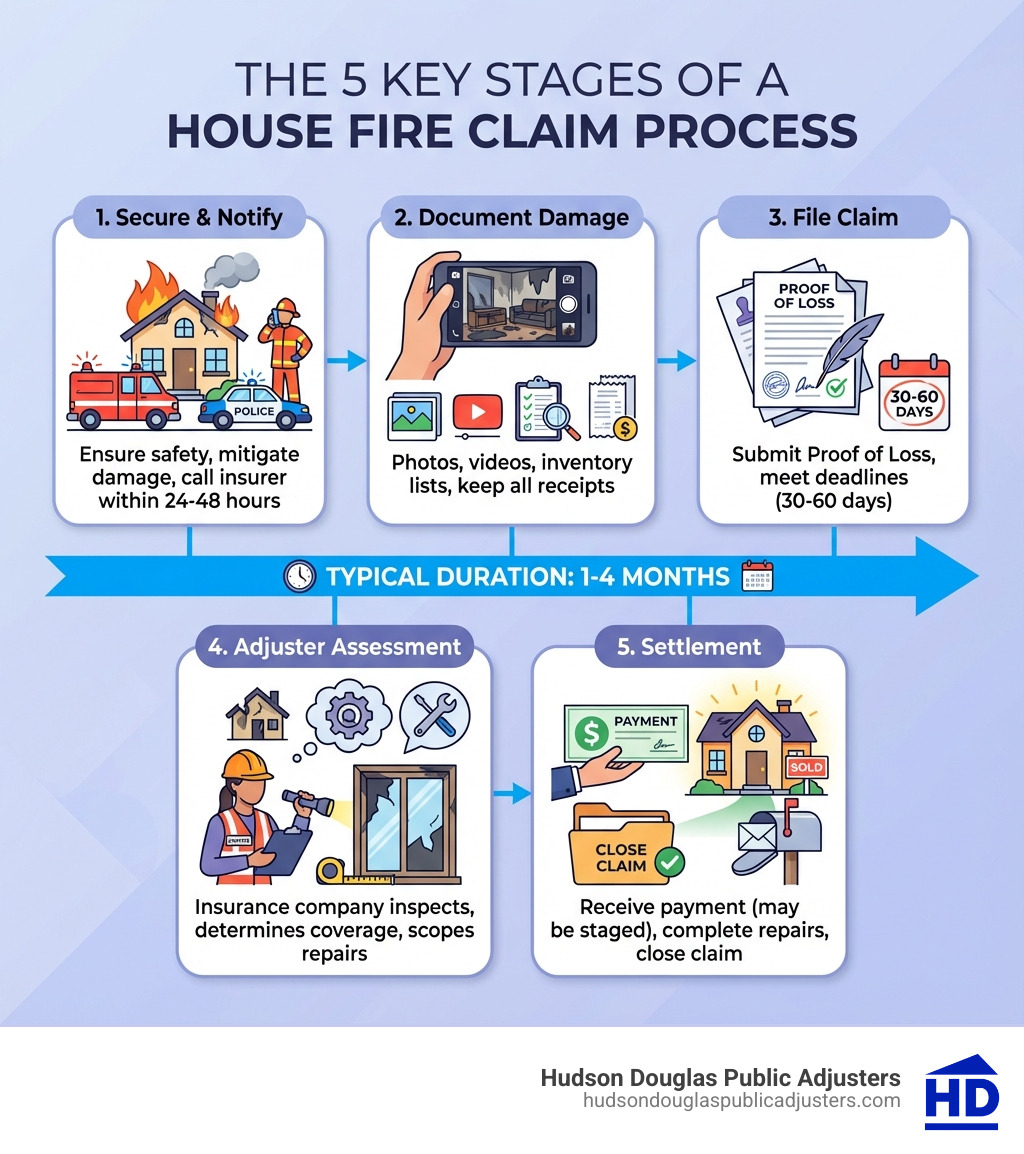
Quick Navigation: The 5 Essential Stages of Your House Fire Claim
- Secure & Notify – Ensure safety, prevent further damage, contact your insurer within 24-48 hours
- Document Damage – Photograph everything, create property inventory, save all receipts
- File Claim – Submit Proof of Loss form, meet policy deadlines (typically 30-60 days)
- Adjuster Assessment – Insurance adjuster inspects damage, determines coverage, scopes repairs
- Settlement – Receive payment (may be staged), complete repairs, close claim
As one insurance guide puts it: “House fires or property fires are never an easy thing to deal with. In addition to being temporarily displaced, many items are priceless that can never be replaced or properly appraised in the unfortunate event of a fire.”
The path from ashes to answers doesn’t have to be walked alone. Most fire claims are resolved within one to four months, but this timeline varies significantly based on damage scale, documentation quality, and whether disputes arise over coverage or valuation. Understanding the process before you’re in crisis mode can save you thousands of dollars and countless hours of frustration.
This guide walks you through every step of the house fire claim process—from the moment you smell smoke to the day you close your claim. You’ll learn what immediate actions protect your rights, which documents you absolutely need, how to interpret confusing policy terms like “actual cash value” versus “replacement cost,” and what to do if your insurer denies your claim or offers a settlement that doesn’t cover your actual losses.
First Steps: What to Do Immediately After a House Fire
When the unthinkable happens, your safety and the safety of your loved ones—including furry family members—are paramount. The aftermath of a house fire can be chaotic and emotionally draining, but taking the right steps immediately can significantly impact your recovery and your house fire claim.
First and foremost, ensure everyone is out of the house and in a safe location. If you haven’t already, contact emergency services. Once the fire department has cleared the scene, you’ll need to assess the situation for immediate next steps.
Prioritize Safety and Shelter
- Find temporary shelter: If your home is uninhabitable, securing a safe place to stay is your top priority. This could be with family or friends, or in a hotel. Remember to keep all receipts for these additional living expenses, as they may be covered by your insurance policy’s Additional Living Expenses (ALE) coverage.
- Pet care: Our pets are family, and a fire can be incredibly traumatic for them. Have pets checked by a veterinarian if they appear scared or disoriented.
- Notifying authorities and utilities: Notify your local police department if you have to leave the property unattended to prevent looting or further damage. Contact utility companies (gas, electricity) to temporarily stop service to your home, ensuring no further hazards exist.
Homeowner’s Responsibility: Preventing Further Damage
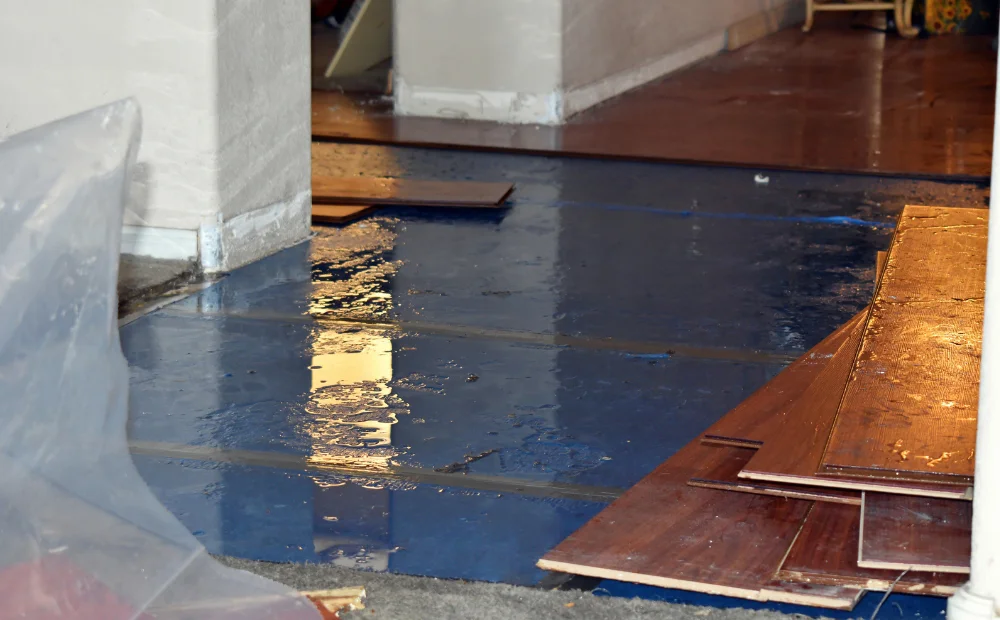
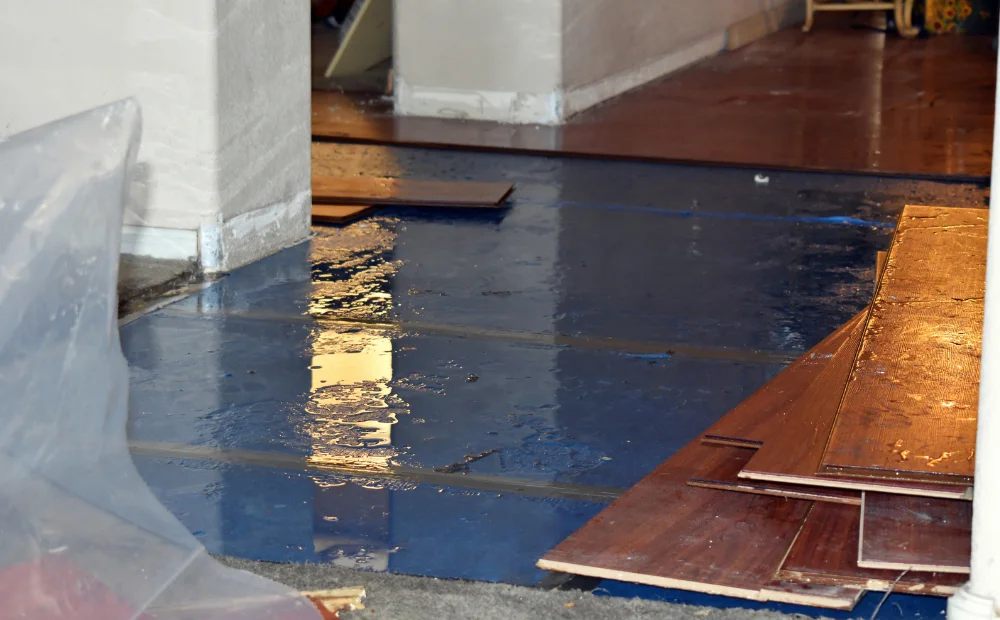
After a fire, your home might be vulnerable to the elements or even opportunistic individuals. You have a responsibility as the homeowner to take reasonable measures to prevent additional damage. This is crucial because insurance policies may not cover ensuing damage if you haven’t taken these steps.
- Mitigation measures: This includes securing your home by covering broken windows and doors with plywood or boarding them up. If the roof is damaged, tarping it can prevent water intrusion from rain, which could lead to mold and further structural issues.
- Saving receipts for emergency repairs: Any materials purchased for these temporary repairs are typically reimbursable under your policy. Keep detailed records and receipts for everything!
Notifying Your Insurer and Mortgage Lender
As soon as you and your family are safe, you need to contact your insurance provider. We recommend doing this as soon as possible, ideally within 24-48 hours.
- Initial call to insurance company: This call initiates your house fire claim. Be prepared to provide a statement on the circumstances of the incident. The agent will check your insurance coverage and, if emergency repairs are needed, may refer you to a recommended service provider. They will also give you a claim number, which you’ll need for all future communications. This initial call could take up to 30 minutes.
- Notifying your mortgage lender: If you’re still making mortgage payments, your mortgage lender has a financial interest in rebuilding your home. They often have specific requirements in your mortgage contract regarding insurance claims. While insurance companies don’t track mortgage balances, your lender will need to be involved, especially if they are co-payable on the claim. They can hold insurance funds up to the balance of the mortgage. It’s important to communicate with them and understand their process. Fortunately, funds for Contents and Additional Living Expenses are usually sent directly to you, not your lender.
The Ultimate Guide to Your House Fire Claim Process
Once the immediate crisis has passed, the real work of navigating your house fire claim begins. This process can feel overwhelming, but breaking it down into manageable steps makes it more approachable.
Filing the Claim
After your initial notification, your insurer will guide you through the formal claim process.
- Proof of Loss form: This is a critical document. A “Proof of Loss” form is a formal statement made by you, the policy owner, to your insurer regarding your loss. It outlines the event, how it took place, and the cost of the damaged property. This form helps the insurer determine the extent of its liability. Be prepared to submit this signed form, typically within 30 to 60 days of the loss.
- Policy deadlines: Adhering to all deadlines specified in your policy is essential. Missing deadlines can jeopardize your claim.
- Working with the insurance adjuster: Your insurance company will assign an adjuster to your case. This individual is professionally trained to assess property damage. They will inspect your home to determine the extent of the damage, verify coverage, and work with you on repairs.
- Scoping the loss: The adjuster will “scope the loss,” which is a brief inspection of the damage. This scope includes the degree of damage, the quality of materials and workmanship, and measurements for calculations. It differs from a finished estimate as it doesn’t list prices or calculated quantities. Sometimes, due to time constraints, an adjuster may need a second visit for a thorough evaluation.
- Your rights during the inspection: You have the right to be present during the adjuster’s inspection. Take notes, ask questions, and don’t hesitate to document the process yourself with photos or videos. Do not move or remove anything from the damaged site until the insurer gives written confirmation, as this could impede their investigation.
Essential Documentation for Your House Fire Claim
The success of your house fire claim settlement rests on meticulous documentation.
- Home inventory list: If you had one before the fire, now is the time to retrieve it. If not, start creating one of your damaged items. List everything that was damaged or destroyed, including brand names, model numbers, and approximate age. This significantly speeds up the claims process.
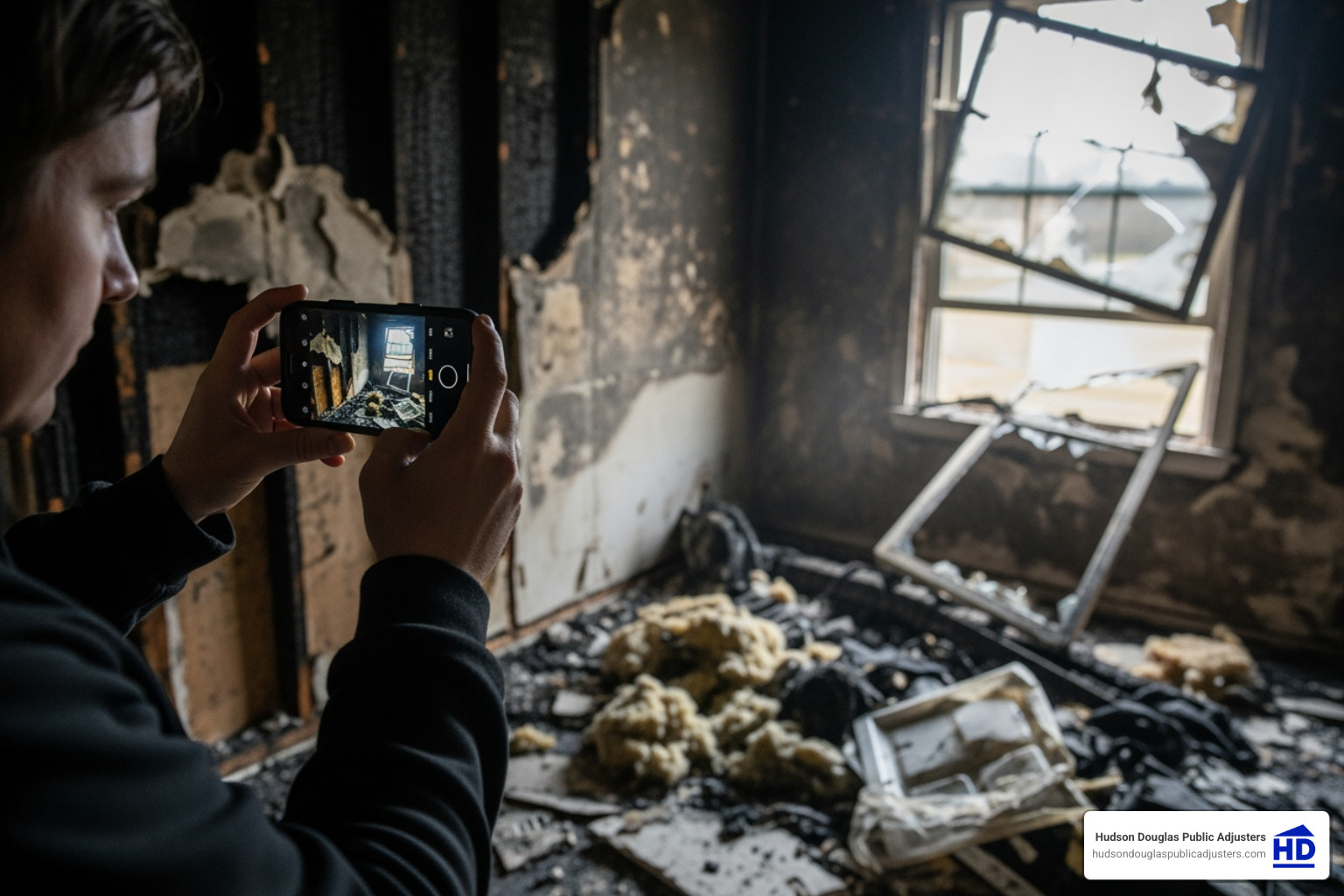
- Photographs and videos of damage: Take extensive photos and videos of all fire damage, both inside and outside your home, and of any damaged personal belongings. Before-and-after photos (if you have them) can be incredibly valuable.
- Receipts and proof of ownership: For high-value items, gather receipts, bank statements, or original packaging to prove price and age. It’s a best practice to keep digital photos of valuables and receipts stored off-site.
- Contractor estimates: Obtain detailed repair estimates from several skilled, licensed, local contractors. Don’t rely solely on your insurer’s preferred providers. Get written bids for all repair work.
- Repair bids: These bids should be line-item estimates, covering all aspects of the repair, including potential code upgrades, handling of hidden damage, and smoke odor treatment.
- Crucial documents to gather for your claim:
- Your insurance policy (declarations page and full policy)
- Fire department report
- Photos and videos of the damage
- Detailed inventory of damaged personal property
- Receipts and proof of ownership for valuable items
- All receipts for temporary repairs and mitigation efforts
- Quotes/estimates from contractors for repairs
- Any communication logs with your insurer, contractors, and other parties
- Proof of loss form
- Keeping a detailed communication log: Keep a detailed log of all communications with your insurer, adjusters, and contractors, noting dates, names, and conversation summaries. This log is invaluable if disputes arise.
Understanding Your Settlement: Key Policy Terms
Navigating the financial aspects of your house fire claim requires understanding a few key insurance terms that directly impact your payout.
- Replacement Cost (RC) vs. Actual Cash Value (ACV):
- Replacement Cost (RC): This is the dollar amount needed to replace a damaged item with one of similar kind and quality without deducting for depreciation (wear and tear). It allows you to replace your property with new items.
- Actual Cash Value (ACV): This pays the amount needed to replace the item at its current market value, meaning it deducts for age, wear and tear, and other factors. You receive what the item was worth just before the fire.
- Depreciation explained: Depreciation is the reduction in value of an asset over time due to wear and tear, age, or obsolescence. For example, an eight-year-old washing machine would have significantly depreciated in value. An ACV policy would pay out that depreciated value, while an RC policy would pay for a new one.
Table: RC vs. ACV Payouts on a Sample Item
| Item | Original Cost | Age (Years) | Depreciation | ACV Payout (Estimated) | RC Payout (New Item Cost) |
|---|---|---|---|---|---|
| 50″ Smart TV | $800 | 3 | 40% | $480 | $750 |
| Washing Machine | $600 | 8 | 70% | $180 | $650 |
| Sofa | $1,200 | 5 | 50% | $600 | $1,100 |
- Additional Living Expenses (ALE): Also known as “Loss of Use” coverage, ALE covers necessary expenses incurred when you cannot live in your home due to a covered loss. This includes costs above your normal living expenses, such as temporary housing (hotel, rental), restaurant meals, laundry services, and even pet boarding. Keep all receipts!
- Dwelling coverage: This covers the physical structure of your home, including the foundation, walls, roof, and attached structures like garages.
- Personal property coverage: This covers your personal belongings, such as furniture, clothing, electronics, and other items within your home.
- Debris removal: Homeowners policies typically include coverage for the cost of removing debris after a fire. This may allow application of a certain percentage, generally 5%, of the coverage limit.
- Tips to maximize your residential property insurance claim: To ensure you receive everything you’re entitled to, fully understand your policy, carefully document all losses, and be prepared to negotiate. For more in-depth strategies, we encourage you to explore how to Maximize Your Residential Property Insurance Claim.
Common Roadblocks and How to Steer Them
The path to a full house fire claim settlement isn’t always smooth. You might encounter delays or even outright denials. Understanding these common roadblocks can help you steer them more effectively.

Typical Claim Timeline
While many claims resolve in one to four months, this is an average. Simple claims are faster, but complex claims involving a total loss, valuation disagreements, or cause-of-fire questions take longer. Insurers are expected to process claims in a timely manner.
Factors Causing Delays
Several issues can prolong your house fire claim:
- Inspections and reports: Delays can arise if the insurer is waiting on fire department reports, specialized inspections (e.g., structural engineers, electrical experts), or other third-party assessments.
- Documentation: Incomplete or insufficient documentation from your end (e.g., missing receipts, unclear photos, vague inventory lists) can cause significant slowdowns as the insurer requests more information.
- Policy assessment: The insurer might take time to thoroughly assess your policy terms, especially for complex or unusual damages.
- Disputes: Disagreements over the cause of the fire, the extent of damage, or the valuation of losses are major contributors to delays.
Reasons for Claim Denial
Insurance companies may deny house fire claims for various reasons. While some denials are legitimate, others can be challenged. Common reasons for denial include:
- Misrepresentation: If you provide inaccurate information on your application or during the claim, even unintentionally, it could be denied. Honesty is crucial.
- Arson investigations: If the fire is suspected to be intentionally set (arson), your claim will almost certainly be denied, and you could face criminal charges.
- Illegal activities: If your property was involved in illegal activities (e.g., manufacturing illicit substances) and that activity contributed to the fire, your claim could be voided.
- Lack of proof: If you cannot provide sufficient proof for the value of damaged property and belongings, the insurer may deny compensation for those items.
- Policy exclusions: Your policy may have specific exclusions. For example, some policies might exclude damage from certain types of fires or perils if specific endorsements aren’t purchased.
- Unpermitted electrical work: This is a common pitfall. If unpermitted or improperly done electrical work caused the fire, your insurance company may deny your claim. Always ensure electrical work is performed by licensed professionals and has the necessary permits.
- Fires from auto accidents: If a fire damages your home due to an auto accident (e.g., a car catches fire in your garage, or an accident on the street causes a fire to spread to your home), the claim can become more complex. This involves different insurance considerations, potentially including auto insurance, comprehensive coverage, and liability assessments. Your auto insurance policy’s comprehensive coverage typically handles damage to the vehicle itself, but the damage to your home would fall under your homeowner’s policy. The interplay between these policies and determining liability can be tricky.
Disputing a Denial or Low Settlement Offer
Receiving a denial or a settlement offer that feels inadequate after a devastating fire can be incredibly frustrating. But it’s not necessarily the final word. You have rights as a policyholder, and avenues for recourse are available.
Your Rights as a Policyholder
In states like California, consumers are protected by regulations like the Fair Claims Settlement Practices Regulations. These rules set deadlines for insurers and define unfair practices. If your claim is denied, your insurer must provide a written explanation and inform you of review processes.
Steps to Appeal a Decision
If you disagree with your insurer’s decision or settlement offer, here’s what you can do:
- Request a reassessment: You have the right to challenge the insurance provider’s decision and request a reassessment of your claim. Provide any additional documentation or information that supports your position.
- Talk to the claims manager: If you’re not getting a satisfactory response from your assigned adjuster, escalate the issue to their supervisor or the claims manager. Often, a fresh perspective can help resolve misunderstandings.
- Write a formal appeal letter: Document your dispute in writing. Clearly state why you disagree with their decision, reference specific policy language, and include all supporting evidence. Send this letter via certified mail to ensure proof of delivery.
- Contact your state’s Department of Insurance: These agencies act as consumer watchdogs. If you believe your insurer is acting unfairly, causing undue delays, or has improperly denied your claim, you can file a complaint. Agencies like the California Department of Insurance can provide impartial answers and may intervene on your behalf.
- Consult an attorney: If all else fails, or if the claim is particularly complex, you may consider acquiring legal aid.
Your Rights in a House Fire Claim Dispute
When facing a dispute, having an expert on your side can make all the difference.
- The role of a professional claims advocate: This is where public adjusters come in. Unlike the insurance company’s adjuster, who works for the insurer, a public adjuster works solely for you, the policyholder. We are your claims advocate. Our goal is to document, prepare, and negotiate your house fire claim to maximize your settlement.
- When to seek expert guidance: We recommend seeking expert guidance from a public adjuster immediately after a fire, or certainly if your claim is denied, undervalued, or if you’re facing significant delays. The claims process is complex and stressful, filled with confusing jargon that’s difficult to steer alone.
- Navigating insurance terminology: We help you understand your policy’s fine print, interpret complex clauses, and ensure that all covered damages are identified and properly valued. We also help avoid common pitfalls, such as initial statements that might not reflect the full extent of damages and could be used against you.
- How a claims advocate can help maximize your settlement: With over 50 years of combined experience across states like Alaska, Arizona, California, Colorado, New Mexico, Nevada, Oregon, Texas, Utah, and Washington, we possess the expertise to level the playing field between you and your insurance company. We work for you, with no upfront fees, and are available 24/7, tirelessly fighting to ensure you obtain the financial entitlement you deserve to rebuild your life. For a deeper understanding of how we can assist, learn about the Fire and Smoke Damage Public Adjusters difference.
Frequently Asked Questions about House Fire Claims
How long does a house fire claim typically take to resolve?
The resolution time for a house fire claim can vary significantly, but generally, many claims are resolved within one to four months. This timeframe is influenced by several factors:
- Complexity of damage: A total loss will naturally take longer to assess and settle than partial damage.
- Thoroughness of documentation: Claims with complete and well-organized documentation tend to process faster.
- Investigations: If the cause of the fire requires extensive investigation (e.g., arson suspicions), this will prolong the process.
- Disputes: Any disagreements over the scope of damage, valuation, or coverage can lead to significant delays.
- Insurer responsiveness: While insurers are expected to act in good faith and in a reasonable and timely manner, some may be slower than others.
If you’ve submitted all requested documents and haven’t received a clear response, it may be time to ask questions or seek expert guidance.
What are Additional Living Expenses (ALE) and what do they cover?
Additional Living Expenses (ALE), often referred to as “Loss of Use” coverage, are a crucial part of most homeowner’s insurance policies.
- ALE definition: ALE covers the necessary increase in living expenses incurred by you so your household can maintain its normal standard of living when a covered loss (like a fire) makes your home uninhabitable.
- What they cover: This coverage reimburses you for costs that are above your normal living expenses. For example, if your mortgage payment is normally $2,000, and you incur $3,000 in temporary rent, only the $1,000 difference is covered by ALE.
- Examples: Common ALE coverages include:
- Hotel bills or temporary rental housing costs
- Restaurant meals (the difference between what you’d normally spend on groceries and eating out)
- Laundry services
- Costs for temporary utilities at your temporary residence
- Transportation costs (e.g., increased commuting if you move further away)
- Pet boarding fees
Remember to keep meticulous records and receipts for all additional expenses, as these will be essential for reimbursement.
What is the difference between an insurance adjuster and a claims advocate?
Understanding the distinction between these two roles is critical for anyone filing a house fire claim:
- Insurance Adjuster: This individual works directly for the insurance company. Their primary role is to investigate the claim, assess the damage, determine coverage based on the policy, and negotiate a settlement on behalf of the insurer. While they are expected to be fair, their loyalty ultimately lies with the company that employs them.
- Claims Advocate (Public Adjuster): A claims advocate, or public adjuster, works exclusively for you, the policyholder. We are independent professionals hired by you to represent your interests throughout the claims process. Our goal is to document all damages, interpret your policy, prepare a comprehensive claim, and negotiate with your insurance company to ensure you receive the maximum settlement you are entitled to under your policy. We level the playing field, ensuring your voice is heard and your losses are fully accounted for. For more details on this vital distinction, read our article on Public Adjuster vs. Insurance Adjuster.
Rebuilding and Moving Forward
Experiencing a house fire is a traumatic event, but navigating the house fire claim process doesn’t have to add to your distress. Understanding the steps, carefully documenting losses, and knowing your rights as a policyholder are key to a fair and timely settlement.
Being proactive and informed is your most powerful tool. From the moment you secure your property and notify your insurer, to the detailed documentation of every damaged item and every communication, your diligence lays the groundwork for a successful recovery.
To prevent future issues, conduct an annual policy review with your agent to ensure your coverage, limits, and endorsements are current. Proper home maintenance, especially ensuring electrical work is permitted and up to code, can also prevent common fire causes.
At Hudson Douglas Public Adjusters, we understand the emotional toll a fire takes. We are here to simplify the complex claims process, advocate fiercely on your behalf, and ensure you receive the full financial entitlement you deserve. With our 50+ years of expertise, no upfront fees, and 24/7 availability, we empower policyholders in Alaska, Arizona, California, Colorado, New Mexico, Nevada, Oregon, Texas, Utah, and Washington to rebuild their lives.
Contact Us for a Free Consultation on Your Fire & Smoke Damage Claim