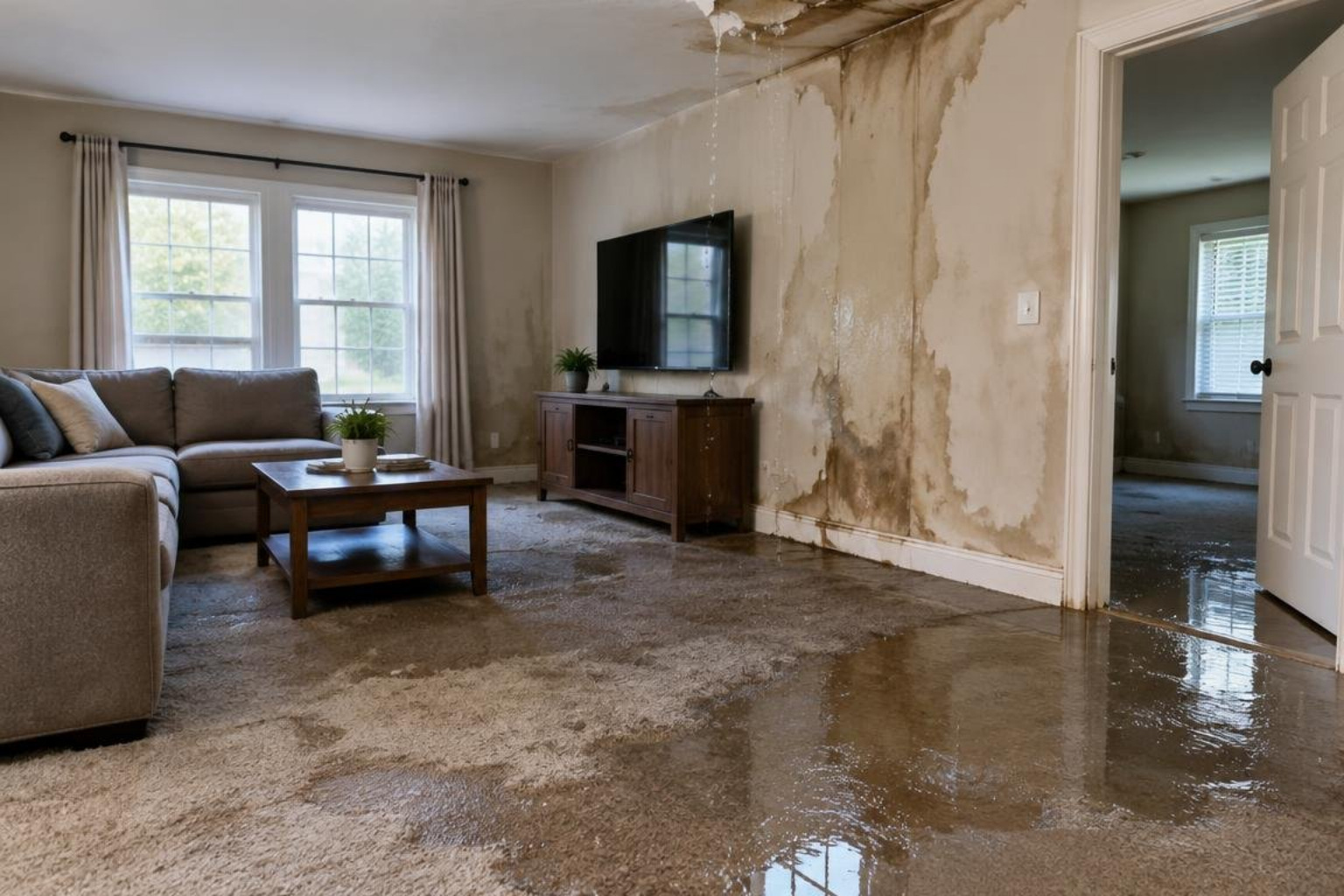
Take Control of Your Water Damage Insurance Claim
When an insurance adjuster handles water damage, your best move is to act fast and keep clear proof. Stop the water if it is safe, arrange emergency drying, photograph every affected area and item, save all receipts, and report the loss promptly. Do not throw away damaged materials before documenting them unless they create a safety risk.
Water damage claims can turn on small details: where the water came from, how long it was present, what was damaged, and whether your policy covers the cause. A sudden pipe break may be treated very differently from surface water entering the property during a flood. Quick mitigation can also help prevent added damage from moisture and mold.
An insurer’s adjuster evaluates the claim for the insurance company. You can ask questions, provide evidence, and request that overlooked damage or hidden moisture be added to the scope. Keep a simple log of calls, emails, inspections, repair work, and expenses.
Hudson Douglas Public Adjusters is a family-owned, locally based Arizona business that represents Arizona residential and commercial property policyholders only, and I am Douglas Waldie.
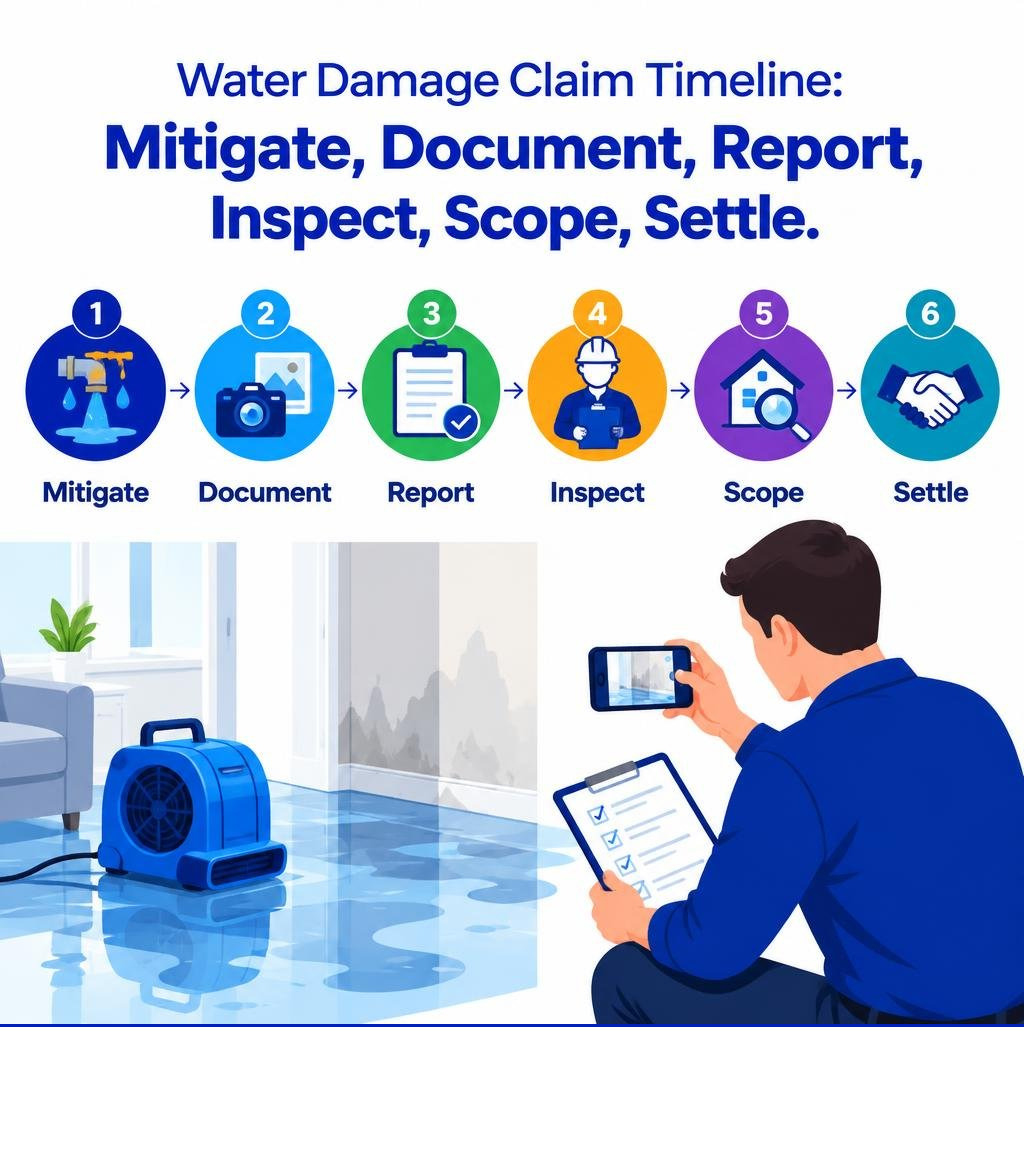
Insurance adjuster water damage definitions:
Immediate Steps to Take Before the Adjuster Arrives
The hours following a water intrusion event are critical for protecting your property and preserving your financial recovery. Homeowners insurance policies contain a clear contractual clause known as the “duty to mitigate.” This clause requires the policyholder to take reasonable, practical steps to protect the property from subsequent damage after a loss occurs. If an owner allows water to sit indefinitely without intervention, the insurance carrier may refuse to cover the resulting secondary damage.
Reviewing essential water damage insurance claim tips helps ensure you fulfill your policy obligations while building an organized claim file from day one.
Mitigating Property Loss and Preventing Secondary Damage
Your immediate priority must always be safety, followed closely by stopping the source of the water. If an interior plumbing supply line fails, shut off the main water valve immediately. Once the flow has ceased, focus on emergency water extraction and structural drying.
- Extract Standing Water: Remove standing pools of water using wet vacuums, pumps, or by calling certified professional mitigation technicians.
- Promote Air Circulation: Set up commercial air movers and dehumidifiers to pull ambient moisture from building materials.
- Track Every Out-of-Pocket Expense: Keep an organized folder containing all receipts, work authorizations, invoices, and equipment rental contracts. Temporary mitigation expenses are generally reimbursable under your policy’s reasonable emergency repairs provisions.
Failure to secure the property promptly can complicate coverage. Insurers closely examine whether wood rot or extensive microbial growth stemmed from neglect or the original sudden loss event.
Documenting Waterlines, Moisture Levels, and Belongings
Before wet drywall, baseboards, or soaked carpeting are removed and discarded, you must preserve comprehensive physical proof. Insurance company field adjusters rely on documented evidence to justify repair allowances to their desk managers.
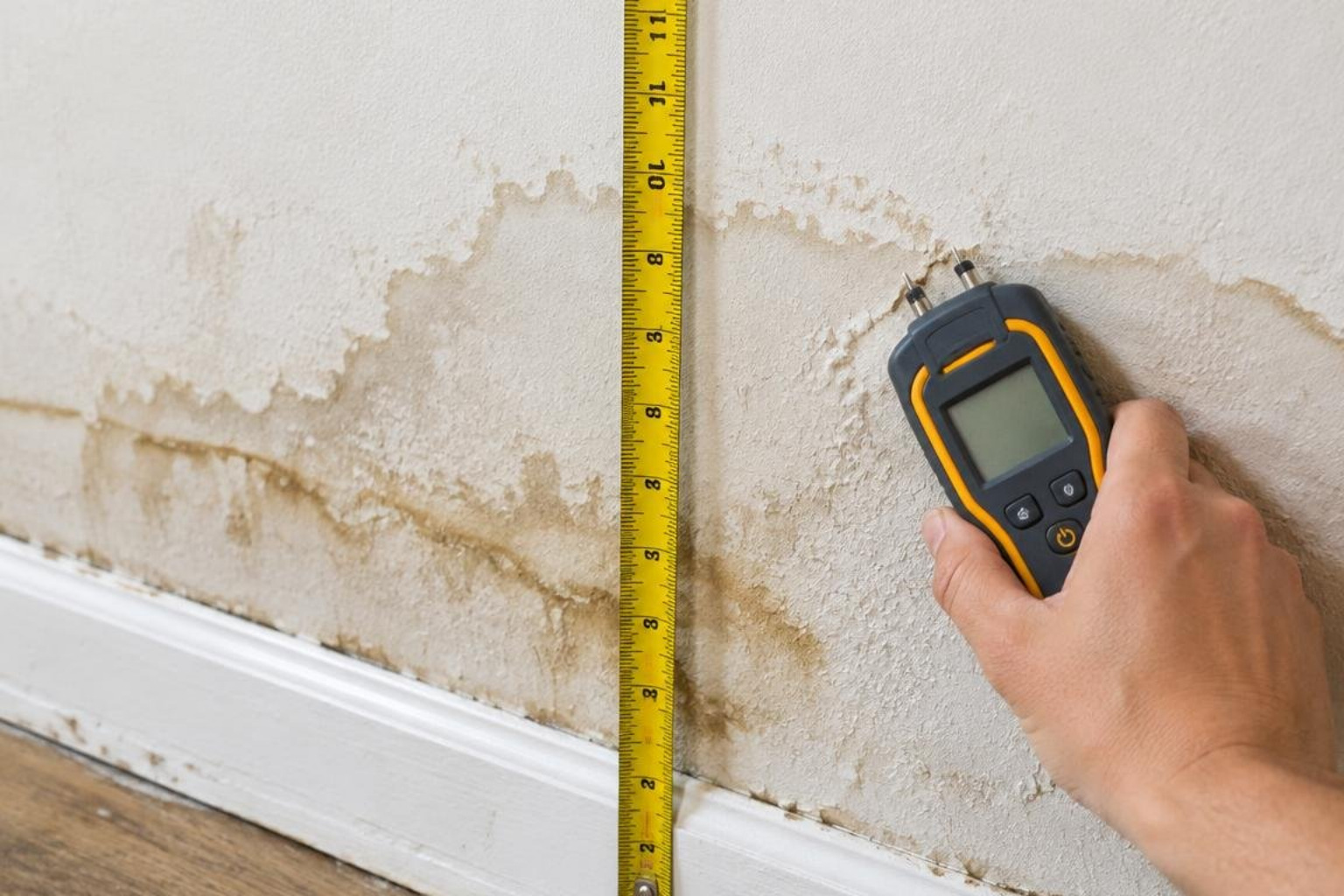
- Perform a Video Walkthrough: Capture high-definition video of the affected areas before any demolition begins. Narrate the video by stating the date, time, and room locations.
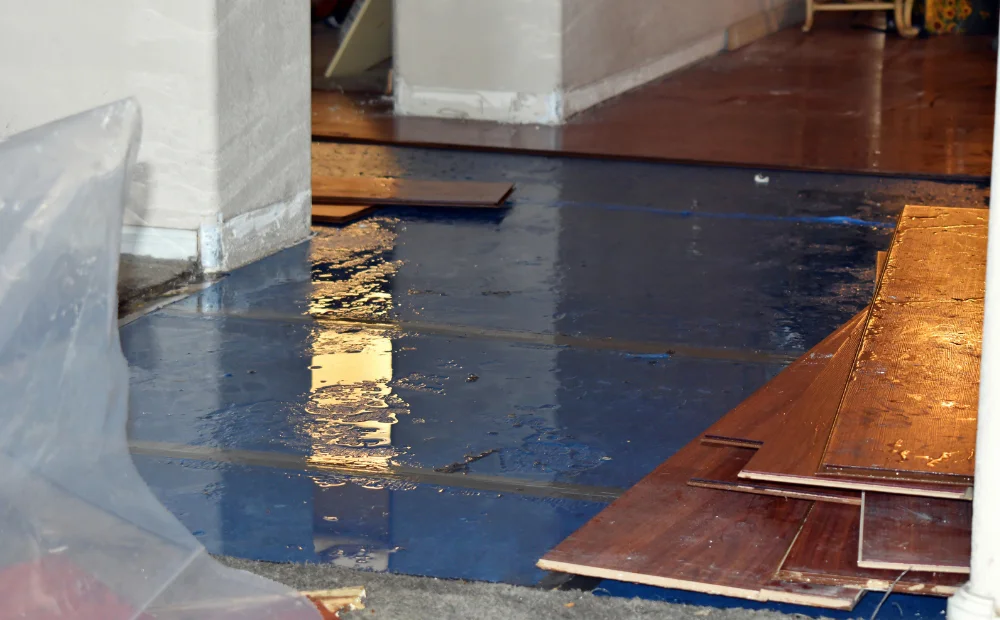
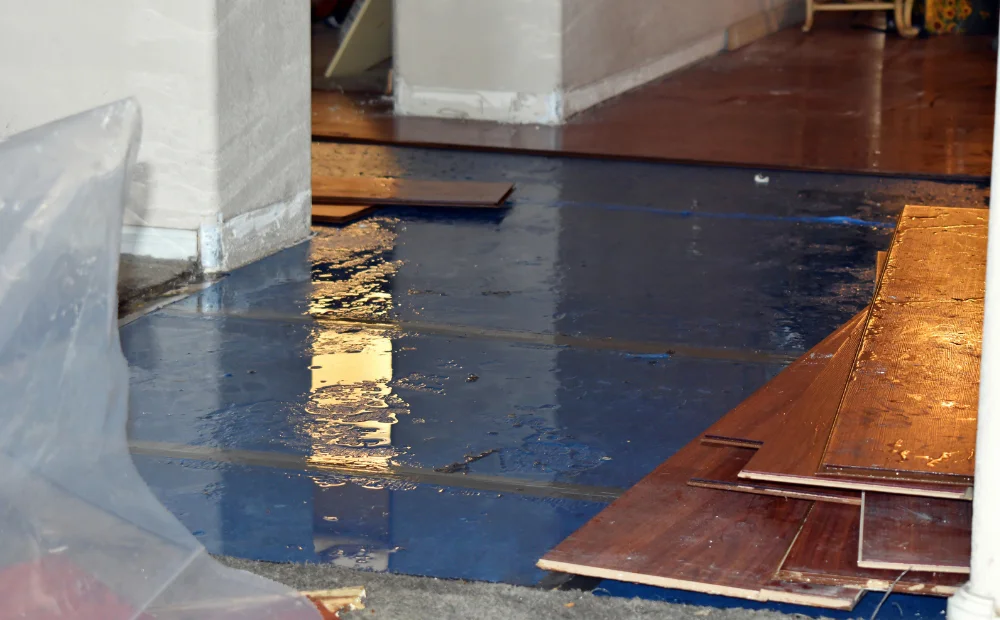
- Photograph Clear Waterlines: Measure waterlines against a standard tape measure placed next to walls, cabinetry, and structural posts. Take wide-angle establishing shots as well as close-ups.
- Record Moisture Readings: Document moisture meter readings showing moisture percentages in drywall, subflooring, and framing studs.
- Compile a Detailed Contents Schedule: Build an itemized list of all damaged personal property, noting the manufacturer, model number, approximate purchase date, and estimated replacement cost. Never discard high-value personal property items until the carrier’s adjuster has had the opportunity to inspect them.
What to Expect from an Insurance Adjuster Water Damage Inspection
When your carrier receives notice of your water loss, they assign an adjuster to investigate the cause of loss, verify policy coverage, inspect physical damage, and establish a repair estimate. Understanding the clear public adjuster vs insurance adjuster differences is vital here: the company adjuster or independent adjuster works directly on behalf of the insurer to protect the carrier’s financial interests, whereas a licensed public adjuster represents you, the policyholder.
Initial Protocol of an Insurance Adjuster Water Damage Assessment
Under standard property adjusting practices, the assigned adjuster is generally expected to make first contact within 24 to 48 hours of receiving the loss assignment. During this initial communication, the adjuster gathers baseline information, reviews emergency mitigation measures, and schedules an on-site property inspection.
During the physical inspection, the adjuster will:
- Identify and document the physical origin and failure point of the water intrusion.
- Map out affected rooms and take field measurements.
- Document moisture migration into adjoining wall cavities and beneath floor coverings using thermal cameras and penetrating moisture meters.
- Compile a detailed scope of repair using industry-standard estimating software such as Xactimate.
In substantial loss scenarios, adjusters may authorize pre-inspection advance payments—frequently ranging from $5,000 to $20,000—to help policyholders initiate urgent drying, debris removal, or secure temporary housing under Additional Living Expenses (ALE) provisions.
Challenging an Insurance Adjuster Water Damage Settlement Offer
It is not uncommon for an initial insurance company settlement offer to fall short of the true reconstruction cost. Adjusters handling high claim volumes may inadvertently omit essential construction line items, fail to account for matching requirements for flooring and cabinetry, or overlook hidden structural moisture trapped inside wall cavities.
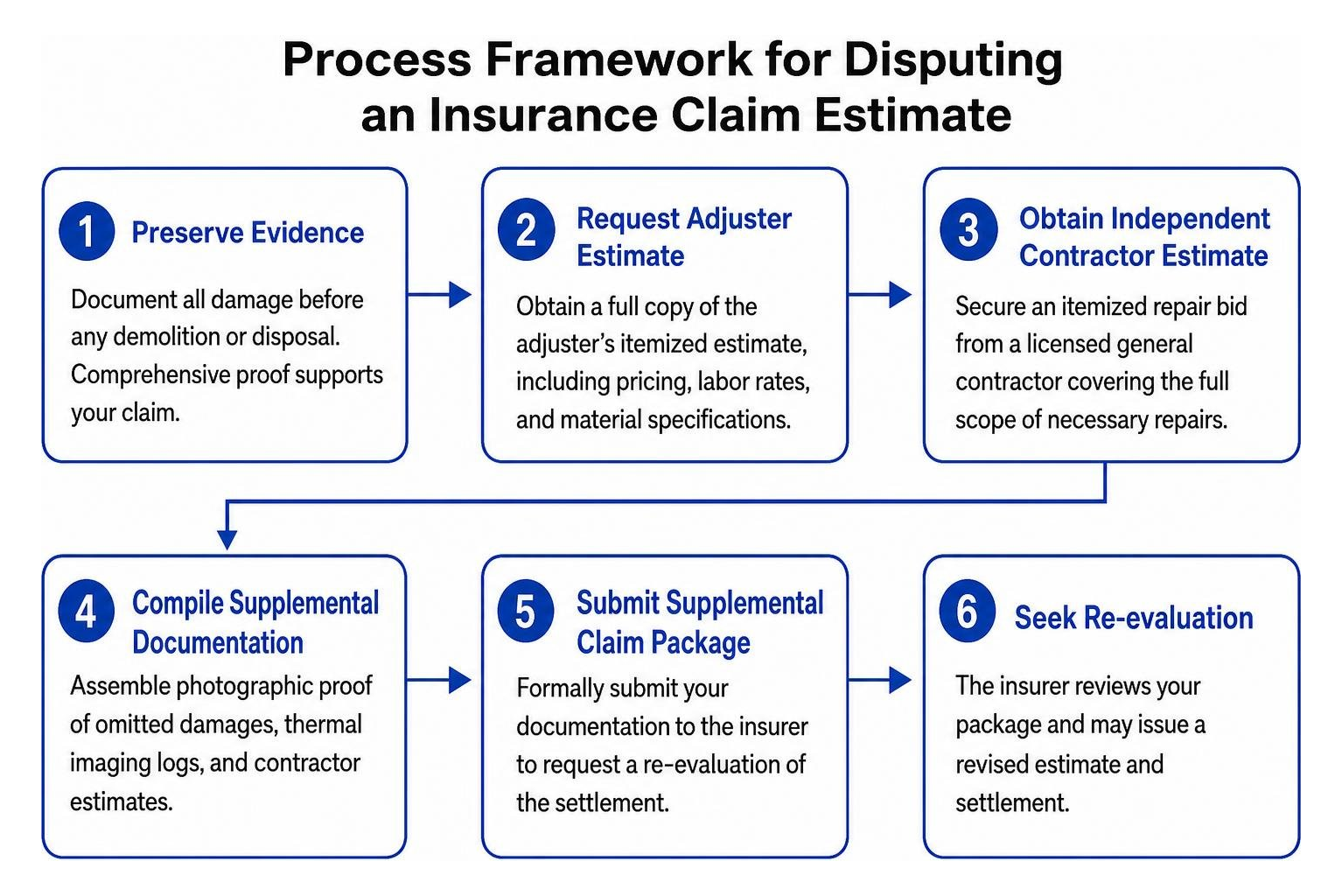
If you receive an undervalued estimate or face a denied water damage claim, you have the contractual right to challenge the carrier’s findings:
- Request a full copy of the adjuster’s itemized Xactimate line-item estimate, including unit pricing, labor rates, and material specifications.
- Secure an independent, itemized repair bid from a licensed local general contractor detailing the full scope of necessary structural repairs.
- Submit a formal supplemental claim package containing photographic proof of omitted damages, thermal imaging logs, and contractor estimates to request a re-evaluation of the settlement.
Determining Coverage: Plumbing Failures, Flood, and Exclusions
Not all water damage scenarios are treated equally under property insurance policies. Determining whether a loss is covered depends on the exact origin of the moisture and the specific language contained within your policy’s endorsements and water damage exclusions.
Sudden and Accidental Leaks vs. Maintenance Neglect
Standard homeowners policies (such as an HO-3 or HO-5 form) provide coverage for water damage that is “sudden and accidental.” Common examples include an unexpected supply line split behind a refrigerator, a washing machine hose rupture, or a burst pipe insurance claim caused by sudden internal pressure failures.
Conversely, carriers explicitly exclude losses resulting from:
- Long-term continuous or repeated seepage occurring over weeks, months, or years.
- Deteriorated plumbing pipes resulting from normal wear, tear, and age.
- Deferred property maintenance, such as failing to replace worn roof shingles or cracked shower pan grout.
While the policy will generally cover the resulting water damage to drywall, framing, and flooring caused by a sudden pipe burst, it typically excludes the cost to repair or replace the failed plumbing component itself.
Standard Homeowners Policies vs. Flood Insurance
A major point of confusion for property owners is the critical distinction between internal water damage and external flood events. Standard residential and commercial property policies strictly exclude damage caused by rising groundwater, overflowing rivers, storm surges, and surface runoff.
| Feature | Standard Homeowners Policy (HO-3) | National Flood Insurance Program (NFIP) |
|---|---|---|
| Water Source | Internal plumbing, burst pipes, appliance failure | Rising surface water, overland flooding, mudflow |
| Dwelling Coverage Limit | Policy Coverage A limit (e.g., $300k–$1M+) | Statutory cap up to $250,000 (SFIP Dwelling) |
| Personal Property Limit | Typically 50% to 70% of Coverage A | Separate policy up to $100,000 max |
| Adjuster Qualification | State-licensed property adjuster | Must hold active Flood Control Number (FCN) |
| Governing Rules | State Insurance Department / Policy terms | NFIP Claims Manual guidelines |
To understand how these scenarios are handled locally in regions subject to flash flooding and severe seasonal storms, review our breakdown on flood damage vs water damage distinctions.
Calculating the Settlement: Scoping, RCV vs. ACV, and Hidden Costs
Calculating an accurate property loss settlement requires a comprehensive evaluation of structural framing, finish materials, personal belongings, and mandatory building code upgrades.
Structural Repairs vs. Personal Property Loss
Property claim payments are calculated based on two primary valuation methodologies: Replacement Cost Value (RCV) and Actual Cash Value (ACV).
- Replacement Cost Value (RCV): The total dollar amount required to repair or replace damaged property with new materials of like kind and quality at current market prices, without deducting for age or physical depreciation.
- Actual Cash Value (ACV): The fair market value of the item or structure immediately prior to the loss, calculated as Replacement Cost minus physical depreciation based on age, wear, and condition.
When settling a claim, insurers typically issue an initial ACV payment. Once repairs are completed and paid contractor invoices are submitted, the insurer releases the “recoverable depreciation” to bring the final payout up to the full RCV settlement amount.
In addition to standard building materials, adjusters must account for ancillary policy coverages:
- Debris Removal Limits: Generally included as part of the total limit of liability, often providing an additional allowance up to 5% of the dwelling limit.
- Landscaping and Plants: The aggregate limit for trees, shrubs, and exterior plants is generally capped at 5% of the dwelling limit, with sub-limits typically set at $500.00 (or $250.00 in certain policies) for any single damaged tree or plant.
- Ordinance or Law Coverage: Essential for funding mandatory structural modifications required by local building departments during reconstruction.
Handling Mold Remediation and Moisture Above the Waterline
Water damage does not stop at the visible waterline. Through capillary action—often referred to as drywall wicking—moisture travels upward through porous gypsum board and wood framing well above standing water levels.
When moisture remains trapped behind baseboards and insulated wall cavities, mold spores can proliferate rapidly. Standard property insurance policies frequently impose strict sub-limits on mold remediation, ranging from $5,000 to $10,000 unless a specific endorsement has been purchased.
An experienced adjuster must carefully differentiate between primary structural drying costs and specialized microbial remediation protocols to prevent legitimate drying expenses from prematurely exhausting your policy’s mold sub-limit.
Frequently Asked Questions About Water Damage Claims
How long does an insurance adjuster have to respond to a water damage claim?
In most jurisdictions, insurance regulations and industry standard claims guidelines require an adjuster to make initial contact with the policyholder within 24 to 48 hours of assignment. State insurance codes typically require insurers to acknowledge receipt of the claim, conduct an on-site property inspection, and communicate a formal coverage position or settlement decision within 15 to 30 business days following the receipt of all requested proof-of-loss documentation.
Can I start cleanup before the adjuster inspects the water damage?
Yes. Policyholders are contractually required under their policy’s mitigation clause to take reasonable steps to prevent further damage. You can extract standing water, run dehumidifiers, and place temporary tarps immediately. However, you should thoroughly photograph and video-record all wet building materials, waterlines, and damaged contents before removing them, and preserve samples of damaged plumbing components or materials for the adjuster’s inspection.
What happens if water damage reveals pre-existing mold?
If an adjuster determines that mold existed prior to the reported sudden water event, the carrier may exclude remediation costs specifically tied to that pre-existing condition under long-term seepage exclusions. However, any new, ensuing structural damage resulting directly from the sudden and accidental plumbing failure remains covered under standard ensuing loss provisions, subject to your policy’s specific mold sub-limits.
Conclusion
Navigating the complexities of a property water loss requires speed, meticulous documentation, and an in-depth understanding of policy language. From measuring waterlines and securing moisture logs to calculating replacement cost values and negotiating line-item scopes, every step directly impacts your financial recovery.
Hudson Douglas Public Adjusters is a family-owned and operated, locally based Arizona business serving residential and commercial property owners throughout Arizona, Nevada, and Utah. We represent policyholders exclusively—never insurance companies—ensuring your claim is scoped accurately, negotiated fairly, and paid in full. If you are dealing with property loss, contact our team for expert assistance with water damage claims to protect your property and secure the settlement you deserve.